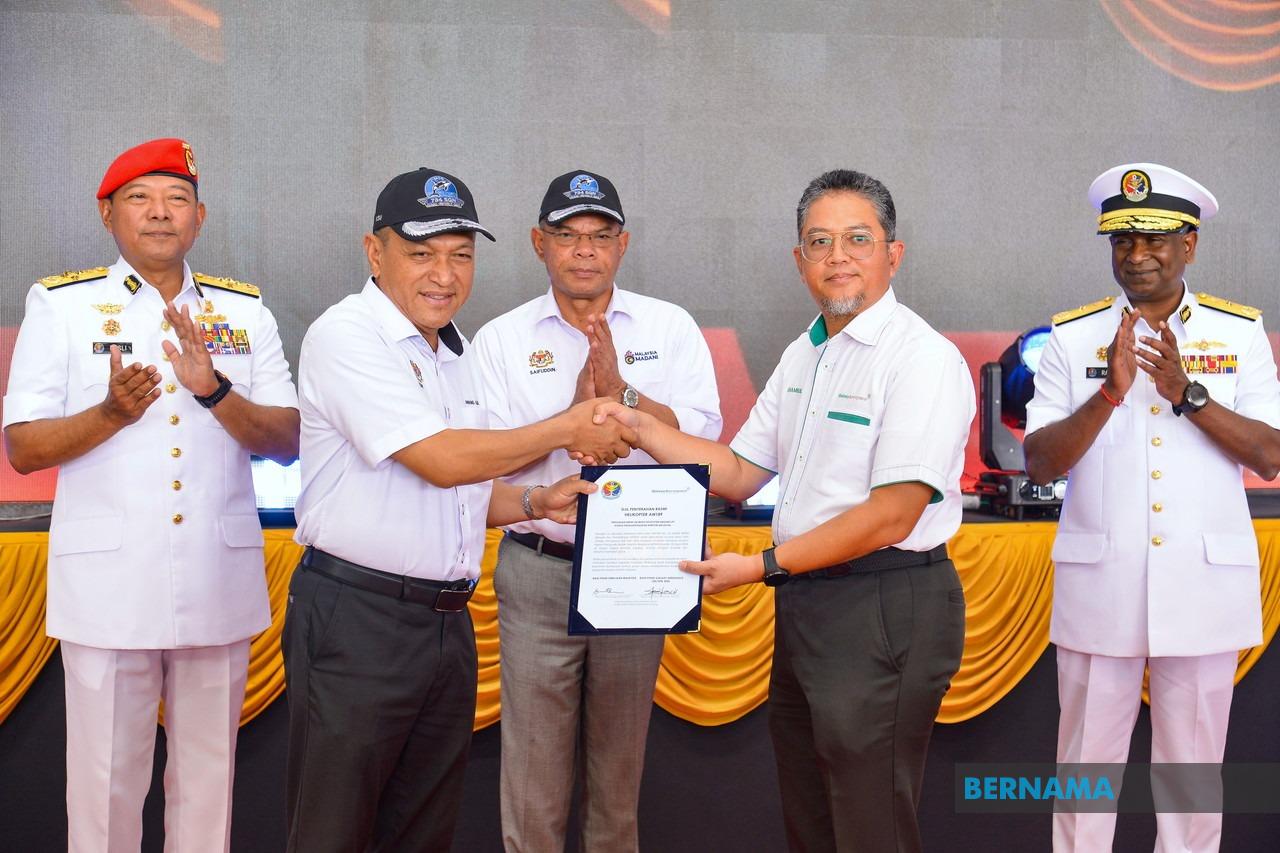
Home Minister Datuk Seri Saifuddin Nasution Ismail has stressed the necessity for thorough evaluation of Malaysia's security legislation and refugee management frameworks, arguing that both require reassessment in light of evolving national circumstances. Chairing a discussion focused on these sensitive areas, Saifuddin Nasution emphasised that policymakers must move beyond narrow perspectives when examining either issue, instead conducting analysis grounded in real-world developments, practical implementation challenges, and strategic options for the coming years.
The minister's remarks reflect growing recognition within government circles that blanket approaches to complex policy domains often prove inadequate. He underscored that public forums dedicated to substantive policy dialogue serve a vital function in democratic governance, enabling stakeholders to contribute evidence-based perspectives rather than operating within institutional silos. His statement suggests the government intends to ground future decisions not merely on reactive crisis management but on careful consideration of how measures interact with broader social, security and humanitarian objectives.
The Security Offences (Special Measures) Act 2012 has become a focal point for sustained domestic controversy since its enactment. Introduced as the successor legislation replacing the Internal Security Act 1960, SOSMA granted law enforcement agencies expansive powers to investigate, detain and prosecute individuals suspected of involvement in security threats. However, the Act has attracted persistent criticism from civil society organisations, legal practitioners and international human rights bodies, who contend that its provisions lack sufficient safeguards against arbitrary exercise of state authority and may facilitate detention without adequate judicial oversight.
Debates surrounding SOSMA have intensified periodically as documented cases of detention and prosecution have accumulated over the past decade. Critics argue the legislation's broad definitional scope for security offences creates ambiguity that permits authorities considerable discretion in determining what activities constitute threats. The absence of robust independent oversight mechanisms in certain operational phases has raised concerns among observers who monitor rule of law standards. Calls for legislative reform or outright repeal have emerged from diverse quarters, including parliamentary opposition, law professor networks, and international observers monitoring Malaysia's human rights performance.
Simultaneously, Malaysia faces mounting pressure regarding its handling of refugee populations, particularly those fleeing violence and instability in Myanmar. The influx of Rohingya and other refugee communities has generated multifaceted policy dilemmas for Malaysian authorities. National security agencies express concern that inadequate border controls and refugee management systems create vulnerabilities that hostile actors might exploit. Simultaneously, humanitarian organisations highlight the desperate circumstances of displaced persons, many of whom have endured persecution and possess minimal resources for subsistence.
The Myanmar refugee situation carries particular resonance within Southeast Asia given the country's regional significance and the scale of internal displacement. Malaysia, with its geographic proximity and existing migrant worker populations, has become an unintended refuge for thousands fleeing military violence and communal conflict. Unlike many developed nations with formalised refugee resettlement procedures, Malaysia has not signed the 1951 UN Refugee Convention, placing refugee management within ad hoc administrative frameworks rather than comprehensive legal structures. This institutional gap complicates humanitarian response while creating security assessment challenges.
Balancing legitimate national security imperatives with humanitarian obligations represents a central tension in Saifuddin Nasution's call for comprehensive scrutiny. Malaysian policymakers must navigate between preventing potential security threats and ensuring that security measures do not become pretexts for marginalising vulnerable populations. The integration of security considerations with refugee policy review suggests official recognition that these domains intersect—decisions affecting refugee processing and settlement location influence both humanitarian outcomes and security assessment protocols.
The Home Minister's emphasis on multidimensional analysis reflects international best practice in security legislation assessment. Jurisdictions including Canada, Australia and some European nations have conducted periodic reviews of security laws, incorporating technical expertise from security professionals, legal scholars, civil society representatives and affected communities. Such consultative approaches, while demanding considerable time and resources, generate policies that command broader legitimacy and prove more durable because they incorporate diverse perspectives rather than reflecting narrow institutional interests.
For Malaysia specifically, comprehensive SOSMA review would benefit from examination of implementation patterns—how many individuals detained actually proceed to prosecution, conviction rates by offence category, appeal outcomes, and documented cases of wrongful detention. Such empirical analysis could reveal whether the legislation performs as intended or whether procedural safeguards prove inadequate in practice. Similarly, refugee policy assessment should incorporate data on entry patterns, demographic composition of refugee populations, security incidents involving documented refugees, resettlement outcomes, and comparison with regional neighbours' approaches.
The timing of Saifuddin Nasution's call reflects broader regional dynamics. Southeast Asia has experienced significant migration pressures following Myanmar's 2021 coup and subsequent civil conflict. Thailand, Bangladesh and Indonesia have all grappled with refugee management questions. Malaysia's approach influences regional responses through precedent and demonstration effects. Policy frameworks that effectively balance security and humanitarian concerns could establish constructive models, while reactive or purely restrictive approaches risk regional destabilisation through uncoordinated responses creating gaps where vulnerable populations become exploited by criminal networks.
Moving forward, substantive policy review requires institutional investment that extends beyond episodic high-level discussions. Establishing dedicated review mechanisms with explicit timelines, clear evidence standards and transparent public reporting could transform policy scrutiny from occasional political discussion into systematic institutional practice. The Home Minister's public commitment signals openness to such processes, though implementation will depend on whether sufficient political will exists to follow through when reviews produce recommendations challenging established practices.
Malaysia's capacity to craft security and refugee policies that enhance both safety and humanitarian standards will significantly influence its standing within international governance frameworks and its credibility as a responsible regional actor. The Minister's call for in-depth scrutiny represents constructive acknowledgment that complex policy domains demand rigorous examination rather than reflexive adherence to inherited frameworks. Success will ultimately depend on whether dialogue translates into substantive reform demonstrating genuine commitment to evidence-based policymaking.

