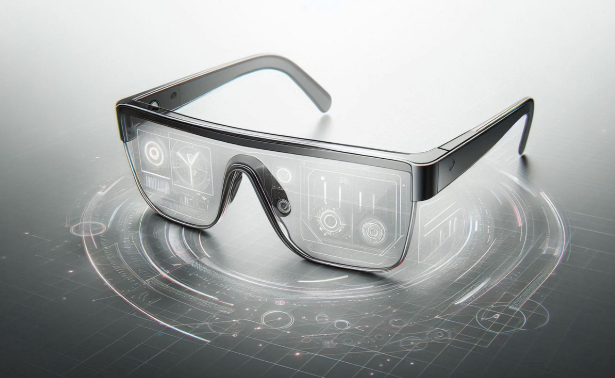
South Korean prosecutors have taken unprecedented legal action against a man in his 40s who deployed artificial intelligence-enabled glasses to gain unfair advantage during a national qualification examination, in what authorities are treating as the country's inaugural case involving such devices in an academic cheating context. The Gwangju District Prosecutors' Office formally indicted the suspect last month on violations of the National Technical Qualification Act, with the case drawing widespread attention after being reported by multiple local news organisations on Monday, July 13.
The incident unfolded in May when the man attempted to fraudulently answer questions on a fire protection facilities engineer certification examination at a testing facility in Gwangju. An alert exam supervisor detected something unusual about his appearance, specifically noticing an optical reflection bouncing off the glass lenses in a manner inconsistent with standard eyewear. This vigilance proved crucial in identifying what would become a landmark legal case in South Korea's ongoing battle against sophisticated examination fraud.
When questioned by investigators, the suspect provided details about his operation. He acknowledged deliberately cheating and explained that he had personally engineered a custom artificial intelligence application designed to integrate with the glasses hardware. According to his account, his primary motivation was experimental—he wanted to verify whether the system could accurately display correct answers when activated during the examination environment. This explanation suggests a level of technical sophistication that goes beyond typical exam cheating schemes and highlights how rapidly emerging technologies can be weaponised for educational misconduct.
The Gwangju case is not an isolated incident. Authorities have uncovered a troubling pattern of similar violations occurring across multiple examination venues and in different contexts. Two additional men, both in their 20s, were similarly apprehended after utilising the same AI glasses technique at separate national technical qualification examination sites—one located in Seoul and another in Mokpo—during the same May period. The geographic spread and timing of these incidents suggest a growing awareness among test-takers about the potential of this technology.
Beyond the national qualification examination system, artificial intelligence glasses have also penetrated the market for English language certification tests. Authorities have documented multiple violations involving the TOEIC examination format, with two individuals caught using the devices in May and an additional person apprehended in June. The diversity of testing platforms where these glasses have been deployed indicates that the technology's application extends across different qualification and certification frameworks, making it a systemic concern rather than an isolated problem.
The rapid escalation of these incidents prompted emergency action from South Korea's examination oversight bodies. Officials representing the various agencies responsible for administering and proctoring major national qualification and certification examinations convened on July 10 to develop a coordinated response strategy. The urgency reflected in this emergency meeting underscores the threat that examination officials perceive from AI-enabled cheating technologies.
Among the countermeasures now under consideration, test administrators are contemplating explicit prohibition of AI glasses through formal amendments to the lists of banned items currently enforced in examination halls. This regulatory approach would remove any ambiguity about whether such devices fall within existing restrictions and would provide clear legal grounds for confiscation and investigation if discovered. The measure reflects how examination rules must continually evolve in response to technological innovation.
Equally significant is the proposal to substantially escalate penalties imposed on individuals caught engaging in exam fraud involving advanced technology. Tougher sanctions serve a dual purpose—deterring would-be cheaters from investing time and resources in acquiring and learning to use sophisticated devices, while also signalling that examination authorities take technological cheating with proportional seriousness. The enhanced consequences are intended to make the risk-benefit calculation unfavourable for potential offenders.
For Malaysia and other Southeast Asian nations, the South Korean experience offers an instructive case study. As artificial intelligence technologies become increasingly accessible and affordable, educational institutions across the region should anticipate similar challenges emerging in their own examination systems. The rapid proliferation of AI glasses cheating cases in South Korea—progressing from zero documented incidents to multiple prosecutions within a few months—demonstrates how quickly new technologies can permeate examination fraud ecosystems once early adopters prove their viability.
The implications extend beyond individual examinations to broader questions about educational integrity and certification validity. Professional qualification examinations for engineers, technicians, and language proficiency certifications carry significant weight in career advancement and employment prospects. When such credentials become vulnerable to technological manipulation, the entire value proposition of standardised testing comes under threat. This undermines legitimate test-takers who succeed through genuine preparation and knowledge.
The sophistication demonstrated by the Gwangju suspect—developing custom software to integrate with wearable hardware—suggests that technological barriers to cheating are rapidly diminishing. As artificial intelligence becomes more powerful and user-friendly, creating exam-fraud solutions requires progressively less specialised knowledge. This democratisation of sophisticated cheating tools presents a moving target for examination administrators.
South Korea's response through both criminal prosecution and regulatory enhancement establishes a framework that other nations can adapt. However, the case also illustrates a fundamental challenge: technology evolves faster than legal systems and regulatory structures can typically respond. Examination bodies must adopt more agile governance models that can anticipate and address emerging threats rather than merely reacting after frauds are discovered. The window for preventive action may be narrow before AI-enabled cheating becomes widespread across multiple examination formats and geographic regions.

