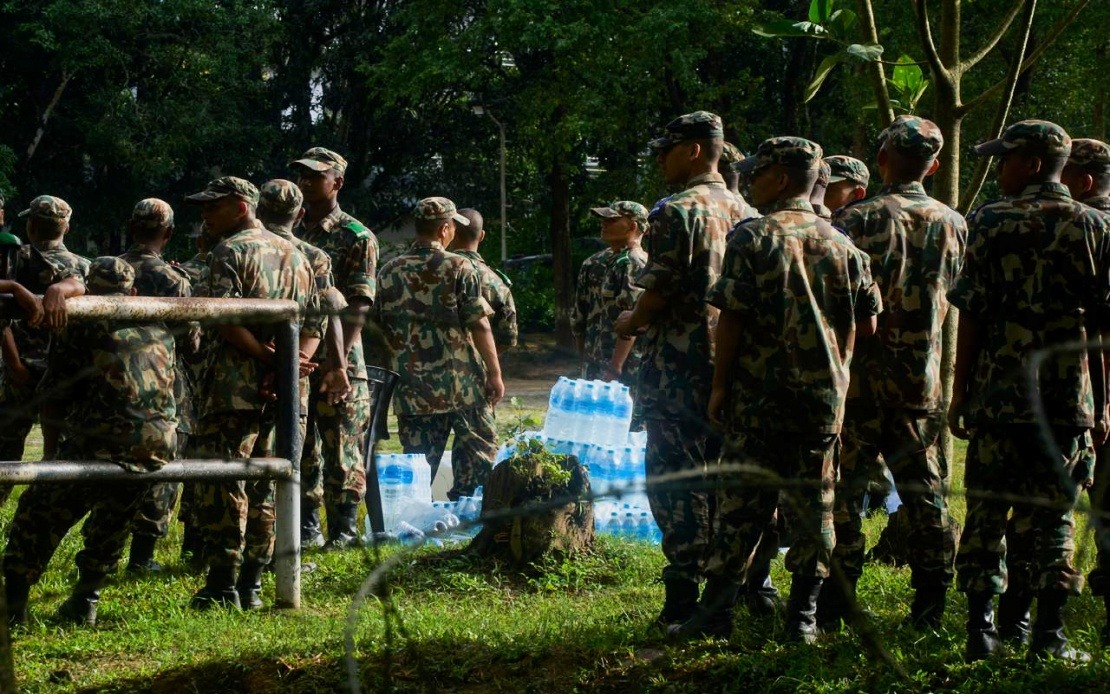
South Korea's government has mobilised an emergency response team to Nepal following the disappearance of nine nationals in one of the region's most severe natural disasters this year. The 11-member unit, comprising officials from the Foreign Ministry alongside police and fire personnel, departed Seoul on Thursday with orders to arrive in Kathmandu the same evening to coordinate search and rescue operations for the missing workers.
The nine South Koreans—comprising six employees from the engineering firm Doosan Enerbility Co. and three from Korea South-East Power Co., a state-controlled electricity producer—vanished when a catastrophic flash flood and mudslide swept through Nepal's Rasuwa district on Wednesday. All were working at a hydropower plant construction site in the mountainous terrain when the disaster struck, destroying infrastructure and isolating personnel across the work zone.
The scale of the humanitarian crisis extends well beyond the Korean contingent. Local authorities and international agencies report that at least 160 people have been confirmed dead, with 403 additional persons unaccounted for across the affected region. Notably, approximately 341 of those missing are foreign nationals, highlighting how the project site attracted a substantial international workforce. The disaster occurred in Nepal's north-central Himalayan region adjacent to the Tibet border, an area frequently vulnerable to seasonal weather patterns that can rapidly escalate into life-threatening conditions.
Separately, ten other Doosan workers who had been stranded in the immediate vicinity of the disaster zone have been accounted for and confirmed alive, though they remain in the region awaiting proper evacuation arrangements. These individuals were able to evacuate the construction site during the initial flood response, joining approximately 200 additional foreign workers from various nationalities who abandoned the site as conditions deteriorated.
The Upper Trishuli-1 hydropower plant, situated roughly 70 kilometres northwest of Kathmandu along the Trishuli River, represents a significant binational infrastructure project involving both South Korean and Nepali interests. The 216-megawatt facility commenced construction in January 2022, with project stakeholders having scheduled commercial operations to commence by the end of this year. However, industry analysts and construction observers now anticipate that the extensive damage inflicted by Wednesday's disaster will necessitate substantial schedule delays, potentially pushing the completion timeline into the following year or beyond.
Both Doosan Enerbility and Korea South-East Power have established their own internal emergency response protocols and are preparing to dispatch field teams directly to the accident site. Corporate officials from both organisations have coordinated with government authorities to ensure that private sector resources complement and support the official rescue efforts. This dual-track approach—combining government coordination with corporate logistics—reflects the complexity of managing multinational construction operations in geographically challenging environments.
At the diplomatic level, Foreign Minister Cho Hyun has signalled the government's intention to engage directly with Nepali counterparts, specifically requesting ministerial-level discussions with Nepal's foreign ministry to secure enhanced cooperation and priority access for Korean rescue teams. This engagement underscores how bilateral relationships become especially important during cross-border humanitarian emergencies involving citizens abroad.
President Lee Jae Myung has issued direct instructions to the government apparatus to mobilise all available resources toward locating and rescuing the missing nationals. This presidential directive carries significant weight within South Korea's administrative structure, effectively elevating the operation to the highest priority level and ensuring that bureaucratic obstacles are minimised. Such top-level involvement signals to both the international community and to Nepal's government that Seoul regards the situation with utmost seriousness.
For Malaysian and regional observers, the Nepal disaster illustrates the vulnerabilities inherent in major infrastructure projects operating in seismically and meteorologically unstable territories across South and Southeast Asia. Many Malaysian firms maintain ongoing construction commitments in similar Himalayan and monsoon-affected zones throughout the region. The incident reinforces the critical importance of comprehensive disaster preparedness protocols, redundant communication systems, and pre-established evacuation procedures at remote construction sites. Additionally, it highlights how natural disasters in one country can suddenly create diplomatic imperatives for neighbouring nations, requiring rapid coordination between governments to ensure the safety and welfare of their citizens working abroad.
The immediate challenge facing both Korean and Nepali authorities involves conducting thorough search operations across terrain that has been significantly altered by flooding and landslides. Local conditions typically deteriorate further during monsoon seasons, potentially complicating rescue efforts over coming days. The international composition of missing persons—with substantial numbers from multiple countries—suggests that coordinated multinational rescue coordination mechanisms may also be activated, potentially involving agencies from several nations whose citizens worked on the construction project.
This disaster also carries implications for Korea's international development and construction sector, which maintains substantial operations throughout Asia and beyond. Companies like Doosan Enerbility have built their global reputations on executing complex engineering projects in challenging environments. The incident will likely prompt comprehensive reviews of safety protocols across the Korean construction industry's overseas operations, potentially influencing how similar firms approach risk assessment and emergency preparedness in future projects.

