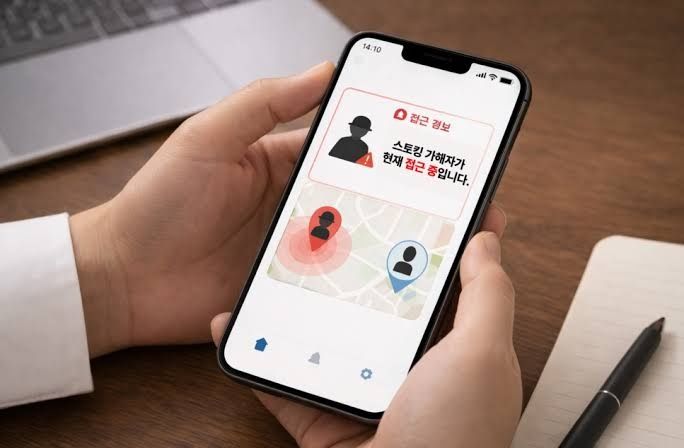
South Korea's government has taken a significant step in victim protection by launching a sophisticated mobile alert system on June 24, designed to furnish stalking victims with immediate access to the whereabouts of suspects fitted with electronic ankle monitors. The application, operated through the Ministry of Justice, represents a recognition that traditional safeguarding mechanisms have fallen short in an environment where digital technology has made harassment increasingly sophisticated and difficult to police.
The newly deployed system functions by transmitting live location data and directional information about monitored suspects to authorised victims through their smartphones. This real-time visibility represents a fundamental shift in how South Korean authorities approach the challenge of stalking—moving from reactive intervention after incidents occur to proactive notification that grants potential targets situational awareness. The technology aims to empower vulnerable individuals with the intelligence needed to avoid dangerous encounters and make informed decisions about their movements and safety protocols.
The impetus behind this technological innovation stems from mounting evidence that existing protections have proven inadequate. Since 2024, South Korea has expanded its electronic monitoring programme to encompass certain high-risk stalking cases following court orders, building upon an earlier system that equipped victims with smartwatch-style emergency alert devices. Yet these measures, though well-intentioned, have not prevented tragedy at the scale many feared necessary to prompt action. According to Representative Lee Gwang-hee of the ruling Democratic Party of Korea, between 2021 and August 2025, twenty-three individuals were killed or became targets of attempted murder despite holding emergency alert devices, illustrating the limitations of passive notification systems alone.
This stark reality—that conventional alert mechanisms failed to prevent nearly two dozen deaths—exposed critical gaps in South Korea's stalking victim protection infrastructure. The government acknowledged that providing victims with the capability to see where suspects are located in real time offers a qualitatively different form of protection compared to merely alerting authorities after a threat is activated. The psychological dimension is equally significant: victims who can monitor their stalkers' positions regain a measure of agency and control, reducing the psychological toll that accompanies helplessness in the face of sustained harassment.
Addressing the legitimate tension between victim safety and suspect privacy rights, the Justice Ministry implemented revised regulations governing electronic monitoring protocols in December 2025. These adjustments sought to navigate the delicate balance between granting victims access to location information necessary for self-protection while establishing appropriate safeguards against the misuse of such sensitive personal data. The regulatory framework reflects international best practices in victim-centred justice, where protection measures are calibrated to address genuine threats without permitting blanket surveillance.
The initiative carries particular relevance for Southeast Asian nations grappling with similar challenges. As stalking and harassment increasingly migrate to digital platforms and become increasingly difficult for law enforcement to manage, countries across the region face comparable questions about how to empower vulnerable populations without compromising fundamental privacy principles. South Korea's technological approach and regulatory framework may offer valuable lessons for jurisdictions developing their own victim protection strategies, particularly given the region's rapid digitisation and evolving definitions of harassment.
Beyond the immediate application launch, South Korea has signalled further institutional reforms designed to enhance victim autonomy in legal proceedings. The Justice Ministry has announced plans to introduce a system in April 2027 that would permit stalking victims to directly petition courts for restraining orders without requiring law enforcement agencies to file applications on their behalf. This procedural change represents a significant departure from traditional models where the state controlled access to judicial remedies, instead vesting authority directly with victims to initiate protective legal action.
This forthcoming reform addresses another vulnerability in existing systems: the dependency on police cooperation and prosecutorial discretion. In many jurisdictions, victims have discovered that law enforcement agencies prioritise resources elsewhere or approach certain cases with insufficient urgency. By permitting direct judicial petitioning, South Korea seeks to eliminate intermediaries and reduce delays that could prove fatal. Victims would gain the ability to present their circumstances directly to judges, who could then issue court orders restricting suspects' proximity, contact, and monitoring activities.
The comprehensive nature of South Korea's approach—combining real-time technological monitoring, regulatory privacy safeguards, and expanded judicial access—suggests a government attempting to construct a multilayered protection system addressing distinct failure points in victim security. Rather than relying solely on technology or law enforcement, the strategy distributes responsibility across technological platforms, regulatory oversight, and judicial authority, creating redundancy that makes system failure less likely.
For Malaysian observers, these developments raise pertinent questions about local stalking victim protections and whether similar technological and procedural innovations might enhance safety in the Malaysian context. As digital stalking and harassment increasingly cross borders and adopt sophisticated methods, regional governments face mounting pressure to modernise victim protection frameworks. South Korea's experience suggests that solutions require coordination between technology developers, justice ministries, privacy regulators, and courts rather than isolated initiatives by individual agencies.
The success of South Korea's system will ultimately depend on implementation quality and victim awareness about the application's availability. Technology alone cannot guarantee safety; victims must know the system exists, understand how to utilise it effectively, and trust that the data protection measures adequately safeguard their privacy. Additionally, the upcoming judicial reform in 2027 will require substantial training of judges and court personnel to manage an anticipated influx of direct petitions from victims previously unable to access the system independently.

