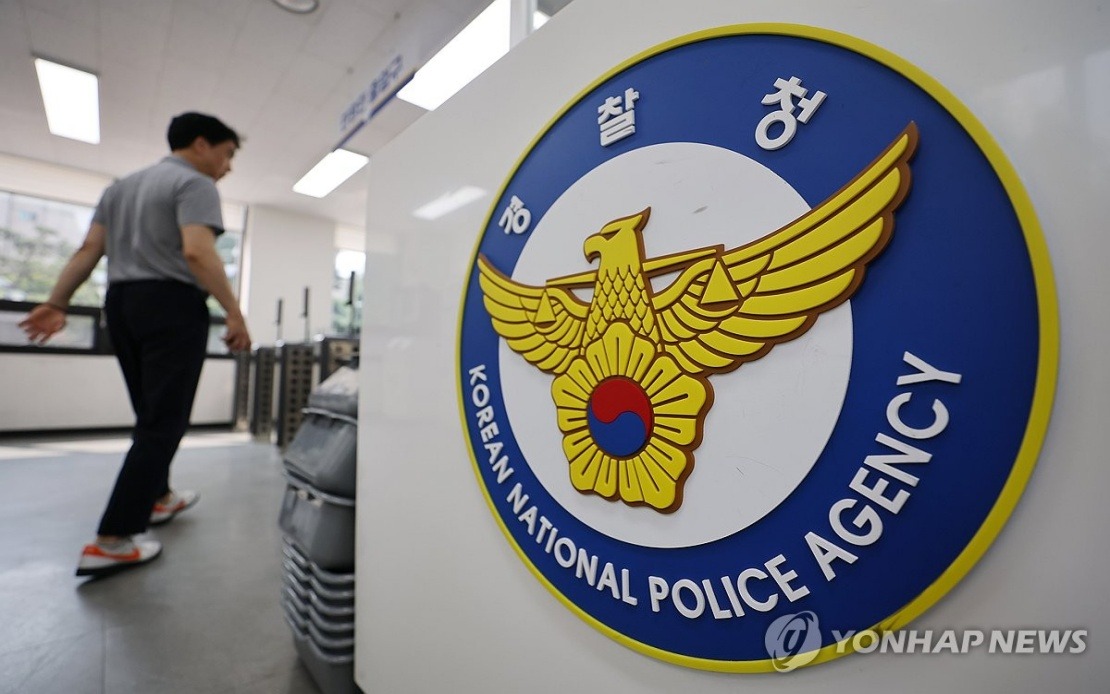
South Korea's Korean National Police Agency announced this week that it will initiate a comprehensive enforcement campaign targeting organized crime and cross-border criminal activities beginning Monday and extending through the end of October. The operation represents a significant escalation in the country's law enforcement response to what officials describe as a concerning surge in criminal activity, particularly among younger perpetrators who have increasingly turned toward financial crimes as their primary revenue source.
The scope of the operation reflects a strategic pivot in how South Korean authorities approach organized crime. Rather than focusing exclusively on traditional gang violence and territorial disputes, the police agency will concentrate resources on financial crimes including coordinated fraud schemes, unlicensed lending operations, underground gambling platforms, and sophisticated money laundering networks. This reorientation acknowledges a fundamental shift in how criminal enterprises operate in the digital age, where transactions occur across networks and jurisdictions rather than in physical locations that traditional policing can easily monitor.
One particularly notable aspect of the initiative involves targeting criminals who deliberately publicize their illegally obtained wealth through social media and online platforms. South Korean authorities have identified a troubling pattern where gang members flaunt expensive purchases, luxury travel, and designer goods online—behavior that police argue amplifies public anxiety and serves as a recruitment tool for younger individuals drawn to the apparent lifestyle. The crackdown includes plans to seize and freeze criminal assets, thereby cutting off the financial lifeblood that sustains these organizations and finances their continued operations.
The international dimension of the enforcement campaign underscores how organized crime in South Korea has evolved beyond domestic parameters. The police agency intends to intensify scrutiny of drug trafficking networks, with particular emphasis on synthetic substances like ketamine that pose public health challenges. Additionally, the operation will target organized criminal enterprises involving foreign nationals, requiring enhanced intelligence gathering within immigrant communities, their workplaces, and entertainment districts where international individuals congregate. This cross-border focus reflects the reality that modern criminal networks exploit international mobility and jurisdictional gaps.
The timing of this announcement follows alarming statistics released from the first half of 2024. Between mid-March and the end of June, police apprehended 1,185 gang members and made 225 arrests—figures representing respective increases of 9.7 percent and 48.3 percent compared to the previous equivalent period. These numbers demonstrate that organized crime in South Korea is not merely persistent but actively expanding, suggesting that previous enforcement efforts have failed to achieve sufficient deterrence or disruption.
Data regarding the demographics of arrested suspects reveals the demographic transformation of South Korea's criminal underworld. Individuals aged 30 and younger comprised 63.6 percent of all apprehended suspects during the March-to-June period, indicating a significant youth skew in criminal activity. Among this younger cohort, fraud-related offences accounted for 42.7 percent of charges, substantially exceeding other categories. This statistical portrait suggests that young South Koreans are increasingly gravitating toward financial crimes rather than traditional gang activities, possibly reflecting both the reduced barriers to entry for cybercrime and the potentially greater profitability of coordinated fraud schemes.
The surge in foreign national involvement in South Korean crime warrants particular attention for the region. Police recorded 18,130 foreign nationals booked in the first half of this year, representing a 9.1 percent increase from the corresponding period in 2023. This escalation indicates that South Korea is experiencing immigration-related crime pressures similar to those confronting other developed Asian economies. Simultaneously, drug-related offences surged 29 percent, suggesting that trafficking networks have successfully expanded their distribution operations within the country, possibly exploiting porous enforcement in certain sectors or utilizing South Korea's sophisticated transportation infrastructure to move contraband efficiently.
For Malaysia and other Southeast Asian nations, South Korea's enforcement response carries instructive implications. The strategic emphasis on financial crimes and money laundering reflects a recognition that modern organized crime generates its greatest social harm and profitability through sophisticated financial instruments rather than traditional protection rackets or smuggling operations. As ASEAN member states grapple with similar organized crime challenges—particularly the proliferation of online gambling platforms, cryptocurrency-based money laundering, and transnational fraud networks—the South Korean model of combining asset freezing with enhanced intelligence gathering offers a potentially applicable blueprint.
The police agency's statement emphasizing cooperation with relevant authorities signals recognition that combating modern organized crime requires integrated approaches spanning multiple government agencies and, potentially, international partners. In the Southeast Asian context, where criminal networks routinely exploit regulatory gaps between countries, such interagency coordination becomes essential. The South Korean focus on intelligence gathering within foreign communities also reflects a sophisticated understanding that modern organized crime often exploits language barriers and cultural insularity to shield operations from law enforcement detection.
The enforcement campaign's emphasis on disrupting the public-facing aspects of gang activity—particularly the social media promotion of illicit wealth—represents a departure from traditional law enforcement that focused primarily on specific criminal acts. This approach acknowledges that criminal organizations function as aspirational brands attracting younger recruits through lifestyle messaging. By targeting the visibility and glamorization of criminal proceeds, authorities aim to eliminate the psychological appeal that draws youth into organized crime, potentially achieving deterrence through reputation damage rather than incapacitation alone.
The October 31 endpoint for this operation suggests that South Korean authorities are treating this as an intensive but time-bounded intervention rather than a permanent reallocation of police resources. This timeframe likely reflects both practical constraints on sustained high-intensity operations and political calculations regarding resource deployment. However, the scope and duration of this three-month campaign signal seriousness about the organized crime problem, with the police agency committing substantial personnel and investigative capacity to the initiative.
Looking forward, the success of this operation will likely shape South Korea's broader law enforcement strategy throughout the coming year. If the campaign achieves measurable reductions in organized crime indicators—particularly among the youth demographic—it may prompt other Asian democracies to adopt similar enforcement models. Conversely, if the campaign proves ineffective at achieving sustainable crime reduction, it could prompt recognition that enforcement-only approaches inadequately address the underlying socioeconomic factors that attract young people to criminal enterprises, potentially catalyzing demand for complementary preventive interventions targeting at-risk youth populations.

