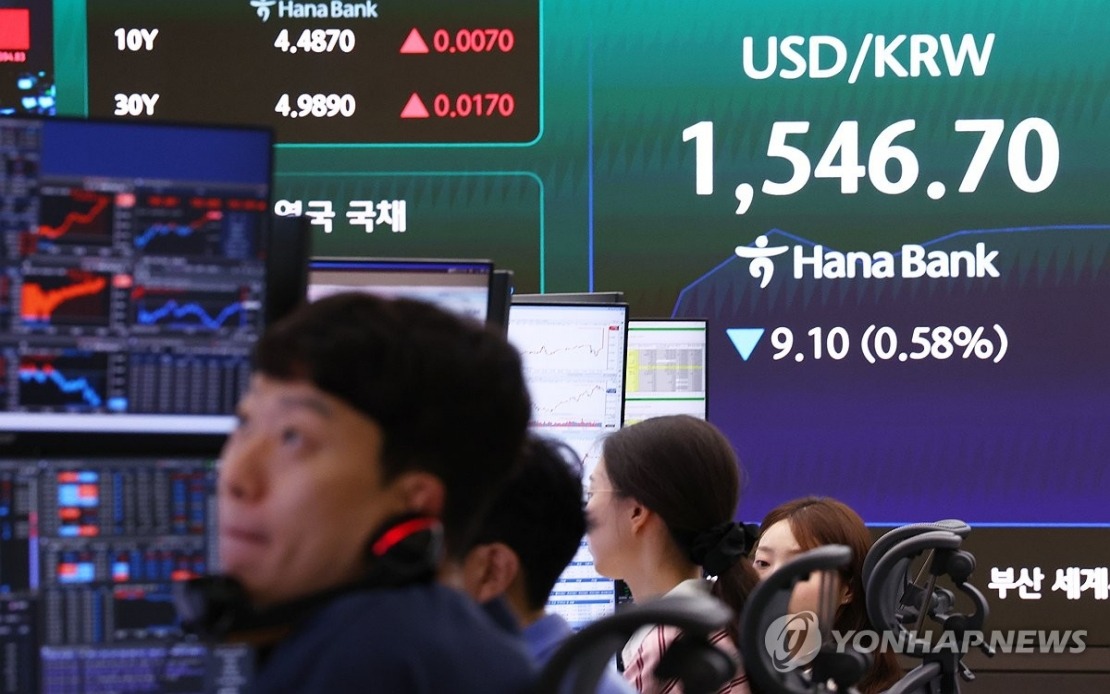
South Korea has taken a significant step in liberalising its financial markets by formally launching 24-hour foreign exchange trading, marking an ambitious push by Asia's fourth-largest economy to position itself as a more accessible destination for global capital. The trading system, which commenced operation this week, runs continuously from 6am Monday through 6am Saturday, closing only on weekends and the first day of each year—a schedule designed to accommodate traders across multiple time zones and trading sessions worldwide.
Finance Minister Koo Yun-cheol underscored the strategic importance of this development during a visit to the dealing room of Hana Bank in central Seoul. The minister framed the initiative not merely as a technical market enhancement but as a reflection of South Korea's underlying economic confidence, pointing to the nation's robust external financial position and its distinction of maintaining record-breaking current account surpluses. This framing reveals how Seoul views currency market liberalisation as integral to its broader economic narrative and competitive positioning in the global financial landscape.
The round-the-clock trading arrangement represents a significant expansion from the previous system introduced just one year ago in July 2024, when authorities extended trading hours from the traditional 9am to 3.30pm timeframe to a more expansive 9am to 2am schedule. The acceleration from that intermediate step to full 24-hour operations demonstrates the government's determination to rapidly modernise its foreign exchange infrastructure and signals confidence that market safeguards are sufficiently robust to handle continuous trading without systemic risk.
Underlying this policy shift is a clear acknowledgment that foreign investors have increasingly demanded better access to Korean won trading outside traditional Asian business hours. Minister Koo explicitly referenced South Korea's recent inclusion in the World Government Bond Index as evidence that international demand for Korean financial assets has reached a critical threshold. This benchmark inclusion is no minor achievement—it signals to global asset managers and institutional investors that Korean bonds now meet international standards for liquidity, transparency, and accessibility, thereby opening the floodgates for substantial new foreign capital inflows.
For Malaysian and Southeast Asian investors, this development carries particular relevance. As regional financial markets increasingly integrate with global trading networks, South Korea's move to operate around the clock creates new opportunities for cross-border won transactions and hedging strategies. Malaysian exporters, investment firms, and currency traders can now execute Korean won positions at virtually any time, eliminating the timing constraints that previously required settling positions during Seoul's business hours or accepting overnight risk exposure.
The practical implications extend beyond mere convenience. Continuous 24-hour trading typically narrows bid-ask spreads—the gap between buying and selling prices—because liquidity pools remain deeper throughout the day rather than concentrating during specific windows. This compression benefits all market participants through reduced transaction costs, making Korean won trading more competitive against other Asian currencies and potentially encouraging greater use of the won in regional trade settlement and invoicing.
Bank of Korea Deputy Governor Min Soo Kwon indicated that the central bank will adopt a careful monitoring posture toward this new market structure, watching for any unintended consequences or systemic vulnerabilities that might emerge from operating without traditional trading breaks. The central bank's cautious approach reflects the reality that 24-hour markets introduce novel challenges: around-the-clock trading removes the daily circuit-breaker effect of market closures, potentially amplifying volatility transmission across time zones if unexpected shocks occur while other markets are closed.
The expansion also carries strategic implications for Korean financial institutions, which have long sought to increase the international footprint of their trading operations. By enabling continuous trading in the won, domestic banks gain competitive advantage in servicing global clients and can establish Seoul as a genuine 24-hour financial hub—a status previously monopolised by London, New York, Tokyo, and Singapore. This positioning could eventually allow Korean financial firms to serve as intermediaries for Asian trading flows even during hours when regional exchanges are closed.
For the broader Southeast Asian context, South Korea's move reflects a region-wide trend toward financial market liberalisation and integration. Countries from Thailand to Indonesia have implemented their own incremental reforms to expand trading hours and improve market accessibility. South Korea's full 24-hour system serves as a test case that policymakers across the region will watch carefully, particularly regarding whether such extended trading improves market efficiency and attracts foreign capital without generating unmanageable volatility.
The government explicitly expects this infrastructure upgrade to catalyse greater internationalisation of the Korean won, transforming it from a primarily domestic and regional currency into a genuinely global medium of exchange and store of value. Wider won usage in international trade settlement and capital flows would reduce transaction costs for Korean enterprises operating overseas and strengthen the nation's financial soft power in regional economic architecture.
Looking forward, the success of this initiative depends critically on how foreign investors respond to the improved access. Merely extending trading hours without attracting actual trading volume would represent a hollow victory. Early adoption patterns among Malaysian institutional investors, Singapore-based hedge funds, and Hong Kong traders will signal whether Seoul's efforts are translating improved market structure into genuine competitive advantage against competing financial hubs.
The timing of this launch also merits consideration within South Korea's broader economic strategy. With global monetary conditions remaining uncertain and geopolitical tensions affecting capital flows, expanding the appeal of Korean financial assets through better market mechanics provides a counterweight to any headwinds in the macroeconomic environment. By removing friction from foreign investor participation, Seoul is effectively placing a bet that the structural attractiveness of its financial markets will outweigh cyclical economic fluctuations.

