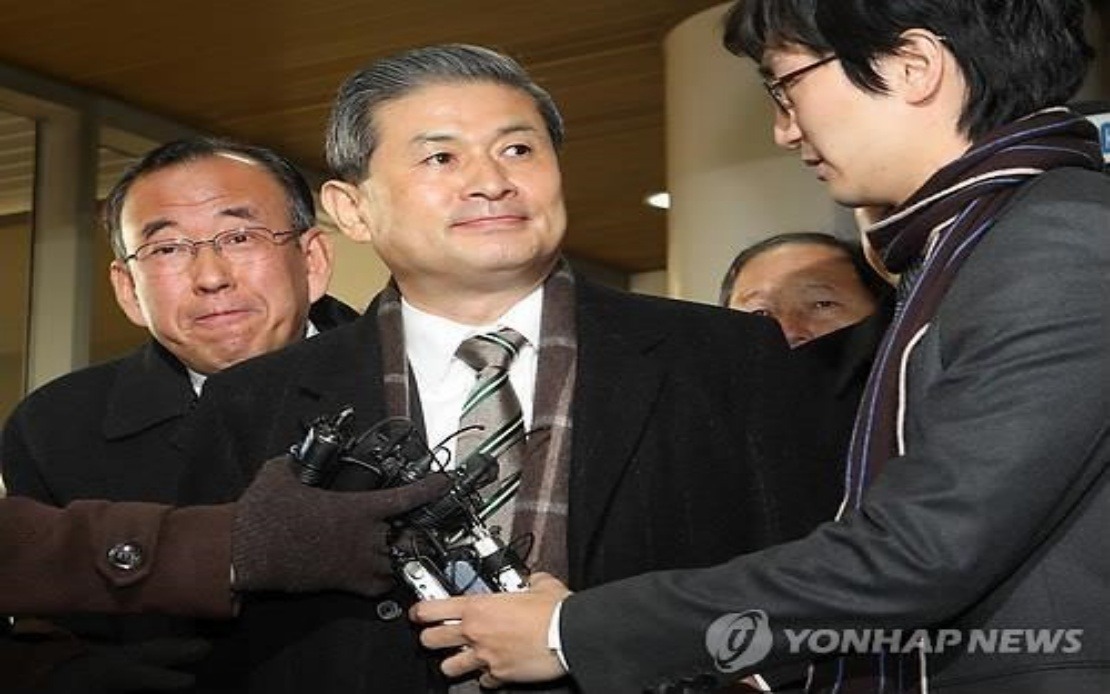
South Korea has taken the step of formally revoking its most prestigious science and technology honour from Hwang Woo-suk, the once-celebrated stem cell researcher whose career collapsed amid one of the scientific world's most notorious fraud scandals. The interior ministry confirmed the revocation on Wednesday, nearly two decades after the 2004 bestowal of the Top Science and Technology Award and marking the culmination of a drawn-out legal process to strip him of the distinction.
The pathway to this decision involved multiple governmental bodies and considerable procedural complexity. In March, the science ministry requested that the interior ministry commence revocation procedures, citing the fabricated nature of Hwang's research. By Tuesday of this week, the interior ministry had sought and obtained presidential approval for the action, finalising what had become an unusually protracted administrative undertaking for such a straightforward matter of scientific misconduct.
Hwang's original recognition came when he received the award along with a monetary prize valued at 300 million won, equivalent to approximately US$201,200 at the time. The accolade was presented in recognition of his purported breakthroughs in human embryonic stem cell research, work that initially generated tremendous pride and international prestige for South Korea's scientific establishment. At that moment, his research appeared to represent a watershed achievement for Asian science.
The revelation of his deception came swiftly after the award ceremony. In 2005, just a year following his public triumph, investigations exposed that Hwang had relied on forged data to substantiate his central claim: that he had successfully created the world's first cloned human embryo. The discovery sent shockwaves through the global scientific community and triggered a comprehensive reassessment of his published findings. His fabrications extended beyond a single error of judgment, representing a systematic misrepresentation of experimental results that betrayed fundamental scientific ethics.
The consequences for Hwang's academic career proved swift and absolute. Seoul National University terminated his appointment in 2006, effectively ending his standing within mainstream scientific institutions. He transitioned from celebrated innovator to cautionary tale, his name becoming synonymous with the dangers of scientific fraud and the importance of rigorous peer review and verification mechanisms.
What complicates this narrative considerably is the government's prior attempt to revoke the award in 2020. That initial revocation process, despite appearing to achieve its objective, ultimately failed to withstand judicial scrutiny. A court determined that the government had executed the revocation improperly, identifying procedural deficiencies that rendered the action technically invalid. This judicial intervention required the government to restart the entire formal process, explaining why South Korea is only now completing what should have been accomplished years earlier.
The Top Science and Technology Award carries particular significance within South Korea's governance structure, functioning as a presidential honour reserved for scientists and technologists whose contributions have materially advanced the nation's scientific and technological capabilities. The award represents not merely academic recognition but an official declaration of national pride and acknowledgment of exceptional service to the state. This elevated status makes the revocation especially meaningful—it constitutes an official repudiation of Hwang's contributions to national scientific standing.
For Southeast Asian observers, the Hwang case offers instructive lessons about the vulnerabilities inherent in rapidly advancing scientific establishments, particularly in nations racing to achieve international prominence. South Korea's ambitious pursuit of biotechnology leadership in the early 2000s created an environment where extraordinary claims received enthusiastic endorsement and substantial public funding. The subsequent collapse of those claims demonstrated that institutional checks and international collaboration remain essential safeguards, regardless of a nation's technological sophistication.
The protracted nature of the revocation process—spanning from 2020 until 2024—illuminates how even straightforward matters of scientific dishonesty can become entangled in administrative and legal procedures. The requirement for presidential approval and the vulnerability of government actions to court challenge on procedural grounds suggests that reforming scientific governance mechanisms remains an ongoing challenge. For Malaysia and other regional research institutions, the episode underscores the importance of establishing clear, defensible protocols for addressing scientific misconduct before crises occur.
Moreover, the case reflects broader questions about accountability and redemption in scientific careers. Hwang remains alive and the formal revocation does not necessarily prevent him from engaging in scientific work of any kind, raising philosophical questions about how societies should treat individuals who have committed serious professional fraud. Whether redemption through subsequent honest work should be possible, or whether certain betrayals of scientific trust warrant permanent professional exile, remains contested.
The revocation closes a chapter that extended far longer than it should have, vindicating those who argued that formal recognition of Hwang's fraudulent work needed to be erased from official records. It also demonstrates South Korea's commitment to addressing the consequences of scientific misconduct, however belatedly. As the Asia-Pacific region continues expanding its research footprint globally, the lessons from this high-profile failure serve as important reminders that scientific integrity cannot be compromised in pursuit of competitive advantage or national prestige.

