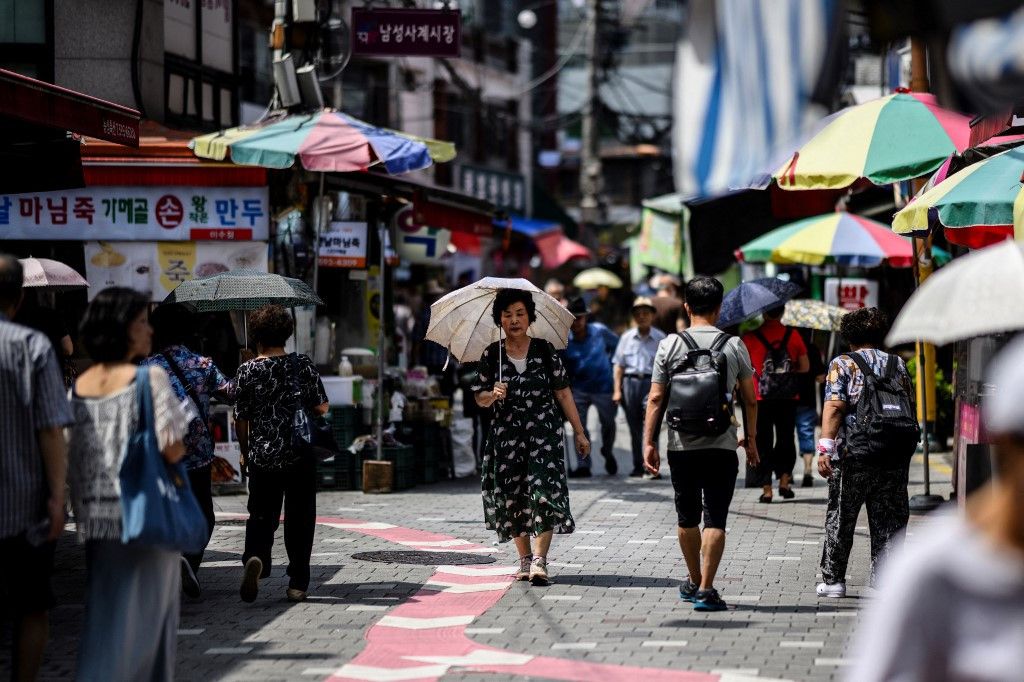
South Korea is experiencing an extraordinary and unprecedented heatwave that has resulted in the nation breaking its all-time temperature record. On Friday, the southeastern city of Yangsan recorded 41.4 degrees Celsius at 1:40 p.m., marking the highest temperature ever documented since the Korea Meteorological Administration (KMA) began systematic weather observations using the ASOS observing system in 1973. This remarkable spike obliterated the previous national benchmark of 41.0 degrees Celsius, which had stood since August 2018 when it was recorded in Hongcheon.
The intensity of the current heatwave is underscored by the fact that Yangsan has now experienced three consecutive days with temperatures exceeding 40 degrees Celsius. This persistence of extreme heat, rather than isolated spikes, suggests a deeply entrenched weather pattern that has settled over the Korean Peninsula with remarkable stubbornness. The KMA has responded by issuing its most severe heat warning classification for parts of South Gyeongsang Province, encompassing Yangsan and surrounding areas, while simultaneously maintaining heatwave advisories and warnings across the vast majority of South Korea's territory. The geographic breadth of these warnings reflects how extensively this weather system has affected the nation's population centres and agricultural regions.
The meteorological explanation for this extraordinary heat reveals the complex interplay of atmospheric pressure systems that have effectively created a heat dome over the peninsula. The simultaneous presence of two major high-pressure systems—the North Pacific High and the Tibetan High—has combined to blanket the Korean Peninsula like an impermeable lid. This atmospheric configuration traps warm air masses over the region, preventing the formation of clouds that would normally provide some relief by blocking incoming solar radiation. With cloud cover severely limited, the sun's energy continuously accumulates in the lower atmosphere, creating the extreme temperatures now being measured. This particular combination of pressure systems is relatively uncommon, which explains why temperatures have climbed to levels rarely, if ever, recorded in modern Korean meteorological history.
For Malaysian and Southeast Asian readers, this extreme weather event carries significant implications and serves as a cautionary narrative about climate patterns that could increasingly affect the broader Asian region. South Korea's experience demonstrates how rapidly and dramatically weather patterns can intensify, and how established temperature records can be shattered. The region shares certain climatic vulnerabilities with Southeast Asia, particularly concerning the increasing frequency and intensity of heat events. While tropical countries like Malaysia are accustomed to high ambient temperatures, the particular danger lies in sustained heatwaves where temperatures remain consistently elevated, overwhelming cooling systems and infrastructure designed for more moderate extremes.
The human and economic impact of such extreme heat extends far beyond the discomfort of high temperatures. Heatwaves of this magnitude strain electricity grids as demand for air conditioning peaks, can cause heat-related illnesses and fatalities particularly among vulnerable populations including the elderly and those with chronic health conditions, and threaten agricultural productivity during critical growing seasons. In South Korea's case, this comes during summer when crops require careful water management, and extreme heat accelerates water evaporation from soils and water bodies. The timing makes this particularly challenging for farmers already contending with irregular weather patterns.
Meteorology experts are also monitoring Typhoon Dolphin, which is currently tracking across the western Pacific Ocean. While its eventual path could potentially alter weather conditions affecting the Korean Peninsula in coming days, forecasters remain uncertain about whether it might provide relief to the region or further complicate the situation. Typhoons can sometimes disrupt established pressure systems and bring cooler, moisture-laden air, but their impacts are inherently unpredictable until their tracks become more definitively established. For now, the focus remains on the immediate crisis posed by the entrenched heat dome.
The breaking of the 2018 record is particularly significant because that previous mark had persisted for five years, suggesting that such extreme temperatures were genuinely rare events. The fact that it has now been surpassed indicates either a shift toward more frequent extreme heat events or a natural variability in which particularly intense pressure system configurations are becoming more common. Climate scientists have long projected that heat records would fall with increasing frequency as global temperatures rise, making South Korea's latest data point part of a broader global pattern of escalating temperature extremes.
The immediate response from South Korean authorities includes public health advisories urging people to limit outdoor activities during peak heating hours, stay hydrated, and check on vulnerable family members and neighbours. Infrastructure operators are likely managing peak electricity demand carefully to prevent blackouts, while healthcare facilities are preparing for potential surges in heat-related medical emergencies. Schools and workplaces may implement adjusted schedules to minimize exposure to the most intense midday heat.
For the broader Asian region, South Korea's experience serves as a reminder that no nation or climate zone is immune to the extremes that modern atmospheric conditions can produce. Southeast Asian countries, despite their tropical location and familiarity with heat, should consider whether their infrastructure, public health systems, and emergency response capabilities are adequately prepared for the potential intensification of heat events. The record-breaking temperatures in South Korea, while extreme by that nation's standards, highlight how rapidly established environmental baselines can be exceeded and suggest that contingency planning for increasingly severe weather scenarios remains essential across the region.

