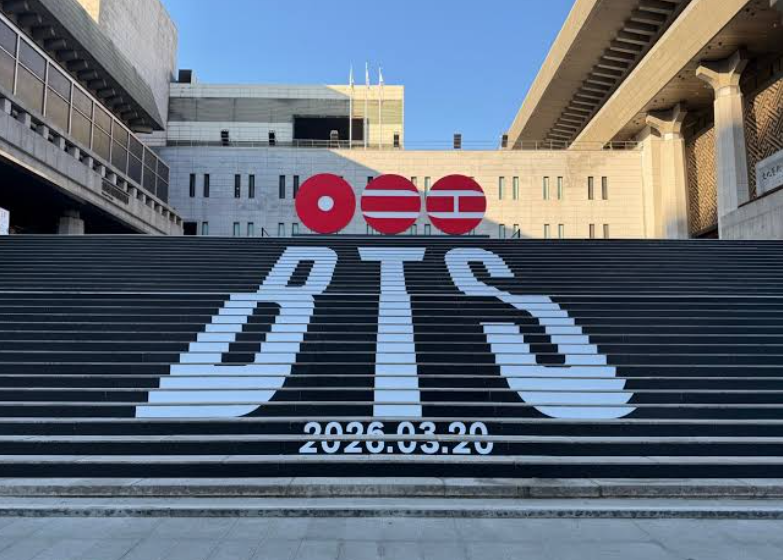
The Seoul Metropolitan Police Agency has escalated its crackdown on concert ticket fraud by referring a woman in her 30s to prosecutors on charges relating to an alleged three-year ticket scalping operation that netted her approximately 442 million won in illegal gains. Police allege the suspect deployed automated macro software to circumvent standard purchasing protections and systematically acquire thousands of tickets to K-pop performances, including nine highly coveted seats to BTS' Gwanghwamun concert, which drew exceptional demand when tickets went on sale in early 2026.
The investigation reveals how determined scalpers have weaponised readily available technology to defeat the safeguards that concert promoters and ticketing platforms introduce to ensure fair access for fans. By utilising macro programmes—software that automates repetitive computer tasks—the accused woman was able to complete online transactions at speeds impossible for human buyers. She further circumvented per-person purchase limits, which typically cap ticket acquisitions at one or two seats per account per show, by registering accounts under the names of relatives and acquaintances. This multi-layered approach allowed her to accumulate approximately 2,600 tickets across numerous K-pop events between April 2023 and March 2026.
The Seoul Metropolitan Police Agency detected the scheme on February 23 during the remarkably competitive ticket sales window for the BTS Gwanghwamun performance. Authorities, already monitoring the ticketing platform intensively due to extraordinary public interest in the show, intervened before the suspect could monetise her nine illegally obtained tickets. The timing of this detection proved crucial, preventing what would have been additional illicit profits. Investigators subsequently broadened their examination of the woman's activities and uncovered her systematic resale operation spanning nearly three years, during which she marketed tickets at significantly marked-up prices to fans desperate to attend sold-out performances.
The financial scale of ticket scalping has grown sufficiently problematic that South Korean law enforcement now treats it as a serious economic crime. Police have not only referred the Seoul case to prosecutors on multiple counts—including violations of the Information and Communications Network Act, obstruction of business, and breaches of the Public Performance Act—but have also pursued seizure and preservation orders against her assets. These legal manoeuvres prevent the suspect from disposing of or hiding the approximately 442 million won (roughly S$409,000) in alleged criminal proceeds before her case proceeds to trial. Such aggressive asset preservation indicates prosecutors view the case as particularly egregious.
The Seoul operation represents merely one dimension of South Korea's broader ticket scalping problem. Police simultaneously announced a separate enforcement action in Ulsan involving a man in his 30s who allegedly engineered a macro programme enabling the purchase of more than 1,700 K-pop concert tickets between November 2024 and October 2025. This suspect achieved even more dramatic markups, reselling tickets at prices ranging from three to thirteen times their face value—a far more aggressive pricing strategy than typical scalping operations. His illegal enterprise generated approximately 420 million won in profits before authorities intervened and referred him to prosecutors.
These two cases illustrate how macro software has fundamentally altered the dynamics of concert ticket distribution in South Korea, transforming what was once a relatively minor problem into a sophisticated criminal enterprise. The technology available to scalpers now rivals the systems deployed by legitimate ticketing platforms themselves. This arms race between promoters seeking to protect fair access and scalpers employing increasingly sophisticated automation has prompted South Korean lawmakers to intervene with substantially tougher legal consequences. The existing regulatory framework, which previously relied on conventional criminal penalties, proved insufficient deterrent.
The timing of these prosecutions carries particular significance because revised provisions of both the Public Performance Act and the National Sports Promotion Act take effect on August 28—just days after the police announcements. These legislative amendments represent a fundamental escalation in the state's response to ticket scalping. Rather than relying solely on imprisonment or conventional fines, authorities may now impose administrative penalties reaching fifty times the value of illegally resold tickets. This multiplication factor transforms even modest scalping operations into financially devastating penalties, creating meaningful disincentive for potential offenders calculating risk versus reward.
For Malaysian and Southeast Asian readers, these developments carry relevance beyond South Korea's borders. The K-pop industry represents a significant cultural and economic phenomenon across the region, with major concert tours regularly visiting cities like Kuala Lumpur, Singapore, and Bangkok. Scalpers operating in Southeast Asian ticket markets increasingly employ similar macro technologies and account multiplication strategies to those detected in Seoul. As South Korean authorities implement stricter enforcement, scalpers may redirect operations toward markets with less developed regulatory frameworks or enforcement capacity—potentially including Southeast Asian nations.
The legislative response emerging in South Korea suggests a regulatory template that Southeast Asian governments might eventually adopt as ticket scalping becomes increasingly mechanised and transnational. Malaysia and other regional nations currently lack comparably stringent penalties for concert ticket fraud. The fifty-times multiplier approach adopted in South Korea establishes an enforcement precedent that prioritises financial deterrence over incarceration, recognising that career scalpers often view prison time as a manageable occupational hazard whereas financial penalties threaten their business model fundamentally.
The broader implication involves the ongoing tension between technological innovation and regulatory adaptation. Concert promoters, ticketing platforms, and law enforcement agencies face constant pressure to develop countermeasures against increasingly sophisticated scalping tools. South Korea's approach—combining criminal prosecution with asset seizure, coupled with substantially enhanced civil penalties—represents a comprehensive strategy acknowledging that no single enforcement mechanism suffices. The detection of the Seoul operation during ticket sales for the BTS Gwanghwamun concert specifically demonstrates how strategic collaboration between police and ticketing platforms, particularly during high-demand sales windows, yields results.
Looking forward, the enforcement actions and legislative changes announced in South Korea suggest that governments increasingly recognise concert ticket distribution as a matter warranting policy attention. The convergence of technological sophistication, substantial financial incentives, and organised criminal networks has transformed ticket scalping from occasional fraud into systematic economic crimes. As K-pop's global reach continues expanding and concert tour revenue becomes ever more significant to the entertainment industry, governments across Asia will likely face mounting pressure to adopt comparable enforcement strategies. The question for Malaysia and other Southeast Asian nations involves whether they will wait for ticket scalping to reach South Korean levels of sophistication or proactively strengthen their regulatory and enforcement frameworks.

