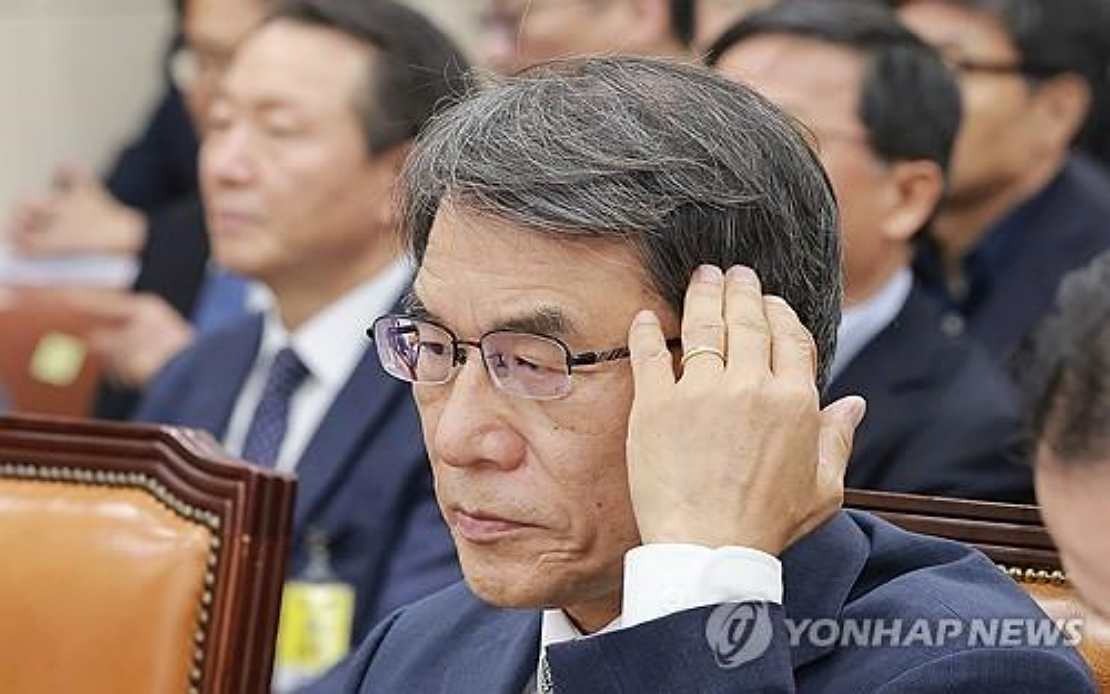
South Korean law enforcement agencies have intensified their investigation into the National Election Commission with a major raid on its Seoul headquarters, targeting former chief Roh Tae-ak and other unnamed officials suspected of financial impropriety. The coordinated police and prosecution team executed the search warrant in the morning hours, examining documents and materials from the election body's central office while avoiding Roh's private residence during this initial phase of the operation.
The inquiry centres on allegations that Roh exploited his position as NEC chief to fund international travel at public expense while deliberately concealing details from official records. During his tenure, Roh undertook three significant overseas delegations spanning Australia and New Zealand, parts of continental Europe including Germany and Estonia, and Scandinavia encompassing Denmark and Sweden. A critical irregularity emerged when investigators discovered that while his spouse participated in all three journeys, this crucial detail was systematically excluded from the publicly disclosed post-travel reports submitted by the commission to relevant authorities.
This deliberate omission represents a textbook case of occupational embezzlement, a serious criminal charge under South Korean law that addresses misuse of official position for personal or familial benefit. The decision to erase spousal participation from official documentation suggests a calculated effort to obscure the actual cost and nature of these missions, effectively misrepresenting public expenditures to oversight bodies and the general population. Such conduct undermines the fundamental principle of governmental transparency that democratic institutions depend upon.
Beyond the former chief's personal conduct, the probe has expanded dramatically to reveal what appears to be systemic abuse within the election commission's organisational culture. Investigators have uncovered evidence that 461 NEC employees collectively engaged in 107 overseas business trips spanning from 2022 through June of this year. The destinations chosen raise particular eyebrows: rather than travelling to locations typically associated with legitimate election administration work, many journeys led to resort destinations and holiday hotspots including the Maldives, Bangkok, Kota Kinabalu in Malaysian Borneo, and Florence in Italy.
The scale and nature of these travels suggest a normalised pattern of institutional misconduct rather than isolated incidents. When hundreds of employees are travelling to tourist destinations under the guise of official business, it indicates either grossly negligent oversight by senior management or deliberate institutional tolerance of financial impropriety. Either scenario reflects poorly on the commission's governance structure and raises serious questions about who approved these trips and what nominal justifications were provided to justify them.
The catalyst for this investigation originated when South Korea's main opposition People Power Party filed a formal complaint against Roh on June 19, alleging occupational embezzlement. This development underscores how political opposition pressure occasionally serves as the mechanism through which governmental accountability is triggered, a dynamic familiar to observers of democratic systems throughout the region. The complaint moved investigation agencies to initiate their formal probe, demonstrating that electoral fraud and misconduct cases often depend on vigilant political actors to publicise them.
Roh's tenure at the National Election Commission ended abruptly last month following considerable embarrassment during South Korea's June 3 local elections. Multiple polling stations in southern Seoul experienced ballot shortages that disrupted voting procedures and inconvenienced citizens attempting to participate in democratic processes. These voting irregularities sparked public criticism and media scrutiny that eventually contributed to Roh's resignation, though the embezzlement allegations would subsequently prove far more damaging to his reputation and legal standing than the administrative failures that initially prompted his departure.
For Southeast Asian observers, particularly those in Malaysia where electoral administration remains a sensitive political matter, the South Korean case offers instructive lessons about institutional vulnerability. Electoral commissions operate at the intersection of technical administration and political sensitivity, making them attractive targets for abuse by officials seeking to exploit their position for personal gain. The systematic nature of the overseas travel misconduct suggests that absent robust internal controls, audit procedures, and genuine accountability mechanisms, even ostensibly independent institutions can become vehicles for widespread financial misconduct.
The investigation also illuminates how democratic systems achieve self-correction through investigative journalism, opposition party vigilance, and independent prosecutorial authority. The fact that law enforcement agencies moved swiftly to raid the NEC headquarters and expand their inquiry beyond the former chief demonstrates that institutional safeguards, however imperfect, can mobilise when misconduct becomes public knowledge. This contrasts sharply with scenarios in some neighbouring jurisdictions where comparable allegations might be suppressed or deflected through political interference.
Looking ahead, the investigation's trajectory will likely reveal whether systemic corruption at the NEC reflected isolated bad actors or deeper institutional failures. If the evidence demonstrates that senior officials knowingly permitted or participated in these practices, it could necessitate comprehensive organisational reform and potentially criminal prosecutions extending well beyond Roh himself. The court proceedings that follow this investigation will also establish important jurisprudence regarding standards of accountability for electoral officials, with implications extending throughout the region's democracies.

