South Korean police have brought in an executive from Shinsegae Group, the operator of Starbucks Korea, for questioning as their investigation into a catastrophically mishandled promotional campaign picks up momentum. Yang Jong-hwan, who heads the group's audit team, was interviewed by the Seoul Metropolitan Police Agency on Wednesday, according to statements issued by the company on Thursday. The interrogation marks an escalation in what has become one of South Korea's most sensitive corporate missteps in recent memory, touching directly on a darkly significant chapter of the nation's recent history.
Starbucks Korea, which operates approximately 2,100 outlets throughout the country under a franchise arrangement with Shinsegae Group, triggered widespread public anger last month by launching what it termed a "Tank Day" promotion centred on reusable drinking vessels. The campaign was set for May 18, a date that carries profound symbolic weight in South Korea as it marks the anniversary of the Gwangju uprising—a devastating crackdown on pro-democracy demonstrators in 1980 that left at least 165 people dead according to official records, though historians and witnesses generally accept that the true death toll was substantially higher. The collision between a cheerful consumer promotion and a tragedy that remains a touchstone of national trauma created an immediate and fierce backlash across the country.
The corporate response came swiftly but proved insufficient to contain the damage. Shinsegae Group terminated its Korea chief executive on the very day the scandal became public, signalling the gravity with which senior management viewed the blunder. The group's chairman, Chung Yong-jin, subsequently made a formal public apology, bowing during media appearances in an effort to demonstrate sincerity and contrition. These gestures, standard elements of South Korean corporate crisis management, ordinarily might have allowed the matter to fade. However, the incident had touched a nerve that transcended normal consumer complaints or marketing failures.
A civic advocacy organisation proceeded to lodge a formal complaint against Chung and other senior figures, alleging violations of a 2016 law designed to protect the historical record of the 1980 crackdown and prevent the spread of disinformation about that period. The statute carries significant weight in South Korean jurisprudence, reflecting the nation's determination to preserve accurate collective memory of its authoritarian past. The complaint also includes charges of defamation and personal insult, suggesting that the group's actions were viewed not merely as poor judgment but as potentially disrespectful to those affected by the Gwangju uprising. This legal escalation transformed what might have been a public relations disaster into a matter of potential criminal liability for company executives.
The investigation has prompted both symbolic and substantive remediation efforts. Starbucks outlets throughout South Korea will close their doors for half a day on Monday to permit staff members to attend an educational session focused on the historical context and human toll of the 1980 crackdown. Two days later, Chung and other members of the senior leadership team will participate in a similar educational programme. These sessions represent an attempt to embed historical awareness into the corporate culture and demonstrate that the company takes seriously its obligation to understand and respect pivotal moments in South Korean history. For a global brand operating in a market where historical consciousness remains acute, the reputational imperative to engage with national memory is unavoidable.
Shinsegae's own internal investigation yielded findings that painted a picture of institutional carelessness across multiple levels of decision-making. The company identified a succession of negligent actions in the lead-up to the promotion, notably that officials had approved the design and marketing materials without actually reviewing the underlying files and documentation. This breakdown in basic oversight procedures—wherein approvals were given based on incomplete information or trust in subordinates without proper verification—suggested systemic failures in quality control and historical sensitivity training. The revelation that multiple layers of management had failed to catch such an obvious and consequential error raised questions about corporate culture and whether global brands operating in South Korea possessed adequate mechanisms to flag culturally sensitive dates and their significance.
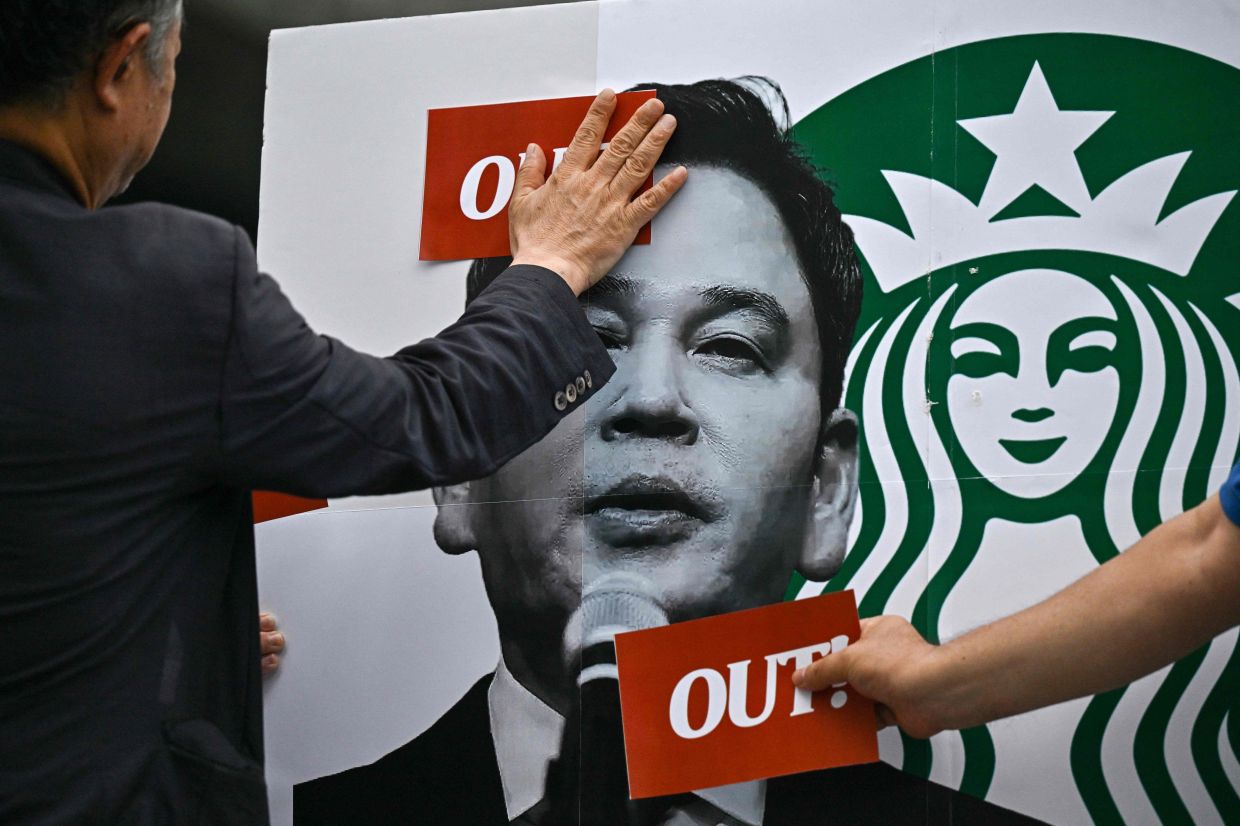
The commercial fallout from the scandal has been substantial. Starbucks Korea reported a sharp decline in sales during the initial period following the public disclosure of the controversy. This financial impact, while manageable for a multinational corporation, underscores how deeply the misstep resonated with consumers. The controversy sparked organised protests in both Seoul and Gwangju, the city where the uprising occurred, demonstrating that the issue transcended online outrage to mobilise physical demonstrations. For Starbucks, South Korea represents the company's third-largest market globally after the United States and China, making any erosion of brand equity in the region a matter of significant strategic concern.
The incident has drawn attention from the highest levels of South Korean political leadership. President Lee Jae-myung issued a public statement condemning the promotion as "inhumane and disgraceful conduct", reflecting how the controversy had become not merely a consumer or corporate matter but one touching on national values and dignity. This political dimension adds further pressure on Shinsegae to demonstrate both accountability and a commitment to understanding why such a lapse occurred. For international companies operating in South Korea, the episode serves as a pointed reminder that historical sensitivity and awareness of national commemorative dates cannot be treated as optional or secondary to marketing objectives.
The police investigation's focus on Yang Jong-hwan and potentially other executives represents an attempt to establish whether the violation was merely negligent or whether it involved conscious disregard for the law and historical significance. The company has expressed hope that the facts would emerge "swiftly and transparently" and has pledged full cooperation with investigators. However, the very fact that such an investigation is necessary suggests that Starbucks Korea and its parent company face a prolonged period of regulatory and public scrutiny. For other multinational corporations operating in South Korea and across East Asia more broadly, the case illustrates the necessity of integrating historical awareness and sensitivity into corporate governance structures, particularly for companies whose marketing campaigns operate across markets with distinct historical consciousnesses and commemorative traditions.