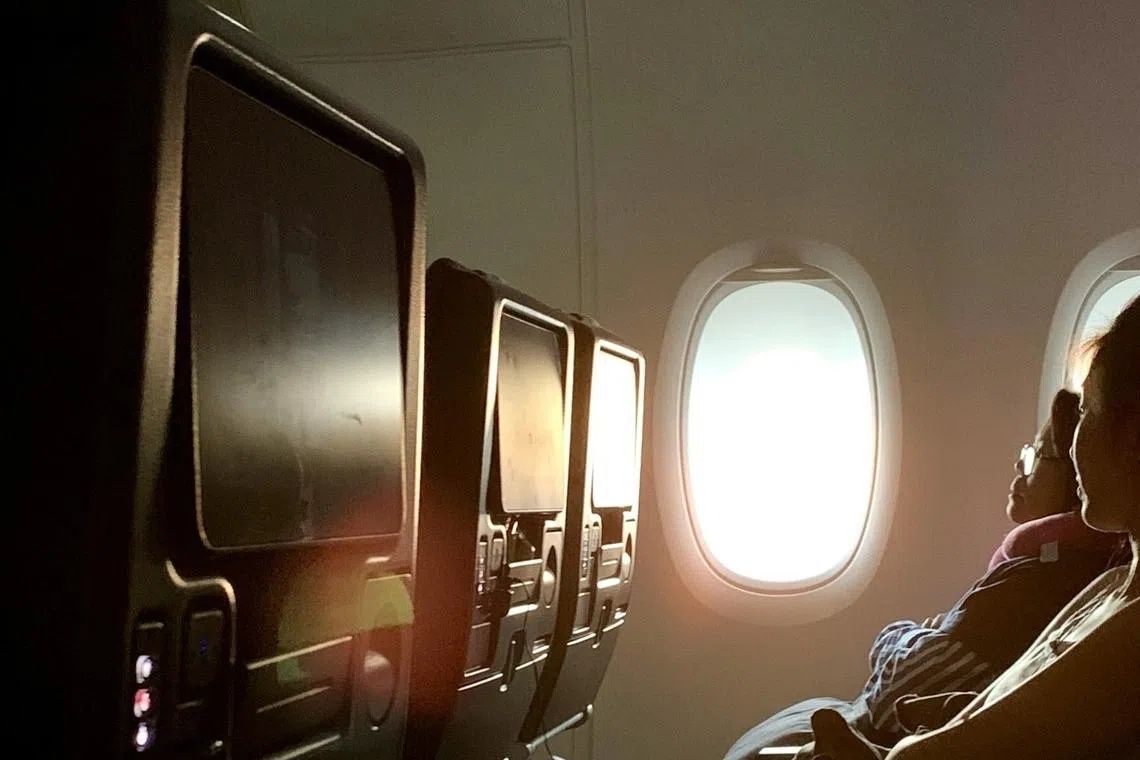
A middle school student in South Korea has escalated concerns about children's exposure to inappropriate in-flight entertainment by filing a formal government petition, highlighting a gap in content regulation aboard commercial aircraft. The petitioner, submitting their case through the Petition 24 platform managed by the Ministry of the Interior and Safety, detailed how they inadvertently encountered violent and sexually explicit material on a flight, describing an inability to avoid the content despite their efforts to refrain from watching. The incident underscores broader questions about duty of care in confined environments where passengers, particularly young travellers, have limited ability to control their visual exposure.
The complaint carries particular weight because the petitioner's younger sister, a fourth-grade elementary school student, was also exposed to the same objectionable scenes during the same flight. This multi-generational exposure illustrates how a single in-flight entertainment system can affect multiple minors simultaneously, complicating parental oversight. The sibling's involvement in the incident appears to have motivated the formal petition, suggesting that guardians felt the situation warranted escalation to government authorities rather than relying solely on airline customer service channels.
The teenager's proposed solution focuses on technological intervention, specifically requesting mandatory installation of privacy screens on individual seat-back monitors. This approach would function similarly to privacy filters used in workplace settings or public transportation, allowing passengers in adjacent seats to view content without it being visible to others. The proposal reflects practical thinking about how in-flight cabin architecture constrains passenger autonomy, particularly for families and minors who cannot simply look away or move seats in a pressurised aircraft environment.
South Korea's legislative framework provides a foundation for the petitioner's complaint. Both the Child Welfare Act and the Youth Protection Act explicitly mandate protection of minors from harmful content, establishing a legal baseline for content standards across various media platforms and public spaces. These statutes suggest that in-flight entertainment, accessible to audiences of all ages, should theoretically fall under such protective provisions, though enforcement mechanisms and specific regulations governing aircraft entertainment systems remain unclear.
The petition gains credibility within Korea's regulatory environment, where the government maintains formal channels for citizen input on policy matters. Petition 24, operated directly by the Ministry of the Interior and Safety, provides a transparent mechanism for public concerns to reach executive and legislative decision-makers. Petitions that accumulate sufficient signatures or generate public attention often trigger government review and response, lending seriousness to this particular complaint.
Currently, South Korea's two largest carriers, Korean Air and Asiana Airlines, maintain policies prohibiting the exhibition of content rated for adult audiences aged 19 and above. Both airlines typically employ edited versions of films, with graphic violence and sexual content substantially trimmed or altered. These existing safeguards demonstrate industry recognition of child protection concerns, yet the incident reported by the petitioner suggests these measures may prove insufficient in practice.
A notable precedent illustrates the carriers' actual content decisions. In 2020, Korean Air and Asiana Airlines jointly removed the internationally acclaimed film Parasite from their in-flight catalogs, despite its rating permitting viewers aged 15 and older in South Korea. The decision reflected determination to avoid even moderate-level violent and sexual content, acknowledging that young passengers might encounter such material. However, the removal of Parasite—a carefully edited version likely less explicit than its theatrical release—suggests the airlines may apply inconsistent standards across their libraries.
The identity of the specific film that prompted this petition remains undisclosed, preventing detailed assessment of whether the content technically violated existing airline policies or represented a case of inadequately edited material slipping through quality control. This ambiguity complicates evaluation of whether the complaint reflects policy failure or implementation breakdown. Regardless, the petitioner's experience indicates that current oversight mechanisms are not catching all problematic content before display.
The petition reflects growing scrutiny of children's media exposure in confined spaces where parental supervision becomes practically impossible. Aircraft cabins present unique challenges compared to home viewing or cinema attendance, where guardians can actively manage content selection and viewing duration. The inability for passengers to simply leave their seats—combined with the shared visual field in economy seating—creates circumstances where involuntary exposure becomes inevitable for nearby minors.
For Malaysian and Southeast Asian readers, the issue carries cross-border relevance given the significant number of regional travellers using Korean carriers and the increasing integration of digital entertainment systems across Asian airlines. Malaysia's own regulatory framework for child protection, including provisions under the Child Act, similarly emphasises safeguarding minors from harmful content, suggesting that similar concerns may warrant attention from Malaysian aviation regulators and industry bodies.
The petition's success in garnering government attention could prompt policy discussions extending beyond Korean carriers. Airlines operating throughout Southeast Asia may face pressure to implement comparable safeguards, particularly if neighbouring governments adopt regulatory responses to similar complaints. The debate surrounding in-flight content curation ultimately reflects tensions between commercial entertainment variety, passenger freedom, and institutional responsibility toward vulnerable audience members in uniquely constrained environments.

