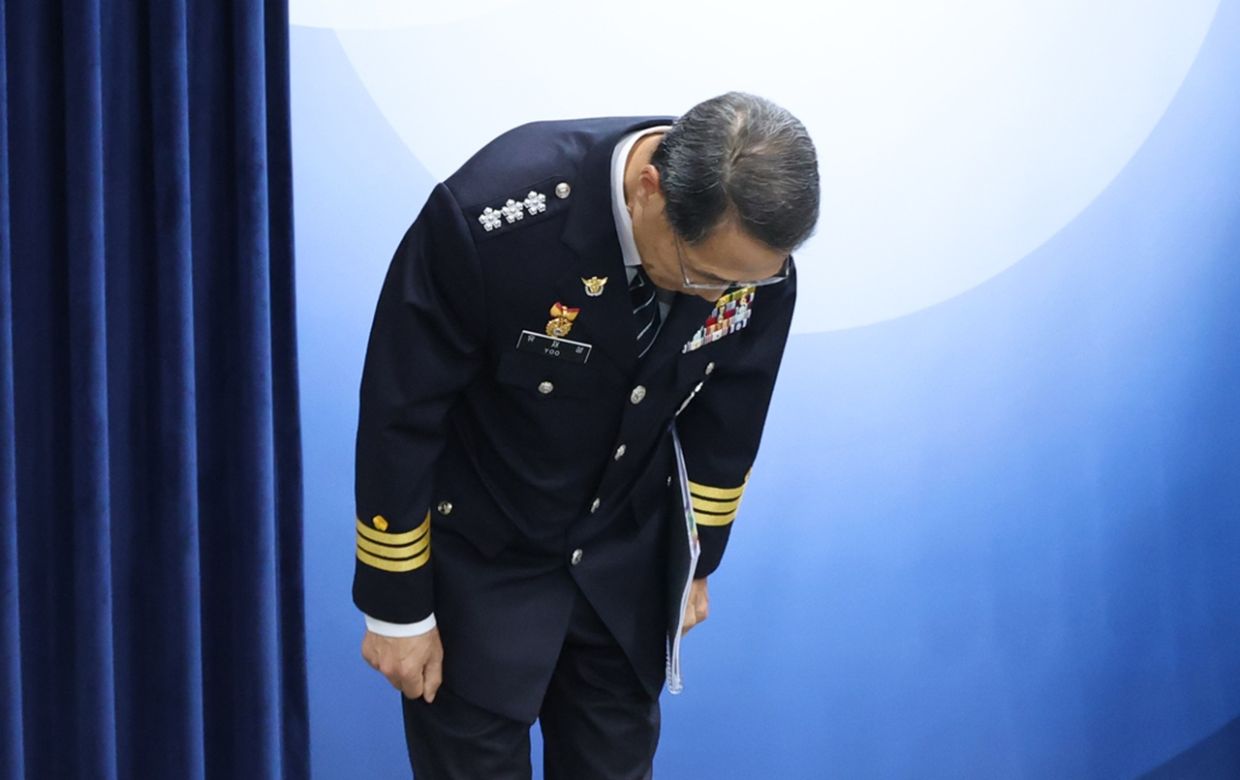
South Korea's law enforcement establishment faces a pivotal moment as Acting National Police Agency Commissioner General Yoo Jae-sung announced extensive reforms on July 20 amid escalating public outcry over a bungled investigation marked by alleged collusion among officers. The controversy centres on the handling of the Jang Yoon-gi case, where the suspect was arrested for allegedly murdering a teenage girl in Gwangju in May. What has ignited widespread anger is not merely the gravity of the alleged crime, but rather evidence that police investigators leaked sensitive information about their inquiry to Jang's father, a serving officer within the force itself, whilst simultaneously failing to preserve crucial evidence.
The credibility crisis confronting South Korea's National Police Agency reflects a broader institutional failure that extends beyond a single case. When citizens discover that those entrusted with investigating serious crimes have compromised their own investigations through information sharing with family members of suspects, it undermines the foundational premise of law enforcement impartiality. Yoo's acknowledgement of this crisis during his press briefing at the Government Complex Seoul carried unmistakable gravity, as he framed the scandal not as an isolated incident requiring damage control, but rather as a catalyst for fundamental transformation of investigative culture and practice.
Central to the proposed remedial measures is the establishment of an investigative reform task force, scheduled to commence operations by month's end. This body will comprise seven to ten members, deliberately structured so that external experts constitute more than half the panel. The composition reflects a deliberate choice to bring in perspectives from outside the police hierarchy, signalling recognition that internal accountability mechanisms alone have demonstrably failed. The task force will examine structural vulnerabilities that enabled the alleged misconduct, particularly focusing on how improper relationships between officers and their local communities can develop and be exploited, alongside procedural weaknesses in cases involving vulnerable populations such as teenagers.
A critical institutional innovation within the broader reform package involves the imminent launch of an internal affairs investigation unit under the National Office of Investigation. This entity has been granted authority to examine serious duty-related crimes allegedly perpetrated by police personnel regardless of rank or seniority. The removal of hierarchical protections represents a meaningful departure from traditional Korean police culture, where senior officers have historically enjoyed considerable latitude from internal scrutiny. By establishing this investigatory capacity, the agency tacitly acknowledges that organisational self-protection has been prioritised over genuine accountability.
Complementing these internal mechanisms, the police authorities propose creating an additional oversight body functioning under the Korean National Police Commission. This civilian-led body would comprise approximately one hundred civilian investigators tasked with examining alleged human rights violations and investigative misconduct. The significance of this proposal lies in its explicit separation from police hierarchy—civilian investigators operating under commission authority rather than police command can theoretically exercise greater independence in determining whether officers have violated citizens' rights. Yoo emphasised that this new oversight structure would require legislative amendment to the Police Act, with relevant proposals already submitted to the National Assembly.
The proposed civilian oversight mechanism represents a conceptual shift in how South Korea's law enforcement approaches accountability. Rather than treating investigations into police misconduct as internal administrative matters, the framework proposes external civilians serving as primary investigators, with their findings potentially triggering personnel decisions and disciplinary action. For this arrangement to possess genuine deterrent value, Yoo acknowledged that the oversight body's authority to recommend personnel actions and sanctions must be clearly embedded in legislative language. Such institutional design stands in sharp contrast to systems where civilian review bodies lack binding power over police management decisions.
Yoo's statement that he would "faithfully carry out his duties without clinging to his position" signals awareness that the public has lost confidence in the current police leadership, and that reform commitments lack credibility unless accompanied by willingness to accept personal consequences. This phrasing, whilst not constituting an explicit resignation offer, acknowledges the political reality that restoration of institutional trust may require sacrifices from senior figures who presided over the period when the alleged misconduct occurred. His subsequent discussion of reform details functioned partly as demonstration that meaningful change is being pursued, and partly as implicit argument that reform implementation rather than leadership decapitation represents the appropriate response.
The proposed expansion of personnel rotation policies reveals the practical complexity embedded in structural reform. Currently, officers at superintendent rank and selected senior inspectors undergo nationwide rotations intended to prevent the development of entrenched local relationships that might compromise impartiality. Extending this system across all ranks would theoretically strengthen institutional integrity by reducing opportunities for officers to cultivate inappropriate connections within their posting communities. However, Yoo candidly acknowledged significant implementation challenges, particularly regarding the provision of official residences for transferred officers and the fairness implications of providing housing support to some ranks but not others.
The rotation policy discussion illuminates a fundamental tension within police reform: measures that enhance organisational integrity often impose substantial burdens on rank-and-file officers whose cooperation remains essential for reform success. Expanding rotation requirements without corresponding support measures would generate resentment among lower-ranking personnel, potentially undermining the morale necessary for culture change. Yoo's commitment to seeking a "reasonable plan" that balances public trust restoration with officer support represents pragmatic acknowledgement that reform lacking frontline officer buy-in will remain superficial regardless of structural innovations.
Regarding the specific investigation into Jang's father, Yoo indicated that the police would refrain from concluding their internal inspection pending completion of findings from a special investigation team. This measured approach prevents the appearance of internal protection whilst respecting the ongoing external investigation. For Malaysian and Southeast Asian observers, the case underscores how even established democracies with decades of police modernisation can experience credibility crises when systemic mechanisms prove insufficient to prevent institutional self-protection. The comprehensive nature of South Korea's proposed remediation—combining internal investigation units, civilian oversight bodies, and structural personnel reforms—suggests that addressing such crises requires simultaneous institutional innovation across multiple dimensions rather than reliance on individual leadership commitment or incremental procedural adjustments.
The unfolding reform process will test whether legislative backing, civilian investigator participation, and explicit disciplinary authority can meaningfully constrain the protective instincts that organisations naturally develop. The success or failure of South Korea's overhaul attempt holds instructive lessons for jurisdictions throughout Asia grappling with similar tensions between institutional loyalty and public accountability. Yoo's pledge of transformation represents necessary symbolic commitment, but the institutions being designed will ultimately determine whether reform constitutes genuine structural change or merely elaborate performance of accountability.

