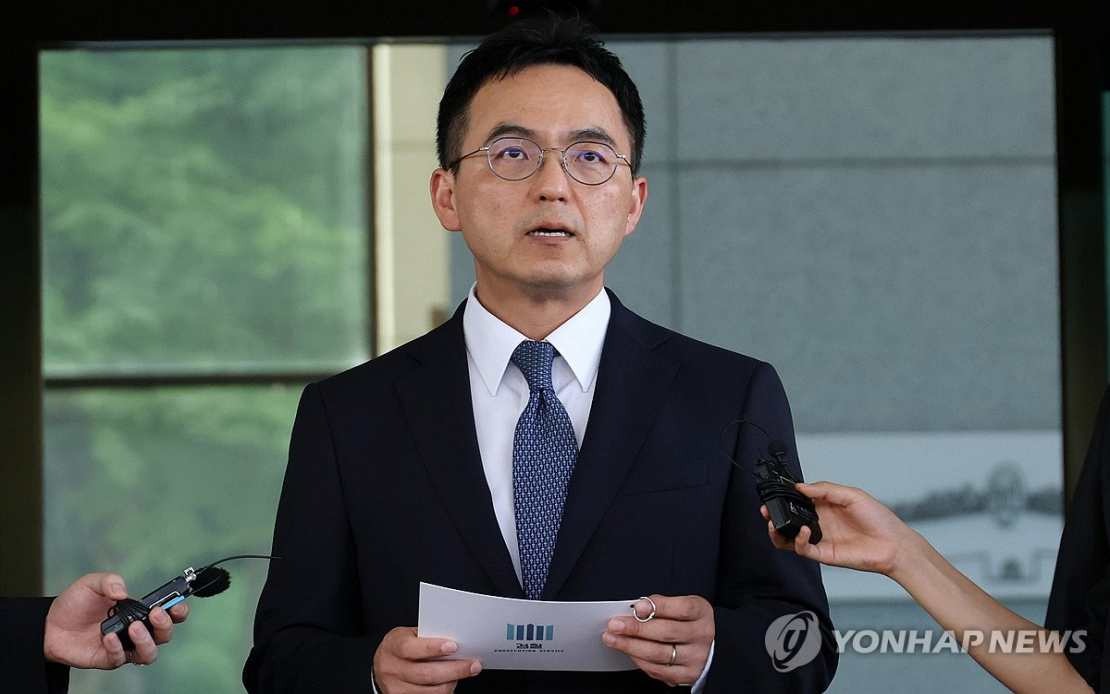
South Korea's Acting Prosecutor General Koo Ja-hyeon announced his resignation on Friday, stepping down in the immediate aftermath of the National Assembly's approval of sweeping legislation that fundamentally diminishes prosecutorial authority. The timing of his departure underscores the intensity of institutional conflict surrounding the bill, which passed with overwhelming parliamentary support despite fierce resistance from opposition lawmakers. Koo's decision to leave office signals both his personal accountability and the profound implications of the reform for the country's legal and enforcement landscape.
The National Assembly, controlled by the ruling Democratic Party, voted 175-2 with a single abstention to advance the revised Criminal Procedure Act through its plenary session on Thursday evening. The decisive margin followed the Democratic Party's successful motion to end a filibuster mounted by the main opposition People Power Party, which had sought to block or delay the contentious measure. This procedural victory represented a significant political win for President Yoon Suk Yeol's government and demonstrated the ruling coalition's legislative dominance on criminal justice matters.
The legislation represents a watershed moment in South Korean prosecutorial history, as it fundamentally reallocates investigative responsibilities within the justice system. Under the new framework, prosecutors lose the ability to conduct independent investigations, including what are termed supplementary investigations. Instead of directing their own inquiries, prosecutors will depend on judicial police officers to carry out investigative work at their request. This structural shift tilts the balance of power away from the prosecution toward law enforcement agencies, potentially creating new dynamics in how criminal cases are developed and presented to courts.
Koo's resignation statement addressed the complexity of this transformation. While acknowledging that the prosecution system requires internal reflection and must work to rebuild public confidence, he cautioned that necessary reforms should not compromise the core institutional mission. He specifically highlighted two concerns that shaped his decision to step down: the prosecution's fundamental responsibility to uncover substantive truth and to protect crime victims throughout the justice process. These principles, he argued, risk being undermined by the new investigative structure.
The Acting Prosecutor General expressed particular worry about the practical consequences of the revised law. By forcing prosecutors to rely solely on investigative records prepared by police rather than conducting their own inquiries, the system creates a potentially dangerous information asymmetry. Prosecutors would lose the ability to pursue independent leads, conduct follow-up questioning, or direct investigative focus toward emerging lines of inquiry. This dependency on police-prepared records could weaken the prosecution's capacity to make informed charging decisions and may ultimately disadvantage crime victims whose interests might diverge from police investigative priorities.
In his resignation statement, Koo emphasised the gap between the legislative outcome and the careful deliberation he believed the reform deserved. He pointedly noted that the revision advanced through parliament without adequate consideration of these victim protection concerns or broader systemic impacts. His characterisation of feeling both disappointed and despairing reflected the depth of institutional conflict over this legislation and suggested that even senior justice officials view the reform as proceeding without sufficient safeguards or transitional planning.
Despite his resignation, Koo made a final plea to the government to conduct thorough review of the legislation before implementation. He urged South Korea's executive branch to examine whether the new framework would create policy gaps or administrative confusion during the transition period. His appeal also implicitly questioned whether the reformed system would adequately protect public interests, suggesting that prosecutors and victim advocates should have meaningful input into how the new investigative model operates in practice.
For Southeast Asian observers, South Korea's prosecutorial reform offers important lessons about institutional power dynamics and criminal justice system design. The debate surrounding investigative authority reflects broader tensions between centralised prosecutorial power and distributed law enforcement responsibility. Many regional democracies grapple with similar questions about appropriate checks on prosecutorial discretion and whether police independence serves public interests better than unified investigative authority. South Korea's experience suggests that such reforms carry significant implementation challenges and that transitional mechanisms matter considerably.
The timing of this reform within South Korea's political context adds another dimension. Prosecutorial authority traditionally carries substantial influence over which high-profile cases proceed and how political figures are investigated. Limiting prosecutorial investigative powers could reshape power dynamics between different government institutions and may reflect calculations about reducing potential challenges to particular political factions. This institutional dimension makes the reform particularly significant beyond purely technical criminal justice considerations.
The resignation of an Acting Prosecutor General following legislative defeat on such a fundamental issue underscores how intensely Koo opposed the change and how personally he held responsibility for the institution's public standing. Whether his departure smooths implementation of the new framework or signals broader institutional resistance remains to be seen. His successor will face the complex task of managing the transition from the traditional prosecutorial model toward a structure dependent on police investigation, potentially requiring significant reassessment of personnel deployment and operational priorities.
The South Korean parliament's decision reflects a judgment that prosecutorial power had grown excessive and required rebalancing through procedural constraints. Whether this rebalancing ultimately strengthens or weakens criminal justice outcomes will depend substantially on how police, prosecutors, and courts coordinate under the new framework and whether adequate victim protection mechanisms exist. Koo's departure marks the symbolic end of an era while signalling the institutional friction that such fundamental reforms inevitably produce.

