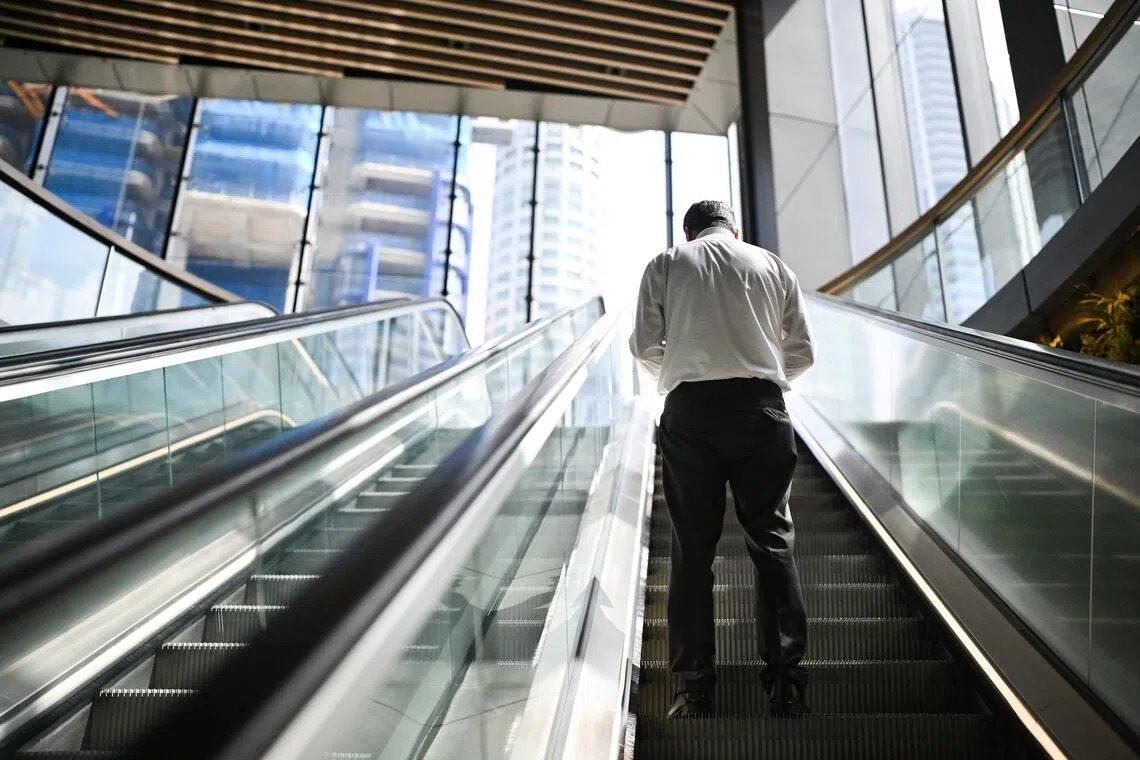
The question of how to behave on an escalator has become unexpectedly polarizing in South Korea, where a recent government survey revealed the nation is almost perfectly divided on the issue. Among 1,000 adults surveyed across seven major cities, exactly half preferred the practice of standing on one side while leaving the other open for those who wish to walk, while the remaining half advocated for passengers to remain stationary across both lines. This razor-thin margin has resurfaced one of the country's most persistent commuter dilemmas and challenged long-held assumptions about efficiency in mass transit systems.
The debate reached a formal stage when South Korea's government convened a public forum in Seoul on August 29, drawing roughly 200 citizens and specialists to hash out the merits and drawbacks of each approach. The gathering underscored the complexity of what appears on the surface to be a simple etiquette question. Jang Gye-ryeon, a researcher in public administration at the Korea Institute of Industrial Relations, captured the heart of the matter by arguing that the choice cannot be reduced to a binary answer. Instead, he emphasized, officials must grapple with fundamental questions about whose time constraints matter and how context—the specific location, time of day, and crowd density—shapes the optimal behaviour.
The efficiency argument initially seems to favour those who wish to walk. For an individual running late, clearly climbing an escalator saves precious seconds that would be lost standing still. However, when viewed through a collective lens, the picture becomes murkier. Research from a crowded British railway station demonstrated that when passengers occupied both sides of an escalator, overall passenger capacity increased by approximately 25 to 30 per cent compared to the one-sided standing arrangement. A limited test conducted at Guri Station near Seoul yielded comparable findings: 190 people used the escalator during a test period when both sides were occupied, whereas only 164 passengers passed through during a matching interval when one side remained reserved for walkers. Researchers were careful to note that this experiment's narrow scope prevented any definitive conclusions, yet the numbers suggested that the principle might hold merit in South Korea's densely packed urban environments.
Beyond efficiency metrics lies a significant safety dimension that complicates the equation further. Specialized sensor testing conducted on escalator steps revealed that walking downward generated an impact force equivalent to roughly 2.01 times a person's body weight, while ascending produced approximately 1.54 times body weight. According to Heo Yun-seop, a professor at Korea Lift College, these repeated mechanical stresses—combined with the uneven loads from people standing exclusively on one side—could accumulate damage to critical escalator components over time. While he stopped short of claiming direct causation between one-sided standing and escalator breakdowns, he flagged the possibility that maintenance costs and equipment lifespan could suffer as a result of these practices.
South Korea's relationship with escalator etiquette has been inconsistent and reactive. The government first actively promoted one-sided standing in 1998, a practice that gained nationwide traction around the 2002 FIFA World Cup as officials sought to accommodate impatient commuters. However, as concerns mounted regarding accident rates and the wear on mechanical systems, the government reversed course between 2009 and 2014, actively encouraging passengers to use both lines. Since 2015, officials have largely stepped back from prescribing any particular method, instead promoting three universal guidelines: always grip the handrail, refrain from walking or running, and keep within designated safety zones. This hands-off approach may paradoxically explain why public opinion remains so evenly split—without clear government direction, commuters have internalized competing norms passed down through decades of conflicting messaging.
Accident data underscores why the government cannot ignore this issue indefinitely. Records spanning from 1993 to 2025 attributed 72.3 per cent of escalator accidents to user behaviour, a sobering statistic that places responsibility squarely on passengers rather than mechanical failure. More troublingly, people aged 60 and older were involved in 53.3 per cent of recorded accidents, suggesting that older commuters face elevated vulnerability regardless of which escalator etiquette becomes standard. This demographic consideration adds a layer of urgency to the debate, particularly as South Korea grapples with a rapidly ageing population that increasingly relies on public transport.
The August 29 forum provided a revealing window into how public dialogue can shift opinion. Before the discussion began, 45.9 per cent of participants supported the two-line standing approach, while only 13.4 per cent favoured one-sided standing for walkers. After hours of expert presentations and citizen debate, support for one-side standing climbed to 29.9 per cent, though backing for two-line standing fell sharply to 31.4 per cent. The most striking outcome was the surge in conditional support: 38.1 per cent of participants ultimately favoured a flexible approach that would adjust rules based on specific circumstances like location type and passenger volume. This shift suggests that South Koreans, when given space to think through the tradeoffs, gravitate toward pragmatism over rigid doctrine.
The regional implications of this debate extend beyond Seoul's subway platforms. Southeast Asian cities facing similar congestion challenges—from Bangkok's BTS Skytrain to Singapore's Mass Rapid Transit—grapple with comparable questions about pedestrian behaviour on moving stairs. South Korea's methodical approach to evidence-gathering and public deliberation offers a model for how regional transport authorities might tackle their own escalator etiquette dilemmas, balancing individual convenience against collective welfare and mechanical sustainability.
Interior Minister Yun Ho-jung signalled that the government plans to incorporate insights from the forum into future escalator safety initiatives. Rather than imposing a uniform national standard, officials appear inclined toward context-sensitive guidelines that recognize the diversity of situations across the country's sprawling transit network. This outcome reflects a maturation in how policymakers approach public behaviour—not through top-down mandates, but through evidence-based recommendations that respect commuter autonomy while prioritizing safety and operational efficiency across the entire system.

