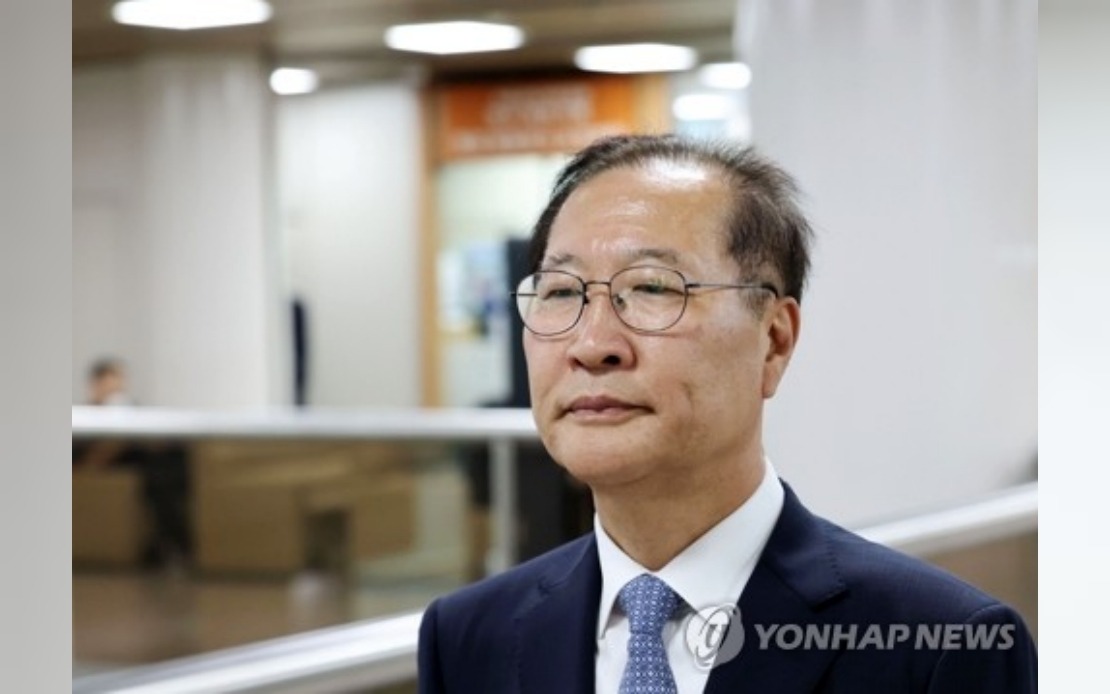
South Korea's former Justice Minister Park Sung-jae faces a quarter-century behind bars after being convicted of insurrection for his central involvement in the government's abortive martial law declaration. The Seoul Central District Court imposed a 25-year prison sentence on June 23, surpassing the 20-year imprisonment recommendation put forward by the special counsel's office. Park was immediately remanded into custody, with the presiding judges expressing concern that allowing him bail might enable evidence tampering.
The dramatic downfall of Park encapsulates a broader reckoning within South Korea's government following President Yoon Suk Yeol's December 3, 2024 martial law decree, one of the most destabilising moves in the nation's recent political history. Prosecutors had argued that Park actively facilitated the attempted power grab by weaponising his ministerial authority, transforming what should have been an office devoted to upholding constitutional order into an instrument of executive overreach. The court's judgment represents a vindication of that prosecution strategy and a powerful statement about the expected ethical boundaries of high office during constitutional crises.
Park's specific actions under scrutiny reveal how deeply the judicial system was implicated in Yoon's gambit. Following the martial law proclamation, Park convened a meeting of senior ministry officials with an ostensibly bureaucratic agenda that masked far more sinister intent. The court found that he directed prosecutors to be dispatched to supporting organisations created to enforce martial rule, made assessments of detention facilities' capacity to hold arrested politicians and prominent figures, and issued orders for officials responsible for travel restrictions to report immediately. These actions transformed the Justice Ministry from an institution theoretically neutral on constitutional questions into an active participant in suppressing potential opposition.
What makes Park's conviction particularly significant for governance accountability is how it establishes that cabinet ministers cannot hide behind claims of administrative duty when executing manifestly unconstitutional directives. The trial court explicitly stated that Park had fundamentally betrayed his constitutional obligation by choosing to support what he evidently believed could succeed as an illegal power seizure. This reasoning may reverberate across other democracies grappling with executive overreach, signalling that professional competence and technical expertise provide no shield against liability for participating in democratic breakdown.
Park joins a growing cohort of Yoon's inner circle facing extended prison sentences. Former Prime Minister Han Duck-soo and former Defence Minister Kim Yong-hyun have already received similar convictions for their insurrection involvement. Even more starkly, Yoon himself was sentenced to life imprisonment in February 2024, though he has mounted an appeal against that ruling. The cascading convictions suggest that South Korean courts are treating the martial law episode not as a momentary aberration but as a systematic conspiracy involving multiple layers of state machinery.
The decision to impose a sentence exceeding the prosecution's request carries particular weight. Judges rarely exceed sentencing recommendations unless they find extraordinary aggravating circumstances. By doing so, the court evidently concluded that Park's conduct merited recognition of his influential position, his constitutional oath, and the potential for his actions to have caused immense constitutional harm had the martial law succeeded in taking hold. This sentencing philosophy reflects a judicial determination to prevent similar governmental misadventures by making the consequences severe enough to deter future cabinet members from participating in anti-democratic schemes.
Another significant element of the judgment concerns the court's dismissal of separate anti-corruption charges. Prosecutors had alleged that Park improperly intervened in investigations into Kim Keon Hee, the President's wife, based on her requests in May 2024. The court ruled that these charges fell outside the scope of the special counsel's investigative mandate, creating a narrower but more focused verdict centred on constitutional rather than administrative corruption. This distinction prevents an expansion of charges that might muddy the central narrative of institutional failure.
Park's legal team has signalled their intention to appeal immediately, characterising the conviction as unsupported by evidence or legal reasoning. This response is standard in Korean judicial practice, yet it also reflects the contested nature of how courts should interpret ministerial responsibility during constitutional emergencies. The defence argument likely rests on the premise that Park was merely executing ministerial functions in response to presidential authority, rather than independently choosing to support an insurrection. However, the trial court rejected this logic by pointing to Park's discretionary choice to participate in a manifestly unconstitutional scheme.
Conversely, the special counsel's office has indicated it will not appeal the sentence upward, suggesting satisfaction with the judgment. The prosecutors' stance indicates they view the ruling as adequately establishing the legal principle that justice ministers bear personal responsibility for defending constitutional order even when presidents demand otherwise. This judicial pronouncement may become foundational to South Korean administrative law, establishing that constitutional duty supersedes hierarchical directives when those directives aim at overthrowing democratic governance.
For observers across Southeast Asia and beyond, the Park case exemplifies how courts in mature democracies can restore constitutional boundaries even after extreme executive overreach. South Korea's judicial system functioned despite tremendous political pressure, producing sentences that survived initial appeals and establishing clear precedent. Yet the case also underscores how fragile constitutional protections remain when political leaders command significant state machinery and when institutional loyalties become entangled with personal advancement. The severity of sentences now being handed down suggests that South Korean courts recognise they must make insurrection genuinely costly in order to preserve constitutional government against future attempts.
The imprisonment of a Justice Minister for supporting an illegal martial law declaration sends an unmistakable message that no position, however exalted, provides immunity from accountability for betraying the Constitution. As South Korea navigates the aftermath of its worst constitutional crisis in decades, Park's conviction represents not merely the punishment of an individual but the reassertion of constitutional supremacy over executive will. Whether that reassertion proves durable will depend on whether future political actors internalise the lesson that state power exists to serve constitutional democracy, not to override it when convenient.