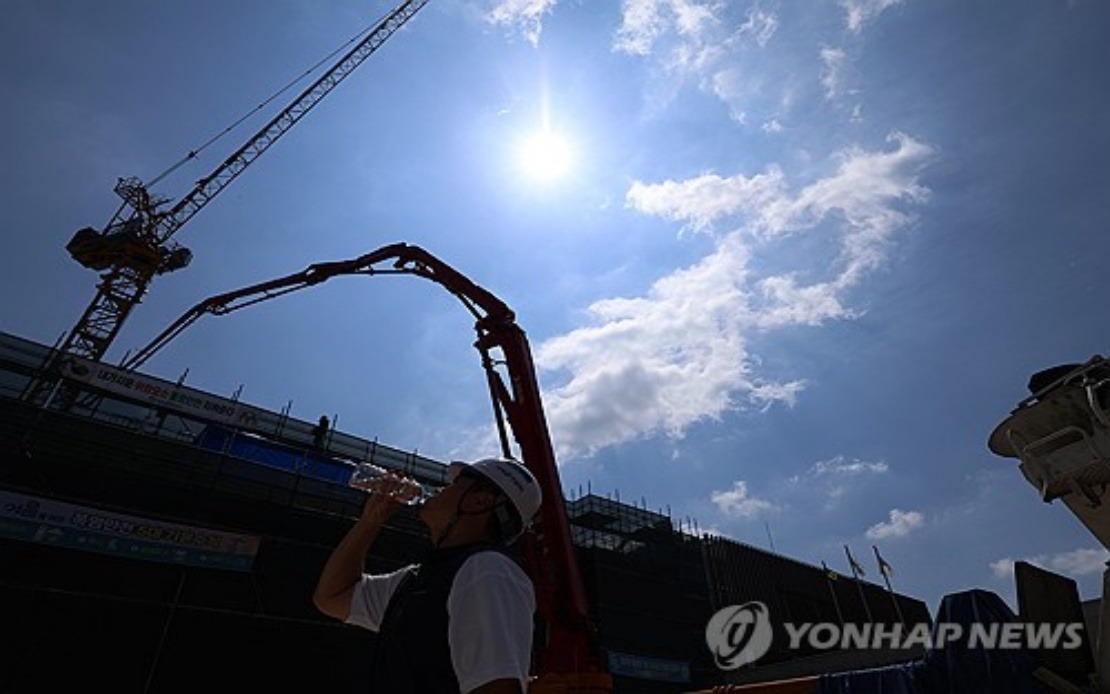
South Korea's meteorological authorities intensified their response to an unprecedented heat crisis on Wednesday, deploying the highest-level heat wave warnings across swathes of the Greater Seoul metropolitan region. The Korea Meteorological Administration activated serious heat wave alerts affecting 20 of the 46 land weather advisory areas in and around the capital, effectively placing 43 per cent of the region under the most severe temperature alert category. The expansion came as southern Incheon and nine municipalities within Gyeonggi Province—including Gwangmyeong, Yeoncheon, and Hwaseong—joined the alert system at 11 am local time, indicating the rapidly deteriorating conditions gripping the nation's heartland.
The scope of the emergency has widened dramatically in recent days. Just one day prior, on Tuesday, Seoul itself fell entirely under the top-tier warning for the first time since the heat wave alert framework was introduced on June 1. The expansion now extends beyond the Seoul metropolitan area, with Cheongyang in South Chungcheong Province becoming the first location in the central Chungcheong provinces to receive the highest-level alert. This geographic expansion signals that the extreme weather system is not localised to the capital region but represents a significant national phenomenon affecting central Korea.
The technical trigger for these warnings reflects genuinely dangerous conditions. According to KMA protocols, authorities issue a serious heat wave warning when apparent temperatures are projected to reach 38°C or higher, or when daily maximum temperatures climb to 39°C or above, particularly in regions where the highest apparent temperature has already exceeded 35°C for at least two consecutive days. These thresholds represent the outer limits of human physiological tolerance, at which point heat-related illness becomes not a medical possibility but a statistical inevitability across large populations.
The underlying heat itself has reached extraordinary levels. Yangsan, a major city in the southeast, recorded a maximum temperature of 42.5°C, representing the highest temperature documented since South Korea established modern weather observation systems in 1904. This milestone is not merely a statistical curiosity—it reflects a climate reality that exceeds the historical experience of weather forecasters and public health planners. For Malaysian readers accustomed to tropical temperatures, it is worth noting that while absolute numbers may seem comparable, sustained high temperatures combined with low humidity and intense solar radiation in temperate East Asia create different physiological stresses than comparable temperatures in monsoon regions.
The human cost has already become visible and measurable. South Korea's disease control authorities reported that between May 15 and the Monday before this announcement, heat-related hospitalisations reached 2,221 cases, while 19 people lost their lives to heat-related conditions. These figures represent both the immediate strain on the medical system and the devastating toll on vulnerable populations. The elderly, outdoor workers, those in inadequately cooled accommodations, and individuals with pre-existing cardiovascular conditions face the greatest risk during sustained heat episodes.
The timing of this crisis carries particular significance for understanding broader climate trends affecting East Asia and the region more broadly. That South Korea is experiencing record-breaking temperatures in August aligns with observed patterns of increasingly intense and prolonged heat waves affecting temperate and subtropical Asia. Climate scientists have documented that the frequency, duration, and intensity of heat waves have increased substantially over recent decades, with projections suggesting further acceleration throughout the coming decades. For a densely populated nation like South Korea, where millions live in urban environments with concentrated heat-island effects, this trajectory poses escalating challenges to public health, energy infrastructure, and economic productivity.
The alert system itself reflects hard-won experience. The introduction of the serious heat wave warning category on June 1 came as authorities sought to better communicate and prepare for genuinely exceptional conditions. The rapid expansion from full Seoul coverage on Tuesday to 43 per cent of the Greater Seoul region on Wednesday indicates both the accelerating nature of the current event and the evolving severity of seasonal temperature patterns. For regional policymakers watching from Southeast Asia, the South Korean experience offers both cautionary lessons and practical examples of how developed-nation infrastructure can be strained by extreme weather.
For Malaysia and other Southeast Asian nations, the South Korean situation warrants attention on several fronts. First, it demonstrates that extreme heat events are not confined to tropical regions, and that temperate zones previously considered relatively safe from deadly heat are now experiencing significant thermoregulatory challenges. Second, the economic implications of sustained high temperatures—from reduced worker productivity to increased energy demand that strains grids—deserve serious consideration as regional planning authorities assess future infrastructure and climate adaptation strategies. Third, the public health response mechanisms deployed by South Korea, including targeted hospitalisation protocols and population-wide warnings, could inform regional health emergency planning.
The broader context suggests that this represents not a temporary anomaly but part of an evolving climatic pattern. Successive heat waves have affected South Korea with increasing regularity and intensity over the past decade, each time setting or approaching temperature records. The convergence of geographic, atmospheric, and now climatological factors means that authorities must prepare for the possibility of such events becoming more frequent rather than viewing them as exceptional occurrences.
As the Greater Seoul region endures temperatures that test the limits of human adaptation, the immediate priority remains protecting vulnerable populations through adequate cooling, hydration support, and medical preparedness. Beyond the immediate crisis, however, the episode underscores the reality that climate change is reshaping environmental hazards across East Asia in ways that demand comprehensive long-term adaptation strategies.

