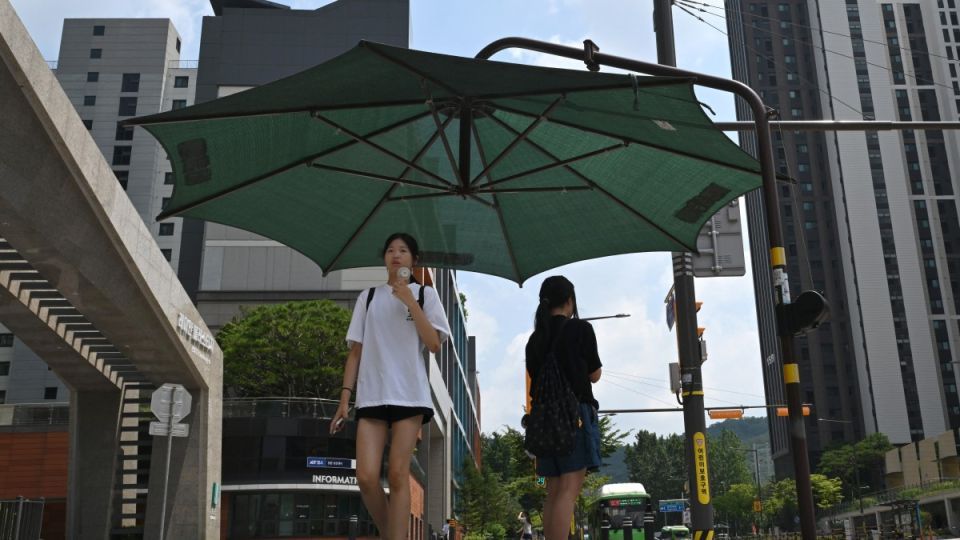
South Korea is grappling with an unprecedented heat crisis that has transformed workplace practices across the nation, prompting corporations to fundamentally restructure how and when employees work. The response from major employers reveals both the potential for comprehensive worker protection and a troubling divide in occupational safety, as record-breaking temperatures push companies toward increasingly inventive solutions while leaving vulnerable populations dangerously exposed.
The intensity of the current heatwave underscores the urgency of corporate action. Yangsan in South Gyeongsang Province has shattered national records with temperatures reaching 42.5 degrees Celsius, while Seoul has endured an extended stretch under the highest-level heatwave warning. These extreme conditions are not merely uncomfortable—they represent genuine threats to worker health and survival, transforming heat management from a comfort issue into a critical safety matter that demands immediate intervention.
The scale of heat-related workplace casualties reveals the genuine stakes involved. Data compiled by Rep. Kim Wi-sang from the ruling People Power Party shows that South Korea's Workers' Compensation and Welfare Service documented 195 heat-related occupational accidents between 2022 and the middle of 2024, claiming at least 20 lives. Particularly alarming is that 13 cases, including four fatalities, were already recognised by June—before the peak danger season of July and August—suggesting this year could exceed previous years' toll significantly.
A landmark legal development has sharpened employer focus on heat safety. Last year, a district court convicted a construction company under the Serious Accidents Punishment Act specifically for a subcontractor's employee's heatstroke death, marking the first prosecution under this stringent law for a heat-related fatality. This conviction has catalysed widespread policy reforms, particularly among construction firms that historically suffer disproportionate casualties from industrial accidents and weather-related incidents.
Major construction conglomerates have pioneered sophisticated heat response systems. Hyundai Engineering & Construction now incentivises workers to use designated rest areas through reward mechanisms. Lotte E&C deployed Internet of Things technology across approximately 80 construction sites, measuring perceived temperatures every five minutes and categorising heat risks into five severity levels, enabling rapid response to dangerous conditions. Daewoo E&C has established penalty-free stopping provisions, allowing workers experiencing physical distress to cease work without professional consequence.
Specialised provisions for migrant workers—a particularly vulnerable population—reflect growing corporate awareness of systemic risks. Hyundai E&C distributed emergency reporting guides in 22 languages and provided cooling vests with integrated fans and oral rehydration solutions. Kumho E&C partnered with beverage manufacturer Lotte Chilsung to furnish bottled water, sports drinks, cooling towels and portable shelters through September. These measures acknowledge that language barriers and limited familiarity with workplace processes place international workers at heightened disadvantage during health emergencies.
Heavy industrial facilities operating continuously have restructured work patterns themselves. Posco, managing blast furnaces that operate around the clock, implemented mandatory 15-minute rest intervals after every 45 minutes of labour when perceived temperatures exceed 35 degrees Celsius, dropping to 10 minutes after every 50 minutes when temperatures climb above 31 degrees. Hyundai Steel followed with comparable protocols requiring minimum 10-minute breaks hourly at 31 degrees and 15 minutes at 35 degrees. Shipbuilders extended break provisions through the summer peak, with Hanwha Ocean doubling morning and afternoon breaks to 20 minutes regardless of temperature, plus extending lunch periods by 30 minutes at 28 degrees and a full hour above 31.5 degrees. HD Hyundai Heavy Industries lengthened lunch breaks from one hour to 90 minutes whilst operating over 270 cooling facilities across its yards, distributing cooling vests, ice water and electrolyte supplements.
However, these sophisticated interventions remain concentrated among corporations possessing substantial capital and infrastructure resources. Data analysis reveals a stark disparity: more than half of the 195 documented heat-related accidents since 2022 occurred at workplaces with fewer than 50 employees, whilst 42 incidents affected micro-enterprises with fewer than five workers. These small businesses typically lack dedicated safety personnel, cannot afford commercial cooling equipment and cannot reorganise schedules without operational collapse. Labour researchers and parliamentary representatives emphasise that workers in these settings face fundamentally different conditions than their counterparts at Samsung, Hyundai or Posco.
Agriculture and outdoor employment sectors expose migrant workers to particularly extreme risks. Recent deaths underscore this vulnerability: a Thai seasonal worker perished whilst labouring in Haenam, South Jeolla Province, and a Vietnamese national died whilst working outdoors on a farm in Goesan, North Chungcheong Province. These incidents occurred during or immediately preceding the peak heat season, suggesting current protections prove inadequate for workers engaged in outdoor labour without access to shade, cooling facilities or adequate supervision.
For Malaysia and Southeast Asia, South Korea's experience carries significant implications. The region's reliance on heat-sensitive industries—construction, agriculture, manufacturing—mirrors Korea's exposure, yet institutional frameworks protecting migrant workers remain comparatively underdeveloped. The concentration of heat-safety measures among multinational corporations whilst small enterprises and outdoor workers remain unprotected suggests that market-driven solutions alone cannot guarantee equitable worker protection. Rep. Kim has called for governmental intervention moving beyond large-enterprise focus, advocating strengthened inspections and practical protections for seasonal migrant workers and small outdoor businesses. Such policy direction may influence regional approaches to occupational heat safety, particularly as climate change intensifies temperature extremes across Asia-Pacific economies increasingly dependent on vulnerable workforces.
The Korean case demonstrates that whilst technology and corporate resources can substantially mitigate heat risks, systemic protection requires regulatory intervention, enforcement capacity and targeted support for populations and business sizes unable to self-protect. Without such measures, heat-related workplace inequality will deepen, placing disproportionate health burdens on the least powerful workers.

