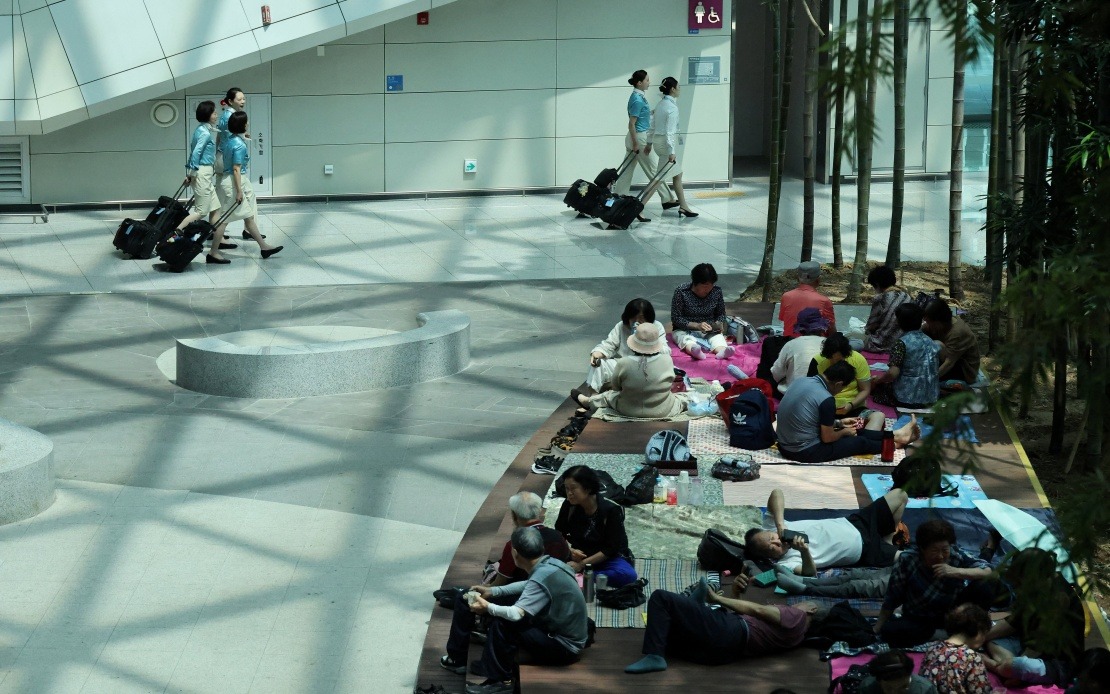
Heat-related illness cases in South Korea have skyrocketed to alarming levels, with the number of patients tripling over the past ten years according to government health data released this week. The Korea Disease Control and Prevention Agency findings reveal a troubling acceleration in heat-stress conditions affecting the nation, particularly during the late summer period when temperatures soar and the transition toward autumn traditionally begins. The trend underscores growing public health vulnerabilities to extreme weather that Southeast Asian nations, including Malaysia, must watch closely as regional climate patterns continue to shift.
Between 2011 and 2015, the period from Ipchu (the traditional calendar marker for autumn's commencement, falling on August 7 this year) through late August saw an average of just 215 heat-related patients annually. This baseline figure paints a picture of a less threatening public health environment two decades ago. However, the subsequent quinquennium from 2016 to 2020 witnessed a dramatic acceleration, with the annual average climbing to 658 cases—more than tripling the previous decade's levels. The figures remained consistently elevated into the present period, with 2021 through 2025 averaging 638 cases per year, demonstrating that this is not a temporary spike but rather a persistent structural shift in health challenges faced by South Korean citizens.
Mortality figures compound the public health concern, revealing that heat-related deaths have increased alongside case numbers. Between 2012 and 2015, heat-related deaths averaged 3.3 patients per year across the monitoring window. By the 2016-2025 period, this figure exceeded four deaths annually, representing a staggering 21 percent increase in mortality rates even as cases more than doubled. These deaths represent preventable tragedies, often concentrated among vulnerable populations including the elderly, outdoor workers, and those without adequate access to cooling facilities. For Malaysia and other tropical developing economies, the South Korean experience offers a cautionary tale about the intersection of extreme heat, aging populations, and inadequate heat-response infrastructure.
The 2024 data presents an especially concerning snapshot of the current trajectory. From Ipchu through late August this year alone, South Korea recorded 1,299 heat-related illness cases with 12 deaths, demonstrating that problem continues to intensify. A single day on Friday saw 202 emergency room admissions for heat-related conditions, three of which proved fatal, illustrating how rapidly conditions can deteriorate when heat waves persist. These figures underscore the strain placed on healthcare systems during extreme weather events and the cascading public health consequences when temperatures remain elevated over extended periods.
Meteorological forecasts suggest continued danger throughout the remainder of August, with daytime temperatures expected to range between 31 and 35 degrees Celsius nationwide. This sustained elevated temperature regime creates the conditions for further illness clusters and potential mortality spikes, particularly among populations lacking adequate cooling access or working outdoors for extended periods. The persistence of dangerous heat waves into late summer—a period traditionally marking autumn's arrival—suggests that seasonal patterns are shifting, potentially extending the annual window during which South Koreans face heat-related health risks.
The government's monitoring infrastructure, operational since mid-May, has captured 3,089 heat-related illness cases with 26 deaths through the monitoring period. This systematic tracking allows public health authorities to identify trends, allocate resources, and implement targeted interventions. However, the scale of cases suggests that current response mechanisms remain inadequate for the magnitude of the health challenge. The difference between the monitoring system's total and the specific reporting for individual periods indicates that many cases occur during the most dangerous high-summer window when temperatures peak.
For regional observers in Malaysia and Southeast Asia, the South Korean experience carries particular resonance. As tropical nations already accustomed to high ambient temperatures, Malaysian and regional governments must consider how aging populations and urbanization will interact with increasingly extreme heat events. South Korea's developed healthcare infrastructure and relatively wealthy population have still proven insufficient to prevent the tripling of cases and increase in mortality, raising difficult questions about how less affluent economies with larger populations might cope with similar trends. The data suggests that adaptation planning, public awareness campaigns, and infrastructure investment specifically targeting heat resilience require urgent policy attention across Southeast Asia.
The underlying drivers of this health deterioration remain rooted in broader climate trends. While the original reporting does not explicitly link cases to climate change, the consistent elevation of heat-related illness rates across multiple five-year periods strongly suggests that ambient temperature regimes have shifted upward. This represents a concerning manifestation of climate dynamics in a developed, temperate nation, implying that tropical regions already experiencing higher baseline temperatures face potentially more severe absolute impacts. The progression from 215 average annual cases to 638 represents a structural change in the health burden that South Korean society must accommodate through policy adaptation, behavioral change, and infrastructure investment.
Public health responses have intensified in recognition of these trends. Beyond the monitoring system, South Korea has likely implemented heat-warning systems, cooling centers, and public awareness campaigns to reduce vulnerable populations' exposure. Yet the persistence and growth of cases suggests these measures, while necessary, require continuous enhancement and expansion. As temperatures climb and heat waves extend their seasonal reach, the reactive health system approach—treating patients after illness onset—must be supplemented with more aggressive prevention and early intervention strategies that reduce heat exposure for at-risk groups. The challenge ahead involves transforming societal infrastructure, work patterns, and public health protocols to accommodate a new thermal reality.

