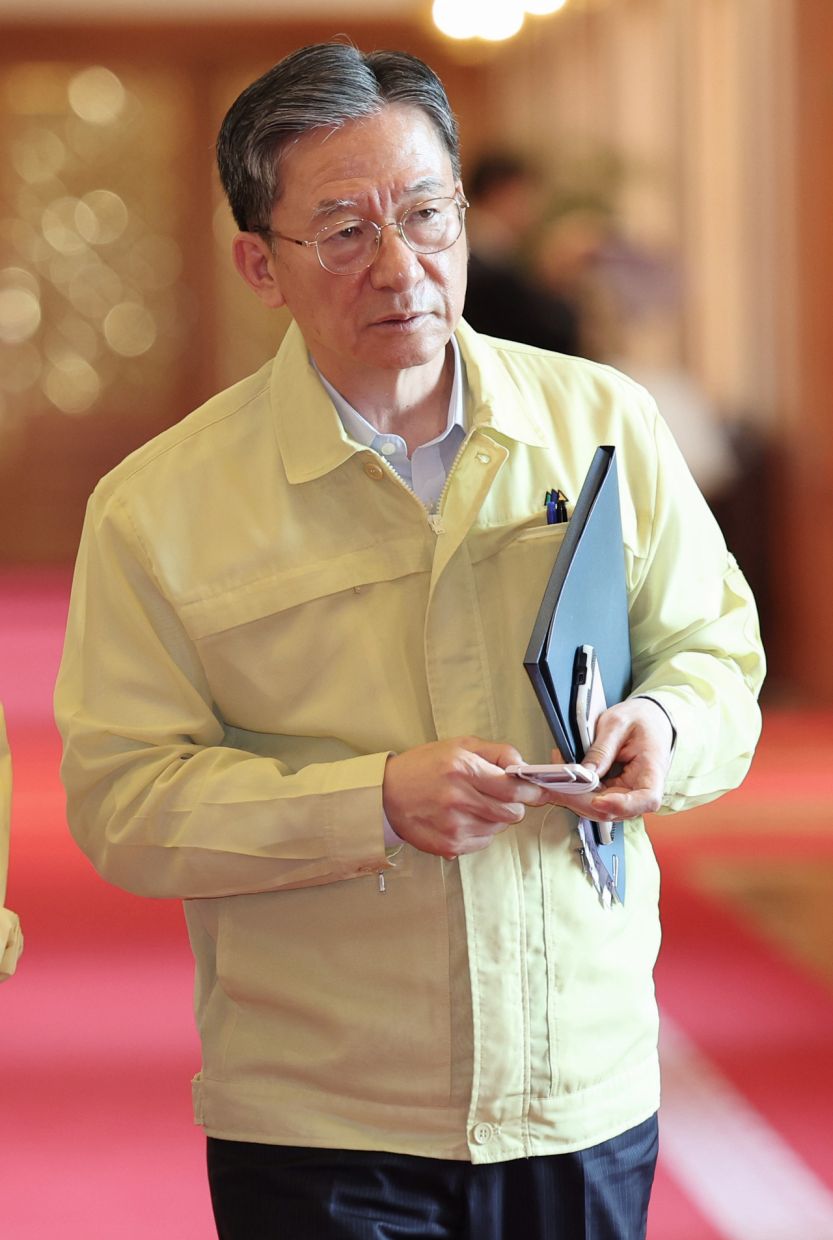
South Korea's Justice Minister Jung Sung-ho has stepped down from his position, marking another high-level departure in the country's ongoing restructuring of its criminal justice apparatus. The resignation, submitted on Tuesday afternoon, emerges from fundamental disagreements between Jung and the ruling Democratic Party regarding the scope of prosecutorial authority in criminal investigations—a contentious issue that reflects deeper tensions over how power should be distributed within South Korea's legal system.
At the heart of the dispute lies a question that has animated judicial reform debates across Asia: whether prosecutors should possess broad investigative capabilities or whether their role ought to be confined primarily to reviewing evidence and pursuing cases in court. Jung expressed reservations about eliminating prosecutors' ability to conduct what are known as supplementary investigations, believing this power necessary to ensure comprehensive case examination. The Democratic Party, however, has advocated for a complete functional separation, arguing that concentrating both investigative and prosecutorial authority in the hands of prosecutors creates unacceptable risks of institutional overreach and abuse.
Under current South Korean law, prosecutors enjoy the right to launch supplementary investigations when they believe police inquiries have been inadequate or incomplete after receiving a case file. This mechanism has long functioned as a check on investigative gaps, allowing prosecutors to direct further evidence gathering before deciding whether to proceed with charges. The system reflects a prosecutorial model common in parts of continental Europe and East Asia, where prosecutors exercise significant oversight authority over police investigations.
However, when the revised Criminal Procedure Act takes effect on October 2, this authority will be substantially curtailed. The new framework will strip prosecutors of their independent investigative powers, requiring them instead to request additional police investigation if they identify gaps. Rather than conducting inquiries themselves, prosecutors will transition to a gatekeeping function—examining investigation files, determining whether sufficient grounds exist for prosecution, and ultimately arguing cases before the courts. This represents a seismic shift in institutional balance, moving South Korea closer to common law jurisdictions where police investigations and prosecutorial review operate through distinct channels.
The implications of this change extend far beyond administrative procedure. Supporters of the reform contend that separating investigative and prosecutorial functions fundamentally weakens incentives for prosecutorial overreach and reduces the scope for political interference in investigations. By removing prosecutors' ability to orchestrate supplementary probes, the system theoretically insulates police investigators from pressure to shape evidence toward predetermined prosecutorial conclusions. For a nation that has experienced high-profile prosecutions widely viewed as politically motivated, such structural safeguards hold considerable appeal.
Yet Jung's departure signals that substantial institutional constituencies remain unconvinced by this reformist logic. Justice ministers typically represent prosecutorial interests and perspectives within cabinet-level policymaking. Jung's resistance to the Democratic Party's direction suggests that prosecutors themselves view the diminution of their investigative reach as potentially undermining case quality and judicial effectiveness. When prosecutors cannot independently verify that police investigations meet evidentiary standards, some argue, wrongful convictions may increase or serious cases may be inadequately examined.
Jung attributed his decision to resign primarily to health concerns, citing the pressures inherent in his office during a period of significant institutional change. However, his statement also conveyed a pointed message about timing and governance. He indicated that implementation of "the new criminal justice system" would be better overseen by "new leadership," a locution that observers interpret as acknowledgment that his philosophical differences with the government made continued service untenable. When a cabinet minister suggests that successor leadership better suits a government initiative, it typically signals substantive disagreement rather than mere administrative inconvenience.
The resignation carries significance beyond South Korea's borders. Across Southeast Asia and East Asia more broadly, nations grapple with similar questions about prosecutorial power and institutional checks. Malaysia, with its recent history of high-profile prosecutions and concerns about political impartiality in the justice system, will likely observe South Korea's experiment with interest. The structural separation between investigation and prosecution functions represents one possible model for limiting prosecutorial discretion—a challenge that transcends geography and political system.
For Malaysian readers particularly, the South Korean debate illuminates how different legal systems attempt to balance effective crime prosecution against risks of institutional weaponisation. South Korea's choice to strengthen police investigative independence relative to prosecutorial authority reflects a judgment that this rebalancing serves democratic governance. Whether such reforms actually improve case outcomes or merely shift power toward police—themselves subject to political pressure—remains contested even among South Korean legal scholars.
Vice Justice Minister Lee Jin-soo will assume acting duties pending appointment of a permanent successor. His administration will oversee the crucial implementation phase of the October reforms, making ministerial perspective and prosecutorial buy-in genuinely important to the transition's success. The government must now signal whether Jung's concerns will receive substantive consideration or whether the Democratic Party intends to proceed unmodified. How Seoul addresses prosecutorial institutional anxiety during this transition period may determine whether the reforms ultimately strengthen or undermine public confidence in criminal justice proceedings.

