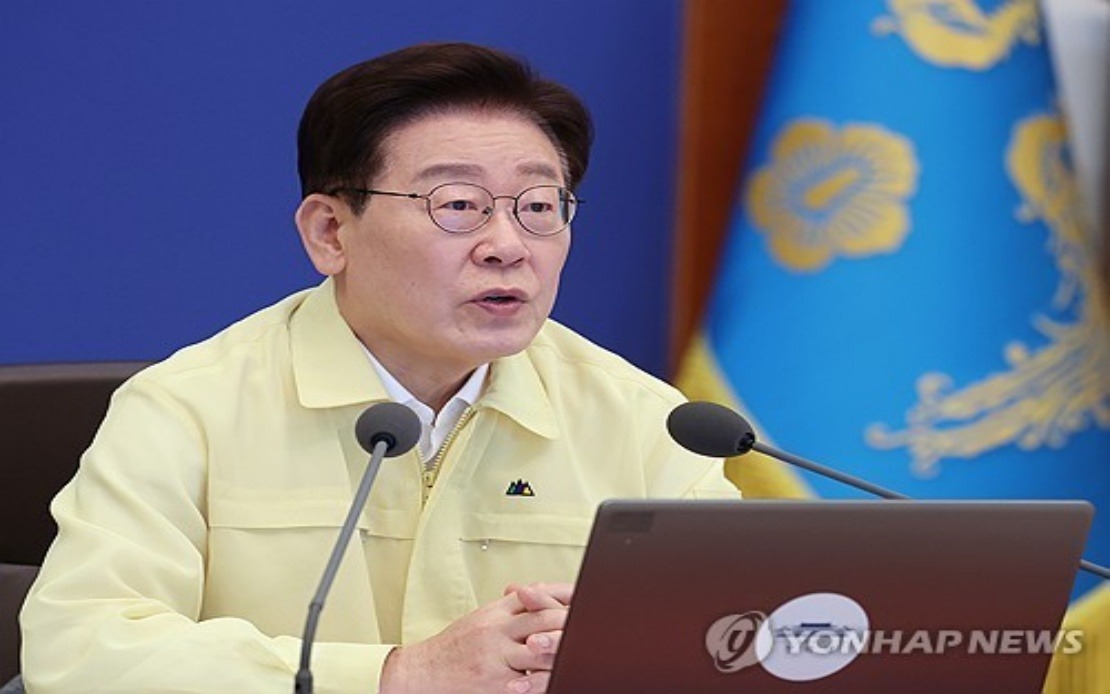
South Korea's President Lee Jae Myung has doubled down on his administration's ambition to restore full wartime command of the country's armed forces from American leadership, seeking to complete the transfer before departing office in 2030. During a Cabinet gathering on Tuesday, the president underscored that achieving this milestone would reinforce Seoul's capacity for independent defence while the global security landscape undergoes profound shifts. The statement reflects growing pressure within South Korean political circles to demonstrate national sovereignty in military affairs, even as Washington remains central to the peninsula's security architecture.
The historical context of this issue remains crucial for understanding contemporary Korean geopolitics. When the Korean War began in 1950, all military operations fell under United Nations Command control, which effectively meant American direction. That arrangement persisted through the armistice in 1953. Following the establishment of the South Korea-US Combined Forces Command in 1978, operational control remained bifurcated: Seoul recovered authority over peacetime situations in 1994, but the Americans retained command during any active hostilities. This division has become a persistent source of friction, with successive South Korean administrations viewing full control restoration as essential to national dignity and strategic independence.
President Lee's renewed emphasis on this objective arrives at a particularly sensitive moment in regional dynamics. The statement came shortly after United States President Donald Trump announced via social media that he had directed the Pentagon to reduce joint military exercises with South Korea substantially. Trump's move appeared designed as an overture toward North Korea, which has consistently condemned the annual drills as preparation for invasion. The Ulchi Freedom Shield exercise had just commenced when the president reaffirmed Seoul's OPCON ambitions, creating a complex backdrop where South Korea must balance American strategic preferences with its own security imperatives and desire for greater military autonomy.
Lee's vision extends beyond mere command authority over existing forces. The president simultaneously instructed his administration to accelerate procurement of nuclear-powered submarines, viewing such advanced capabilities as fundamental to establishing credible independent deterrence. This initiative reflects Seoul's understanding that regaining wartime control carries little practical value without the technological sophistication and operational capacity to execute sophisticated military strategy. The submarine programme therefore becomes intertwined with the broader OPCON objective, representing Seoul's determination to construct a defence posture that does not depend on American decision-making during crises.
The president explicitly framed the OPCON transfer within the context of evolving military challenges facing Northeast Asia. Modern warfare, Lee emphasized, encompasses hybrid threats combining conventional operations with cyber warfare, information campaigns, and other non-traditional methods. This evolution demands that South Korean military commanders possess comprehensive operational expertise spanning all three armed services' capabilities. Such integrated command authority cannot exist while ultimate wartime control remains vested with a foreign power, the president's reasoning suggested, creating pressure for structural reform of how South Korea's military operates across service lines.
Central to Lee's argument lies a sophisticated understanding of alliance management. Rather than framing the OPCON transfer as a challenge to the South Korea-US relationship, the president positioned enhanced South Korean capabilities as ultimately beneficial to the alliance's strength. When Seoul can credibly defend itself through advanced indigenous capabilities, the president contended, American security commitments become more strategically valuable rather than less. This framing attempts to convert what might appear as a move away from Washington into a partnership evolution where both nations contribute more equally to the peninsula's security.
Implementing this vision requires substantial institutional restructuring within South Korea's military establishment. Lee directed officials to proceed without hesitation in merging the three armed services' military academies into a unified institution. This consolidation would produce officers trained in joint operations from the outset of their careers, eliminating the interservice divisions that historically fragmented Korean military planning. The reform represents a long-term investment in creating a command structure capable of executing the kind of integrated strategy that wartime OPCON authority demands.
Regional implications of Seoul's OPCON ambitions extend throughout East Asia. Japan, Taiwan, and other security-conscious nations monitor South Korean military development closely, viewing Seoul's trajectory as a bellwether for regional strategic autonomy. If South Korea successfully establishes credible independent defence capabilities while maintaining alliance ties, it would demonstrate a model for reconciling alliance participation with national sovereignty—a balance that multiple Asian democracies seek to achieve. Conversely, failure to establish such balance might suggest that American security dominance in the region remains structurally necessary, with profound implications for regional strategic competition.
For Malaysian policymakers and regional observers, the South Korean push toward greater military autonomy offers instructive lessons about negotiating alliance relationships in an era of rising great power competition. Seoul's carefully calibrated approach—simultaneously strengthening ties with Washington while building autonomous capabilities—reflects sophisticated statecraft. Malaysia and other Southeast Asian nations facing comparable pressures to maintain strategic flexibility while navigating great power relationships can study how South Korea attempts to achieve this balance through institutional reform, technological advancement, and sustained diplomatic messaging.
The timeline Lee established—completing the OPCON transfer by 2030—provides a decade for implementing the necessary military reforms and technological acquisitions. This extended horizon suggests that Seoul recognizes the complexity of the transition, which cannot proceed through administrative decree alone. American agreement remains essential, as does the development of command structures, planning processes, and weapons systems capable of replacing functions currently performed by Combined Forces Command. The president's reaffirmation thus represents not merely political rhetoric but a statement of programmatic intent backed by resource allocation and institutional change.
Ultimately, Lee's push for wartime OPCON transfer reflects a fundamental tension within the South Korean strategic position: the nation simultaneously requires American security guarantees against North Korean aggression and Chinese regional influence, yet aspires to the military autonomy that befits a major developed economy. Resolving this tension requires both sides to evolve their relationship beyond Cold War patterns where Seoul remained largely subordinate to American military direction. Whether Washington proves willing to accommodate Seoul's aspirations within the 2030 timeframe remains uncertain, particularly given Trump's demonstrated skepticism toward traditional alliance arrangements and preference for bilateral negotiations with potential adversaries.

