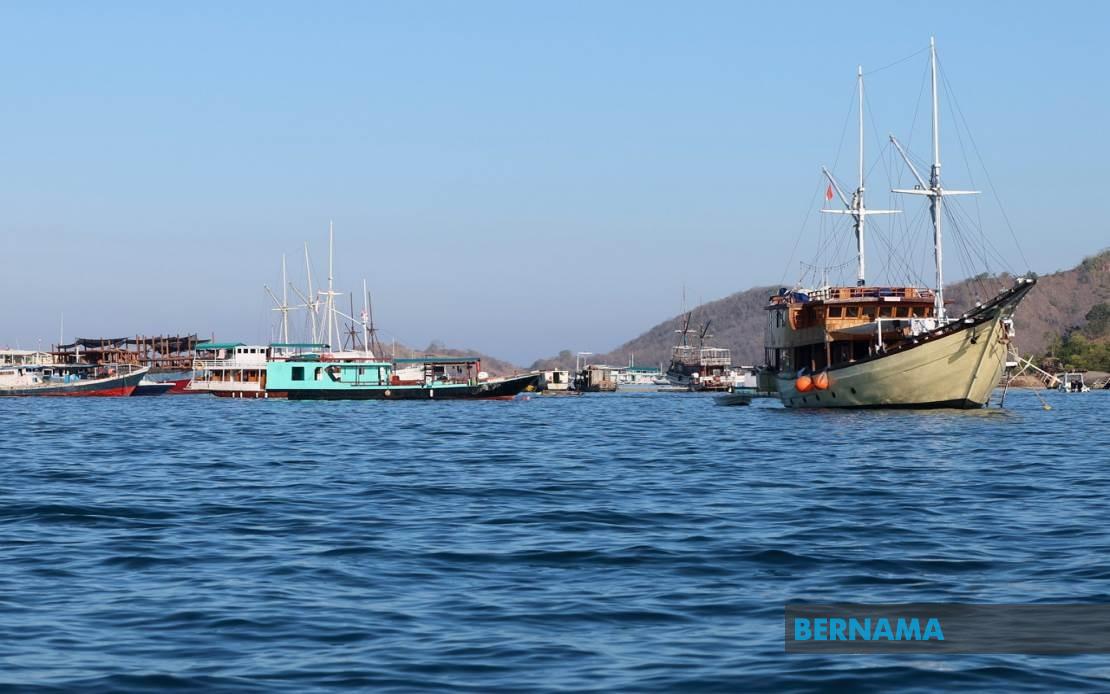
Indonesia's newly installed President Prabowo Subianto has signalled ambitious environmental governance by committing the country to substantial progress on waste management within the next eighteen months. The target, expected by end-2027, represents a significant pivot in the world's fourth-largest nation towards systematic waste resolution—a persistent challenge that has strained both urban infrastructure and public health across the archipelago. For Malaysian observers, this development carries implications beyond Indonesia's borders, as regional waste flows and transboundary pollution often implicate neighbouring economies in Southeast Asia's waste management crisis.
The urgency of Indonesia's waste initiative gains additional weight from concurrent environmental warnings. The country's meteorological authorities have flagged an intensifying El Niño phenomenon that is forecast to deepen drought conditions through early 2027, a projection that extends the window of heightened climate vulnerability across the region's core agricultural zones. Java, Sumatra, and Kalimantan face particular exposure to prolonged dry spells and elevated wildfire danger—threats that could disrupt agricultural output, strain water supplies, and trigger cross-border haze events familiar to Malaysia and Singapore. This convergence of waste management targets and climate pressures suggests the Indonesian government recognises the interconnected nature of environmental challenges facing the region.
In the Philippines, labour dynamics have become fraught after a court-issued temporary restraining order blocked implementation of a wage increase in the National Capital Region. Department of Labour and Employment Secretary Francis Tolentino publicly expressed disappointment at the legal impediment, which thwarted plans to raise compensation standards for Metro Manila workers. The episode reflects broader tensions in Philippine labour policy between cost-of-living pressures pushing upward wage demands and business community concerns about competitiveness. For Malaysian policymakers monitoring regional wage trends and labour market harmonisation, the Philippine experience offers cautionary context on the complexities of coordinating wage adjustments across competing constituencies.
Yet within the same policy landscape, the Philippines has moved decisively to attract technology investment by eliminating a seven-year moratorium on new information technology parks in Metro Manila. The lifting of this restriction is intended to reinvigorate the country's competitive position within the global IT-business process management sector—a domain where the Philippines historically ranks among Southeast Asia's stronger players. By removing barriers to park development, Manila aims to capture expanded market share in software development, back-office operations, and digital services. This liberalisation has implications for Malaysia's own efforts to position Kuala Lumpur and other centres as technology hubs, as increased Philippine capacity may reshape regional competition for both foreign investor capital and specialised talent.
Singapore's health authorities have reported measles infections climbing to their highest annual level in six years, with forty confirmed cases detected so far in 2026. Public health officials have noted that three cases occurred among vaccinated individuals, a finding that underscores the complex epidemiology of measles transmission even within highly inoculated populations. The spike represents Singapore's most significant measles burden since 2020 and suggests potential vulnerabilities in immunity coverage or the emergence of vaccine-resistant strains. For regional health systems including Malaysia's, the Singapore data provides an epidemiological signal that measles control cannot be assumed permanent despite historical vaccination success and warrants renewed vigilance in immunisation surveillance.
Singapore's commitment to environmental sustainability continues on a parallel track, with two-thirds of the city-state's building stock now achieving green certification standards. The achievement reflects systematic implementation of efficiency measures that reduce carbon emissions and lower energy consumption across the built environment. Singapore's building sector has positioned itself to meet targets set for 2030, demonstrating that rapid progress is attainable through coordinated policy frameworks and business compliance. Malaysian property developers and urban planners monitoring regional sustainability benchmarks can observe Singapore's trajectory as a model, particularly as Malaysia sets its own green building targets and seeks to accelerate the retrofit of existing structures.
Thailand's flourishing creator economy encompasses an estimated nine to eleven million content producers, a scale that underscores the rapid monetisation of digital media across the region. However, the explosive growth of solo creative careers has surfaced systemic risks that extend beyond traditional employment concerns. Content creators face unresolved vulnerabilities surrounding platform account ownership, payment processing and access, and the disposition of digital assets upon creator death or incapacity. These gaps reveal the gap between creator economy expansion and institutional frameworks designed to protect individual economic interests. For Malaysian digital entrepreneurs and content professionals, Thailand's experience demonstrates the necessity for clearer contractual protections and regulatory guidance as the creator economy expands within Malaysia's own digital ecosystem.
Thailand's tourism-dependent island economy is simultaneously confronting acute infrastructure stress as Koh Samui faces severe water shortages exacerbated by drought and peak season visitor volumes. Tourism operators have escalated calls for government investment in water supply infrastructure to ensure capacity keeps pace with rising visitor demand. The situation exemplifies how climate pressures interact with rapid tourism growth to create resource bottlenecks that threaten economic sustainability. For Malaysian tourism destinations, particularly those in seasonally dry regions or experiencing visitor growth, the Koh Samui scenario presents a cautionary example of the consequences when water infrastructure development lags behind tourism expansion, underscoring the need for forward-looking resource planning.

