The financial landscape across Southeast Asia is undergoing a fundamental transformation as banks respond to rapidly growing consumer and business appetite for green investments. What was once a niche offering confined to large-scale projects has now become a central business strategy, with financial institutions competing to capture market share in sustainable finance. This shift reflects not just regulatory pressure but genuine market dynamics—Malaysian electric vehicle sales doubled during 2025 while Indonesian sales more than doubled in the same period, according to data from the International Energy Agency. Such momentum is compelling banks to rethink their entire approach to lending and investment services.
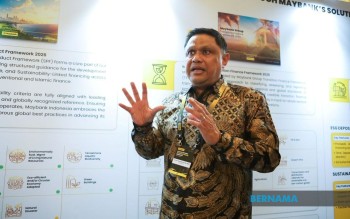
Maybank Group's latest commitment encapsulates the scale of this transformation. The institution has pledged to mobilise RM300 billion across ASEAN between 2026 and 2030, representing a dramatic acceleration from its previous target. Datuk Shahril Azuar Jimin, the group's chief sustainability officer, revealed that despite the programme's launch less than six months prior to his statement, implementation was tracking ahead of expectations. The pace of uptake itself tells a crucial story about market appetite—after years of banks cautiously entering the sustainable finance space, institutional and retail demand has finally caught up with supply.
Perhaps more telling than the new commitment is how comprehensively the previous target was exceeded. When Maybank announced a RM80 billion sustainable finance goal in 2021, it represented an ambitious stretch for the industry. Yet by the end of 2025, the bank had mobilised RM176 billion—more than double the original figure. This overperformance demolishes a longstanding industry myth that insufficient demand exists for green financing. Shahril explicitly addressed this misconception, noting that the notion of a liquidity shortage in sustainable finance has proven unfounded. Instead, he emphasised that banks are actively enthusiastic about supporting sustainability initiatives, suggesting the bottleneck now lies elsewhere—perhaps in client education or project pipeline development rather than capital availability.
The expansion of sustainable finance in Malaysia's residential sector illustrates how the infrastructure is evolving to meet rising consumer interest. The Energy Transition and Water Transformation Ministry's decision to increase the residential quota under the Net Energy Metering (NEM) Rakyat programme by 100 megawatts in May 2025 reflects the rapid uptake of rooftop solar installations among households. This government response validates the market signal that householders are ready to transition toward renewable energy if the financing mechanisms exist. For Malaysian readers, this means the pathway to installing residential solar systems is becoming less financially daunting, with banks increasingly offering tailored green mortgages and loans to support such investments.
Maybank's Sustainable Product Framework has expanded far beyond the initial conception of green finance. The current suite encompasses transition finance—which supports businesses gradually moving away from carbon-intensive operations—alongside electric vehicle financing, green residential mortgages, social finance initiatives, and green bond instruments. This diversification reflects a fundamental strategic shift. Rather than treating sustainability as a separate business unit, the bank is weaving environmental and social considerations across its entire product ecosystem. For businesses and individuals across ASEAN, this means banks are now positioned to finance activities across the entire spectrum of economic transition, from lifestyle choices like purchasing an electric motorcycle to major corporate decarbonisation initiatives.
The transformation extends beyond product innovation into how bankers themselves operate. Relationship managers, traditionally tasked with arranging financing terms, are now expected to serve as advisors on climate and sustainability matters. This reorientation requires substantial retraining. Shahril acknowledged that early challenges in sustainable finance stemmed from relationship managers' difficulty communicating effectively with clients about green projects. The solution demanded more than offering a loan product; it required bankers capable of explaining climate change implications, quantifying social benefits, and contextualising projects within broader transition trends. Maybank's significant investment in capacity-building programmes and sustainability certifications reflects this recognition that the industry's competitive advantage increasingly depends on human capital development, not just capital deployment.
Indonesia's sustainable finance trajectory provides regional context for understanding Malaysia's position. Maybank Indonesia mobilised approximately Rp17 trillion in sustainable financing through 2025 under the previous commitment, establishing the bank as a significant player in the archipelago's green transition. Maria Triffany Fransiska, head of sustainability at Maybank Indonesia, indicates that transportation has emerged as the strongest sustainable financing segment. This focus on electric vehicles makes intuitive sense given Indonesia's massive middle-class expansion and the environmental urgency of replacing millions of combustion-engine motorcycles and vehicles currently on the road.
The sustainability finance strategy is increasingly reaching everyday consumers rather than confining itself to megaprojects or wealthy clients. Maybank Indonesia's portfolio includes financing for affordable housing and low-cost electric two-wheelers targeted at lower-income communities. This democratisation of green finance represents a critical shift in how sustainability is understood and implemented. Rather than sustainable finance remaining the domain of large corporations and affluent investors, it is now embedding itself into the financial products ordinary Indonesians and Malaysians access. Such accessibility could fundamentally alter consumption patterns across the region, particularly in transportation and housing—two sectors responsible for substantial carbon emissions.
Beyond traditional lending, banks are developing adjacent services to strengthen their sustainable finance ecosystems. Maybank Indonesia has become the first institution within the group to launch an environmental, social, and governance (ESG) deposit product, with Malaysian expansion anticipated. These deposit products appeal to investors seeking alignment between their savings and their values, creating a virtuous cycle where banks attract capital explicitly designated for sustainability initiatives, which they then deploy into green projects. The strategy also signals confidence that ESG considerations have moved from ethical positioning into mainstream investor preference.
Green bond initiatives represent another frontier. Maybank Indonesia is preparing to develop such instruments, positioning itself to access the growing global appetite for debt securities funding sustainable projects. Green bonds have become increasingly important in ASEAN as they attract international capital seeking climate-aligned investments while providing local institutions with funding mechanisms for large-scale green infrastructure. For Malaysia and Indonesia, this means institutional access to global capital markets for projects addressing energy transition, renewable infrastructure, and climate adaptation.
The broader implications for Southeast Asia merit consideration. As Maybank and competitors scale sustainable finance offerings, the cost of green investments relative to conventional ones should diminish, creating market conditions favouring the energy transition. Malaysia's stated ambitions for renewable energy and Indonesia's resource transition imperatives align well with this banking sector pivot. However, execution remains critical—the commitment to mobilise RM300 billion means little without effective deployment into projects delivering genuine environmental and social outcomes. Banks must navigate the complexity of ensuring that sustainable finance labels genuinely reflect underlying environmental benefit rather than becoming a marketing exercise.
The acceleration also raises questions about transition financing for carbon-intensive industries. While much attention focuses on emerging green technologies, Southeast Asia's existing industrial base depends heavily on fossil fuels. Sustainable finance frameworks increasingly incorporate transition finance, recognising that decarbonisation requires supporting incumbent industries through gradual transformation rather than sudden displacement. For Malaysia and Indonesia, both substantial fossil fuel producers, this balance between financing green alternatives and enabling industrial transition will prove politically and economically sensitive.
The regional trend toward sustainable finance mainstreaming creates both opportunities and risks for Malaysian and Indonesian policymakers. On the positive side, readily available financing for EVs, renewable energy, and green housing accelerates the decarbonisation pathway at lower cost to government budgets. Conversely, rapid growth in sustainable finance channels may obscure weak environmental standards if green labelling becomes disconnected from genuine impact measurement. The industry's emerging professionalism—evidenced by Maybank's investment in sustainability certifications—suggests awareness of these risks, but vigilant regulation remains essential.

