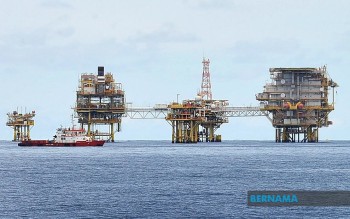
The Asia-Pacific energy sector is demonstrating resilience in the face of recent geopolitical upheaval, with Southeast Asia emerging as a growth engine for offshore investment. According to Hong Leong Investment Bank Bhd (HLIB), the region is positioned to inject more than US$100 billion into greenfield capital expenditure for offshore projects, representing a robust 12 per cent year-on-year expansion. This growth trajectory reflects a fundamental shift in investor sentiment, as energy companies prioritise the development of entirely new offshore facilities rather than focusing solely on maintaining existing infrastructure.
The stabilisation of offshore spending across the broader Asia-Pacific region follows the fragile ceasefire agreement between the United States and Iran, which culminated in the signing of a 14-point memorandum of understanding. While acknowledging the fragility of this arrangement, HLIB analysts believe the trajectory points decidedly towards de-escalation rather than renewed conflict. This assessment carries particular significance for Malaysian and Southeast Asian energy companies, which have long been exposed to supply chain disruptions and shipping route uncertainties stemming from tensions in the strategically critical Strait of Hormuz. The psychological shift alone—from crisis management to investment planning—has unlocked capital that major operators were previously keeping on the sidelines.
Crucially, traffic patterns through the Strait of Hormuz are showing signs of normalisation following the US-Iran agreement, though satellite imagery reveals a more complex picture than official shipping data suggests. Many vessels are transiting with their Automatic Identification System (AIS) transponders disabled, obscuring the true volume of cargo movement. This cautious behaviour underscores the lingering apprehension among shipping companies despite diplomatic progress. For Southeast Asian refiners and petrochemical manufacturers dependent on Middle Eastern crude imports, the recovery of normal shipping flows—coupled with improved predictability—offers genuine relief from the uncertainty premiums that have plagued operating costs over the past eighteen months.
Beyond immediate geopolitical recovery, HLIB's investment thesis rests on two transformative developments that could reshape the regional energy landscape. First, a global resolution to energy security concerns would likely trigger substantial inventory accumulation, particularly benefiting companies operating pipelines and storage terminals across Southeast Asia. Major infrastructure operators in Singapore, Malaysia, and Thailand stand to capture significant value from this shift. The second pillar centres on an anticipated capital spending surge by Petroliam Nasional Bhd (Petronas) beginning around 2027, which could trigger a cascading demand wave throughout Malaysia's oil and gas services and equipment sector. Companies specialising in upstream development, hook-up and commissioning operations, marine support services, fabrication work, and pipeline-related activities are positioned as primary beneficiaries of this investment cycle.
Oil price forecasting has become increasingly nuanced as geopolitical and supply dynamics interact in complex ways. HLIB has adjusted its Brent crude forecast downward to US$80 per barrel for 2026, a revision from its previous US$90 estimate, while maintaining a US$75 floor for 2025. This recalibration reflects analyst confidence that the worst-case scenarios—involving protracted Strait of Hormuz disruptions—are becoming increasingly unlikely. Nevertheless, the bank expects prices to remain elevated at these levels rather than collapsing toward pre-conflict norms, driven by structural factors in global inventory management. The US Energy Information Administration's June outlook projects that OECD commercial oil reserves will decline to just 50 days of supply by late 2026, substantially below the pre-conflict benchmark of 60 days or higher.
Inventory depletion emerges as the critical variable sustaining elevated energy prices in HLIB's analysis. Even as geopolitical tensions ease, the rebuilding of strategic reserves to comfortable levels will require sustained tight supply conditions and elevated price discipline. Should inventory reconstitution extend beyond reaching 60 days of supply, HLIB projects that Brent could remain supported above US$75 per barrel well into early 2027. This scenario underscores how energy security considerations—quite distinct from immediate conflict risk—will keep a price floor in place for an extended period. For Malaysian energy importers, this implies that the relief from geopolitical risk premium reductions will be offset by structural supply tightness, preventing the kind of dramatic price collapse that some observers had anticipated following diplomatic breakthroughs.
The geographic distribution of supply disruptions further complicates the outlook. Shut-in volumes across the Strait of Hormuz region surged to 45 per cent of normal production capacity during May 2026, up significantly from 35 per cent in March, indicating that geopolitical tensions created cumulative supply shocks even as diplomatic talks progressed. These production recovery timelines will determine how quickly global oil flows return to normal and when the inventory rebuilding process can accelerate. For Southeast Asian economies with substantial oil and gas sectors, prolonged production shutdowns in competing regions offer a temporary competitive advantage, potentially directing investment and customer flows toward more stable supply sources in APAC.
Regional economists take a broader macroeconomic perspective on the energy situation's implications. Mohd Sedek Jantan, director of investment strategy at IPPFA Sdn Bhd, notes that crude prices have retreated substantially from their recent peaks and are now stabilising within the US$70-75 per barrel range. This stabilisation, should it persist over coming months, would meaningfully improve the operational environment for energy-intensive businesses throughout Southeast Asia by reducing energy-related input costs and introducing greater cost predictability into business planning. The psychological benefits of price stability rival the benefits of absolute price reductions; companies can now budget and invest with greater confidence rather than hedging against worst-case scenarios.
The broader inflationary implications of sustained oil prices within the US$70-75 range extend well beyond the energy sector itself. Mohd Sedek contends that such price levels would help arrest global inflationary momentum by reducing cost-push pressures that have afflicted central banks since the conflict's onset. With energy costs moderating, consumer purchasing power would strengthen as transport and electricity costs decline in real terms. This dynamic would simultaneously enable central banks across Southeast Asia to maintain more accommodative monetary policies without triggering fresh inflation concerns, thereby amplifying the recovery effects throughout the region's economies. Business investment would likely accelerate as both energy cost certainty and favourable monetary conditions align.
Current market conditions as of the analysis date reveal marginal price momentum, with Brent crude trading at US$69.17 per barrel (up 0.90 per cent) and West Texas Intermediate at US$72.67 per barrel (up 0.94 per cent). These price levels sit comfortably within analysts' expected ranges and suggest that near-term trading dynamics favour relative stability rather than dramatic swings in either direction. For Malaysian policymakers and energy industry leaders, the convergence of geopolitical de-escalation, manageable price levels, and strong regional investment demand creates an unusually favourable window for strategic decision-making regarding domestic energy infrastructure and sectoral development.

