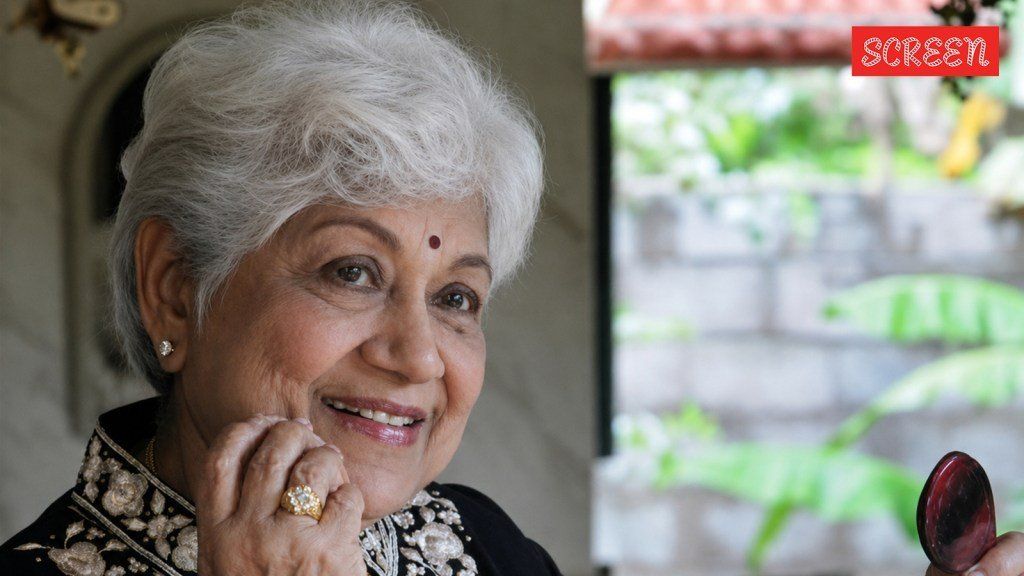
Sowcar Janaki, one of South Indian cinema's most enduring and respected figures, passed away on Friday at age 94 following a brief spell in intensive care at a private hospital in Chennai. The veteran actress, born Sankaramanchi Janaki, succumbed to age-related complications after admission to the facility, with her South Indian Artistes' Association president Nassar announcing her death. Her body was placed at Cenotaph Road, Teynampet, in the city for final respects.
The passing of Sowcar Janaki marks the end of an era in South Indian cinema. Her career, which commenced in 1950, spanned more than seven decades and encompassed nearly 400 films across multiple regional industries. This prolific output was hardly unusual for actors of her generation, yet it also underscored her consistent demand and the deep regard in which producers and directors held her talent. Unlike many contemporaries who faded from public consciousness, Sowcar Janaki remained a respected figure throughout her long life, occasionally appearing in films well into her nineties.
Sowcar Janaki's linguistic versatility made her distinctly valuable in an era when cinema was rapidly establishing itself in India's various states. She acted extensively in Tamil, Telugu, Kannada, and Malayalam films, with her Telugu work perhaps extending her reach across the southern regions. Later in life, she ventured into television, further expanding her footprint in entertainment. Her final Tamil film appearance came in Biskoth in 2020, whilst her last Telugu venture was Anni Manchi Sakunamule in 2023, demonstrating her continued relevance and willingness to work even in her final years.
The accolades she accumulated reflected both her talent and her longevity. Sowcar Janaki received the Padma Shri, one of India's highest civilian honours, recognition that acknowledged her contributions beyond mere commercial success. She also won the Filmfare Lifetime Achievement Award, two Nandi Awards honouring excellence in Telugu cinema, and the Kalaimamani Award for her artistic contributions to Tamil culture. These honours suggest that her work was regarded not merely as entertainment but as a significant cultural contribution worthy of national recognition.
Tamil Nadu's Chief Minister C. Joseph Vijay, himself an actor who emerged from cinema, expressed profound shock at her death through a statement on social media. He characterised her as having left an indelible mark across generations of audiences and celebrated her capacity to portray memorable characters across multiple languages. The Chief Minister noted that her seven-decade journey through cinema represented a loss not merely to entertainment but to the cultural fabric of South India, emphasising the breadth of her accomplishments beyond any single industry or language.
Actor and director Kamal Haasan, who worked with Sowcar Janaki across four decades beginning with the film Paarthaal Pasi Theerum, offered particularly poignant recollections. He recalled a professional relationship spanning numerous projects in which she typically portrayed his character's mother. Haasan characterised her as indispensable to South Indian cinema and noted her status as a preferred collaborator for the late K. Balachander, a revered filmmaker in the Tamil industry. His tribute emphasised the emotional depth she brought to maternal roles, suggesting that her influence extended beyond technical performance into the emotional texture of entire films.
Other prominent figures from the South Indian film world offered their own remembrances. Actor Radhika Sarathkumar highlighted Sowcar Janaki's independent spirit and unconventional approach to her craft, describing her as a path-breaker who challenged conventional expectations. She noted a close friendship between Sowcar Janaki and her own father, the late M.R. Radha, suggesting networks of mutual respect and admiration within the film community. Director Prabhudeva, dancer-turned-filmmaker, shared archival images alongside his condolences, honouring the visual legacy she left behind.
Telugu cinema, where much of her later work concentrated, also mourned her loss. Jr. NTR, one of contemporary Telugu cinema's biggest names, posted tributes acknowledging her lasting impact on the industry and the indelible quality of her performances. Veteran Telugu actor Chiranjeevi similarly recognised her illustrious career spanning nearly seven decades across multiple languages, describing her as a magnificent actress whose natural approach to character work had earned lasting affection from audiences. He emphasised that her contributions would be permanently remembered within Indian cinema's broader history.
Sowcar Janaki's career trajectory illuminates a particular period in South Indian cinema when regional film industries were developing distinct identities whilst remaining economically and culturally interconnected. Her ability to work seamlessly across Tamil, Telugu, Kannada, and Malayalam productions, during an era when dubbing was either unavailable or limited, suggested considerable linguistic skill and cultural fluency. She represented a generation of actors who built careers on regional film industries yet transcended any single linguistic or geographic boundary, creating a pan-South Indian cinematic presence that remains comparatively rare.
The timing of her death in August 2024 occurred as Tamil cinema in particular was experiencing renewed global attention and commercial revitalisation. Yet Sowcar Janaki's legacy belongs to an earlier period when film industries in South India were consolidating themselves regionally. Her continuous work from 1950 through 2023 meant she had witnessed the transformation of cinema from a relatively new medium to a dominant cultural force. She had acted with earlier generations of stars and remained professionally active during the careers of multiple subsequent generations, creating an unusual continuity across seven decades of regional cinema development.
With Sowcar Janaki's passing, the community of actors and filmmakers who worked during cinema's foundational decades in South India becomes increasingly sparse. Those who built careers entirely through regional film industries, working across multiple languages and maintaining consistent professional presence for over seven decades, represent a distinctive historical cohort. Her death reminds audiences and industry professionals of the vast body of work created during South India's cinematic development and the considerable talent that shaped the industries' foundations. The nearness of her death to the final acknowledgments of her work, visible in recent film releases, creates a poignant closing point to her remarkably long and productive engagement with cinema.

