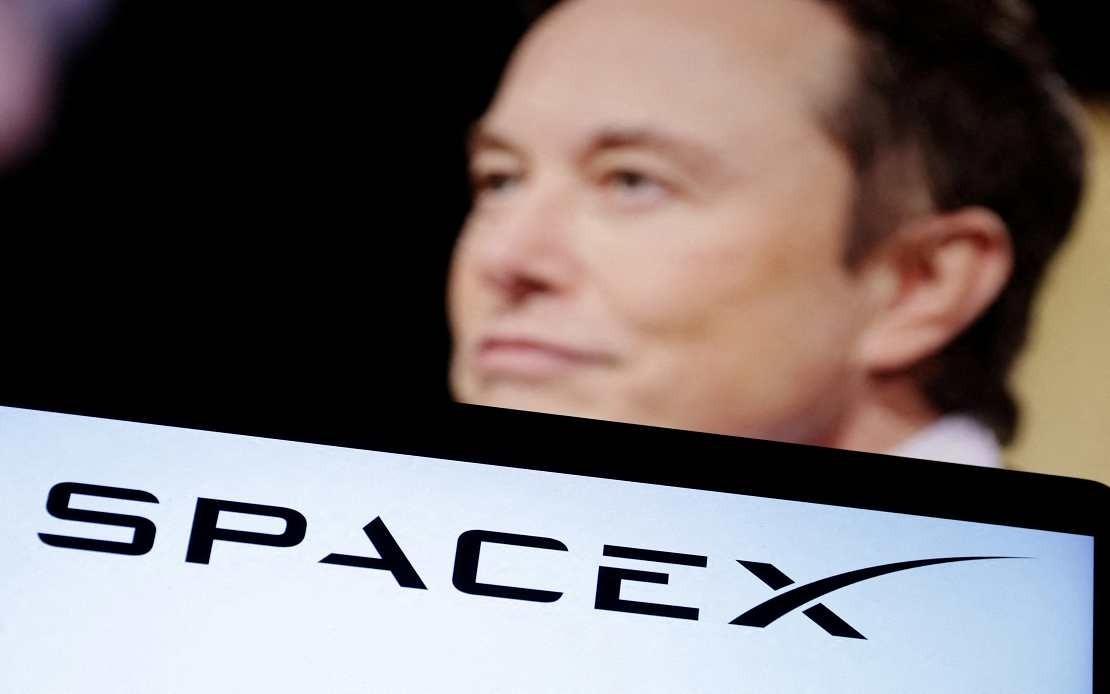
SpaceX has posted a net loss of US$541 million for the quarter marked by its record-breaking initial public offering in mid-June, though this represents a significant improvement from the roughly US$1 billion loss the aerospace company recorded in the same period a year earlier. The loss underscores the complex financial picture facing Elon Musk's space enterprise: despite achieving historic capital-raising milestones, the company continues to burn cash while investing aggressively in future technologies.
The company's financial results stand in sharp contrast to Wall Street's initial enthusiasm for the IPO. SpaceX raised US$75 billion in its June listing, valuing the company at approximately US$1.8 trillion—a number that appears disconnected from present-day profitability. The IPO pricing of US$135 per share nevertheless captured investor optimism, with shares subsequently climbing above US$225 in the weeks following the debut. However, momentum has since evaporated, with the stock sliding back below its issue price to close Tuesday's regular trading at around US$125, a reality check on the company's valuation relative to its current earnings capacity.
Revenue performance tells a markedly different story from the bottom line. Total quarterly revenue surged nearly 92 percent year-on-year to US$7.8 billion, substantially outpacing analyst forecasts that had averaged around US$6.9 billion. This growth has been fuelled primarily by Starlink, SpaceX's constellation of satellites designed to provide global broadband coverage. The service generated approximately US$4.3 billion in revenue during the quarter, up nearly two-thirds from the corresponding period in the previous year. Starlink's customer base has meanwhile expanded from 10.3 million to 12 million subscribers in just three months, demonstrating sustained market demand and competitive advantages in underserved regions.
The expansion of Starlink's commercial footprint carries significant implications for Southeast Asian markets, where internet penetration remains uneven and traditional terrestrial infrastructure faces challenges in remote areas. Airlines have increasingly become customers for Starlink's in-flight connectivity services, representing a diversification beyond consumer broadband and opening new revenue channels. The company's plans to enable direct smartphone connections to the Starlink network could disrupt existing telecommunications business models across the region, potentially threatening traditional mobile operators while offering consumers new connectivity options.
Operating profit more clearly reflects underlying business strength, rising 80 percent to approximately US$1.66 billion. This metric suggests that while SpaceX continues to invest heavily in capital-intensive projects, the core Starlink business generates substantial cash and demonstrates operational leverage. The divergence between strong operating performance and net losses illustrates the substantial research and development expenditures the company directs toward future ventures, particularly its Starship rocket programme and artificial intelligence initiatives—investments that justify the sky-high IPO valuation in management's view, even if current investors remain unconvinced.
Starship represents SpaceX's most ambitious undertaking, with the fully reusable heavy-lift rocket still in test-flight phases. Once operational, Starship is projected to dramatically reduce the per-kilogramme cost of launching payloads into orbit, fundamentally altering space economics. This capability carries implications beyond commercial space markets; it directly supports US governmental space objectives, rendering SpaceX essentially indispensable to American space policy. For Southeast Asian nations developing space programmes or considering satellite capabilities, SpaceX's cost reductions could eventually make space access more economically viable.
SpaceX's critical role in the US space programme provides a strategic buffer against the short-term stock performance pressures facing other newly public companies. The company maintains substantial government contracts for national security launches and other missions, creating a revenue floor independent of commercial markets. This government relationship has arguably contributed to the company's willingness to maintain aggressive investment spending despite public market scrutiny.
The timing of SpaceX's earnings release coincides with an approaching lock-up expiration on Thursday, when additional shares held by early investors and company insiders become eligible for sale. This technical factor could exert further downward pressure on the stock price, as roughly 45 percent of shares entering free-float could trigger selling pressure from early-stage investors seeking liquidity or profit-taking.
The financial picture reveals a company caught between two narratives. For believers in SpaceX's long-term potential—particularly its artificial intelligence ambitions and Starship capabilities—the current stock price may appear attractive given the trajectory of revenue and operational metrics. For value-oriented investors, the US$1.8 trillion valuation appears premature given present profitability levels, suggesting the market has priced in significant future growth assumptions that may not materialise. Malaysian and regional investors considering exposure to SpaceX should carefully weigh the company's transformative potential against near-term financial realities and the execution risks inherent in its moonshot ambitions.

