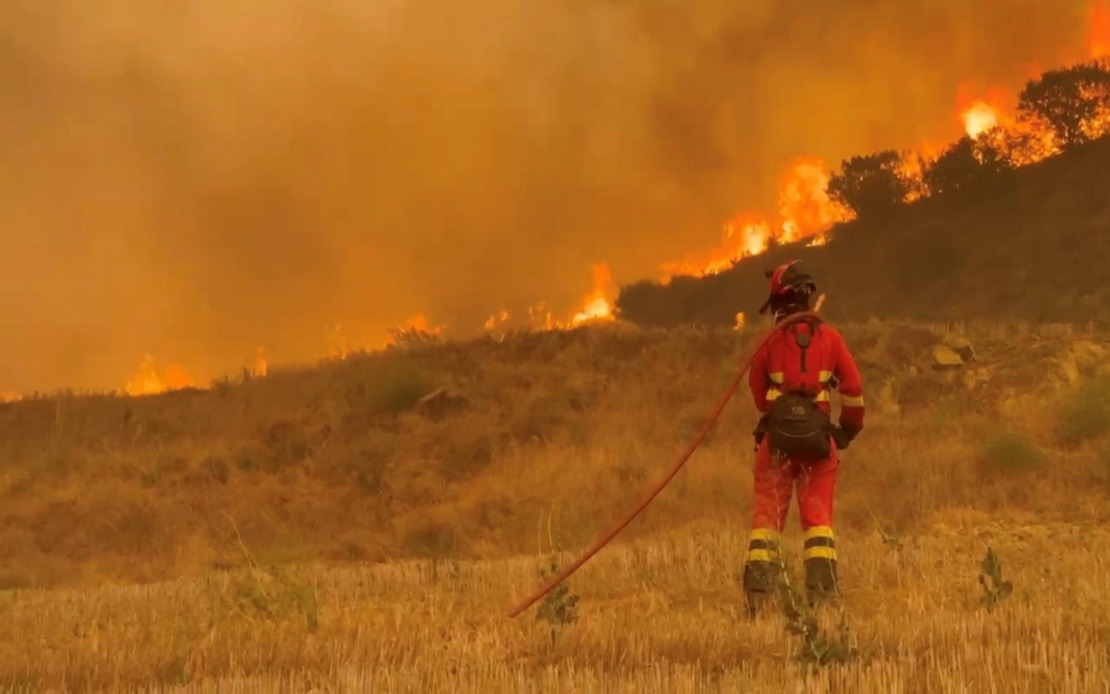
Spain is grappling with its most destructive wildfire of the year, a sprawling blaze that ignited Wednesday in the Cinco Villas region of Zaragoza province and has since torched approximately 12,000 hectares of landscape. The conflagration, which remains active and continues to spread, has necessitated the evacuation of more than 1,100 residents from five municipalities across Zaragoza and an additional community in neighbouring Navarre. Emergency crews characterise the fire's behaviour as "quite active" with "significant" expansion occurring through the night into Friday, underscoring the intensity and unpredictability of the disaster.
The geographical scope of the catastrophe is staggering. The fire has carved a perimeter stretching roughly 60 kilometres across the countryside, with the destruction forcing authorities to seal multiple roads and restrict movement throughout the affected area. Despite the severity of the situation, regional authorities have managed to restore electrical service to all impacted towns, a crucial step in supporting communities facing potential displacement and economic disruption. The evacuation operations have been methodical, though the ongoing volatility of the flames means the situation remains fluid and potentially dangerous for those in nearby zones.
Combating the inferno has required mobilisation of substantial resources. On Thursday alone, authorities deployed approximately 400 ground personnel supported by 19 aircraft, a significant commitment that reflects the scale of the emergency response. Overnight, firefighting efforts concentrated on defending inhabited areas, particularly homes in Uncastillo, where crews worked to establish protective perimeters and prevent the fire from advancing into populated zones. This defensive strategy illustrates the difficult choices emergency services must make when resources are stretched across multiple disaster zones simultaneously.
The Zaragoza fire is not an isolated incident. Concurrently, a second major wildfire in La Mierla, located in Guadalajara province further north, has consumed approximately 900 hectares and remains uncontained. This secondary blaze has similarly forced evacuations and lockdown protocols in surrounding communities, stretching Spain's emergency response infrastructure even thinner. Recognising the magnitude of the dual crisis, the regional government formally requested deployment of Spain's Military Emergency Unit, which dispatched roughly 100 military personnel to supplement civilian firefighting operations and provide additional logistical support.
A third wildfire near Lozoyuela, positioned north of Madrid, presented a somewhat brighter picture, with emergency services reporting the situation progressing favourably. However, officials cautioned that this fire remains neither fully controlled nor contained, meaning the threat persists even as conditions appear more manageable than elsewhere. Across all three major fire zones, authorities maintain lockdown restrictions and road closures as precautionary measures, reflecting the unpredictability of wildfire behaviour and the need for sustained vigilance.
In a development that may signal deliberate human involvement in at least one instance, the Civil Guard arrested a suspect in connection with the fire near Madrid. The regional government subsequently announced its intention to participate in legal proceedings as a civil party, signalling serious commitment to accountability. This arrest underscores that not all wildfire devastation results from natural causes alone, though the vast majority of Spain's current conflagrations stem from environmental factors.
The confluence of meteorological conditions has created an ideal crucible for rapid fire spread throughout the region. Exceptionally high temperatures, powerful winds, and critically low humidity levels have combined to transform the landscape into tinder. Adding fuel to this volatile mixture is abundant vegetation that flourished following a wet spring, creating dense biomass that burns with terrifying ferocity once ignited. This pattern represents a particularly pernicious consequence of climate variability, where seasonal extremes—abundant rainfall followed by scorching drought—paradoxically amplify disaster risk.
Climate change itself has become a focal point for experts examining Spain's escalating wildfire crises. Scientists and policy analysts increasingly characterise rising temperatures and shifting precipitation patterns as primary drivers of the frequency and intensity of these catastrophes. Simultaneously, the abandonment of rural areas across Spain has exacerbated vulnerability. As agricultural communities have declined and depopulated, traditional land management practices have deteriorated, forests have grown denser and less maintained, and early warning systems in remote regions have weakened. This rural abandonment creates ecological conditions substantially more conducive to rapid fire propagation than landscapes actively managed through farming and forestry.
For Malaysian and Southeast Asian observers, Spain's current crisis offers sobering lessons. While the region's climate and geography differ substantially, rising temperatures globally and the intensification of extreme weather phenomena affect all nations. Spain's experience demonstrates how climate shifts can transform natural landscapes into tinderboxes, how preparedness and resource allocation become critical policy issues, and how interconnected hazards can overwhelm emergency services simultaneously. Malaysia's own history of transboundary haze and forest fires illustrates similar vulnerabilities, particularly during El Niño periods when drought stress accelerates across Southeast Asia. Spain's mobilisation of military resources and coordinated regional response provides a comparative framework for understanding emergency management during environmental crises of continental scale.
The current Spanish wildfire crisis simultaneously highlights the tension between reactive emergency management and proactive prevention. While Spain has deployed hundreds of personnel and numerous aircraft, these represent expensive, temporary interventions that address symptoms rather than root causes. The abandonment of rural land management practices, demographic shifts away from agriculture, and the overarching influence of climatic shifts suggest that sustainable solutions require integrated approaches spanning land stewardship, rural policy, climate action, and long-term investment in fire prevention infrastructure. Without such comprehensive strategies, similar disasters will likely recur with increasing regularity as global temperatures continue their upward trajectory.

