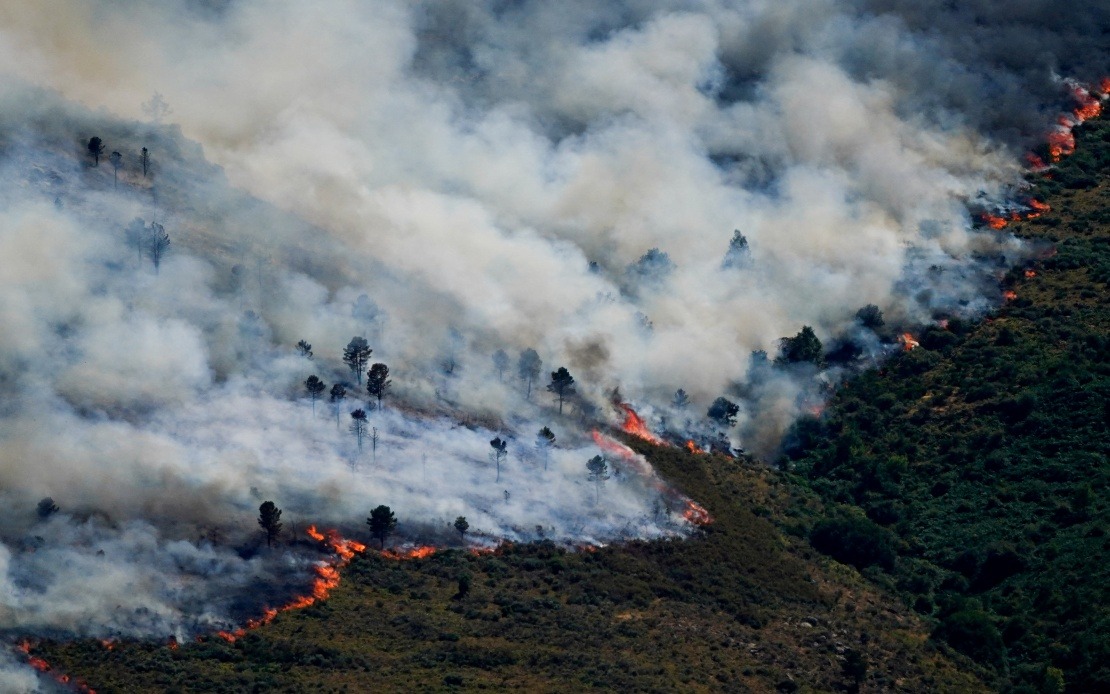
Spain's government has activated emergency protocols of the highest order following catastrophic wildfires that have displaced tens of thousands of residents across the Madrid region and surrounding provinces. The scale of the evacuation underscores the severity of the natural disaster, with authorities mobilizing resources across multiple jurisdictions to manage the humanitarian crisis unfolding in real time.
The evacuation figures paint a stark picture of the crisis's magnitude. In Ávila province, situated northwest of the Spanish capital, local authorities ordered the immediate departure of 30,000 residents seeking refuge from advancing flames. Francisco Martín Aguirre, the Spanish government's representative in Madrid, provided these figures to assembled journalists as the scale of the emergency became clearer throughout Saturday. The evacuation extended well beyond Ávila's borders, with an additional 29,488 people forced from their homes in the territories surrounding Madrid itself, bringing the total number of those who had successfully evacuated to approximately 60,000 by midday.
Beyond those who managed to leave their properties, the Interior Ministry identified a deeply concerning secondary crisis: more than 28,000 individuals found themselves unable to evacuate safely as fire conditions deteriorated. This trapped population comprised 20,262 people in the greater Madrid metropolitan area and approximately 8,000 in Ávila province. These figures suggest that despite extensive evacuation efforts, infrastructure bottlenecks, road closures, and the speed of the fire's spread created dangerous situations where some residents became isolated from escape routes. The plight of these stranded populations added urgency to firefighting efforts and rescue operations across both regions.
Recognizing the unprecedented nature of the disaster, Prime Minister Pedro Sánchez's administration took the formal step of declaring a "state of emergency of national significance" across the Greater Madrid area and Ávila province on Friday. This declaration triggers extraordinary governmental powers, streamlines bureaucratic procedures, and mobilizes national resources on an accelerated timeline. The declaration itself signals that authorities viewed the situation as exceeding the capacity of regional governments to manage independently, requiring coordination and resource deployment at the national level. Such declarations are reserved for disasters of the most serious character and indicate the government's assessment that Spain faces a genuine threat to public safety and territorial integrity.
A modest shift in atmospheric conditions offered the first hopeful development in an otherwise dire situation. On Saturday morning, the Interior Ministry announced that overnight weather patterns had become more favorable for containment operations, with improvements in wind speed and humidity creating windows of opportunity for firefighting teams. These meteorological changes theoretically reduced the speed at which flames could advance and improved visibility for aerial water-bombing operations conducted by helicopters and specialized aircraft. The temporary respite from deteriorating conditions provided essential breathing room for exhausted emergency personnel engaged in round-the-clock operations.
From his position at the emergency services' command centre, Sánchez addressed the nation with guarded optimism, suggesting that improved weather circumstances might enable authorities to achieve meaningful fire containment by the end of the weekend. His statement reflected cautious hope rather than confidence, acknowledging that conditions could shift once more if meteorological patterns reversed. The Prime Minister's presence at the operational command centre itself demonstrated the gravity with which the national government approached the crisis, positioning him to make real-time decisions and coordinate responses across agencies.
Yet Sánchez tempered any optimism with clear-eyed realism about the challenges ahead. He acknowledged that despite the marginally improved conditions, the overall situation remained precarious and subject to rapid deterioration. The fundamental priority, he emphasized, remained the protection of human life—a statement that reflected both the humanitarian imperative and the political reality that any perception of inadequate life-safety measures could invite severe criticism. This framing prioritized evacuation and rescue operations over protecting infrastructure or property, a choice that carries significant economic implications for affected communities but reflects contemporary crisis management philosophy.
The wildfires themselves represent a phenomenon increasingly familiar across Southern Europe, where climate change and prolonged drought conditions have created tinderbox landscapes vulnerable to rapid fire spread. Spain, positioned at the Mediterranean's western edge, has experienced multiple major wildfire seasons in recent years, each pushing emergency response systems to their limits. The Madrid region's proximity to the national capital and the concentration of population in surrounding areas mean that any major fire event threatens millions of people within the broader metropolitan zone and carries political consequences for the sitting government.
For Malaysian and Southeast Asian observers, Spain's wildfire crisis offers instructive lessons about disaster preparedness and governmental response coordination. While Southeast Asia faces different primary natural hazards—typhoons, flooding, and earthquakes predominantly shape the region's risk landscape—the principles of mass evacuation, governmental declaration of emergency status, and prioritization of life safety apply universally. Malaysia's own experience with large-scale evacuations during floods and the occasional transboundary haze events provides comparable contexts where coordination between federal and state authorities becomes critical.
The situation also highlights how environmental challenges increasingly transcend national borders and create shared vulnerabilities across developed economies. Spain's fire management capacity, despite significant resources and advanced technology, was tested severely by the scale and speed of this event. This reality carries implications for how middle-income and developing nations approach climate adaptation and disaster risk reduction, suggesting that even wealthy countries face escalating challenges from environmental hazards. For Southeast Asian policymakers, the Spanish experience underscores the importance of investing in early warning systems, evacuation infrastructure, and coordinated emergency response protocols before major disasters strike.

