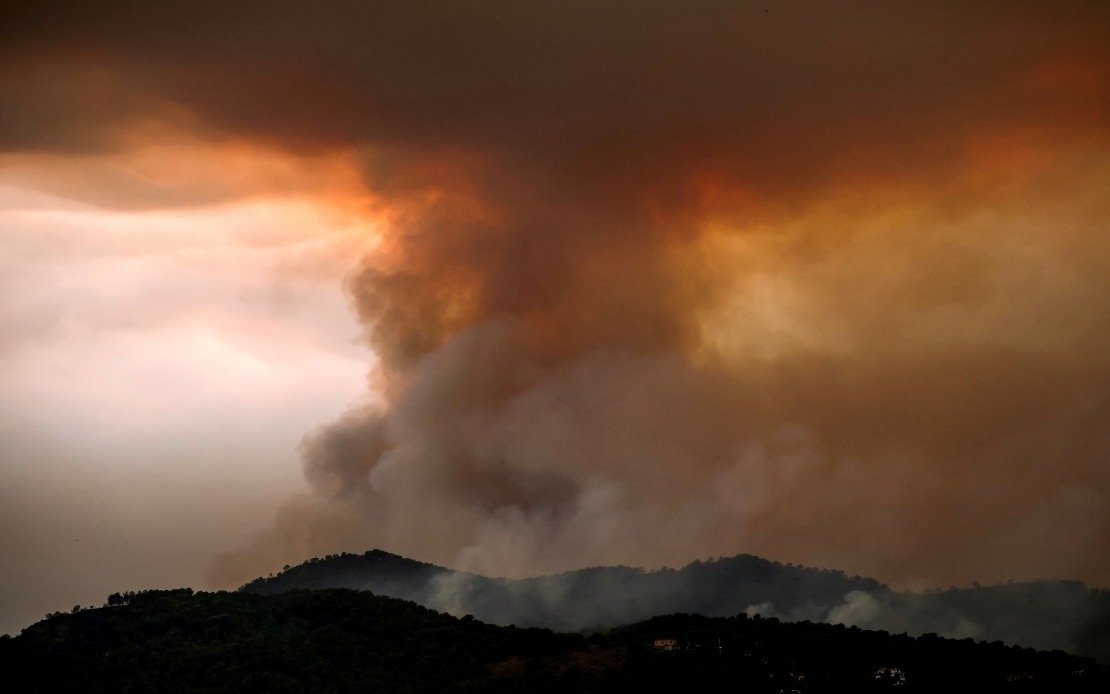
Spain is fighting what authorities have confirmed as the largest wildfire in the nation's recorded history, with flames consuming vast swathes of central territory and forcing unprecedented mass evacuations. The primary blaze in Avila province has already torched approximately 50,000 hectares, while additional fires spreading across the Madrid region and Toledo province have collectively scorched more than 77,000 hectares, according to figures released by Spain's Third Deputy Prime Minister and Ecological Transition Minister Sara Aagesen. The scale of the disaster has drawn responses from the country's highest levels of government, with Prime Minister Pedro Sanchez and the Spanish royal family visiting affected areas to assess the emergency response and demonstrate solidarity with displaced residents and emergency personnel.
The geographic extent of the catastrophe underscores the severity of the situation facing Spanish authorities. The Madrid region, Avila, and Toledo have emerged as the worst-affected territories, with approximately 100,000 individuals either evacuated or instructed to remain indoors across 46 separate municipalities. The disruption has extended beyond these core zones, with an additional wildfire erupting in the eastern province of Castellon over the weekend, impacting more than 16,000 people distributed across 18 municipalities. This multi-front conflagration has stretched emergency response capabilities and highlighted the vulnerability of populated areas to extreme fire conditions, a concern that resonates across Mediterranean and semi-arid regions globally, including parts of Southeast Asia facing similar climatic pressures during dry seasons.
The operational complexity of battling these simultaneous blazes has required mobilization of extensive firefighting resources. Thousands of firefighters, augmented by Spain's Military Emergency Unit (UME), have deployed specialized firefighting aircraft and helicopter support in continuous operations. Lieutenant General Francisco Javier Marcos Izquierdo, commanding the UME, provided crucial clarification regarding the fire topology, noting that while the Avila and Madrid fires had initially appeared as a unified threat, they remain technically separate incidents connected only along a narrow and discontinuous front near San Martin de Valdeiglesias. This distinction matters operationally, as it allows emergency coordinators to concentrate resources and adopt different tactical approaches to each fire zone. Firefighting personnel believe they have successfully arrested the spread between the two zones, though complete perimeter containment has not yet been achieved, indicating that danger persists despite tactical gains.
Minister Aagesen characterized the wildfire situation as inherently "complex," a measured assessment reflecting the unpredictability and scale of the emergency. Speaking from an advanced command centre positioned in Navalcarnero, west of Madrid, she emphasized that emergency crews were simultaneously managing multiple operational fronts, each presenting distinct challenges related to terrain, wind patterns, and fuel density. Her comments indicated that further evacuations remain possible depending on how the fires evolve, and she outlined clear protocols requiring evacuated residents to remain displaced until authorities determine conditions are sufficiently safe for return. This cautious approach reflects lessons learned from previous fire disasters across Europe, where premature returns to affected areas have resulted in casualties and property losses.
Prime Minister Sanchez's assessment during his Sunday visit to affected zones struck a more optimistic tone while acknowledging ongoing dangers. He characterized the challenges confronting firefighters as "extremely complex" yet indicated that the overall trajectory had begun to shift favorably, with portions of the fires transitioning from active expansion to controlled or contained status. This progression, while modest given the fires' scale, provided a measure of relief to authorities and residents anxiously monitoring developments. The symbolic importance of high-level political visits during emergencies extends beyond photo opportunity; such visits signal governmental commitment to crisis management and provide platforms for officials to receive real-time briefings that inform resource allocation decisions.
The involvement of Spain's royal family in the disaster response underscored the national significance of the emergency. King Felipe VI and Queen Letizia visited the disaster zone to receive comprehensive briefings on emergency response operations and to demonstrate tangible support for affected residents and frontline personnel. Monarchical presence during crises serves both practical and symbolic functions within Spanish governance structures, conveying institutional commitment to recovery and providing visible recognition of sacrifice made by emergency workers and the hardship endured by displaced populations. Such gestures carry particular resonance in European political cultures where institutional stability and continuity matter significantly during periods of acute disruption.
The broader national context reveals an alarming escalation in fire activity across Spanish territory. According to data from Spain's Ecological Transition Ministry, wildfires had collectively consumed 172,453 hectares nationwide as of July 24, already exceeding historical baselines for comparable periods. This figure, released before the Avila and Madrid fires reached their full destructive capacity, suggests that total national losses from the 2023 fire season will substantially surpass previous records. The accumulation of fire events across multiple provinces indicates systemic pressures—likely driven by extended drought, elevated temperatures, and vegetation stress—that transcend any single incident and reflect broader climatic shifts affecting Mediterranean Europe.
For Malaysian and Southeast Asian observers, Spain's wildfire crisis offers instructive parallels regarding climate vulnerability and emergency preparedness. While Spain's fires burn in temperate latitudes during summer, Southeast Asian nations confront comparable fire threats during monsoon transition periods and dry seasons, particularly in regions dependent on peatland agriculture or experiencing deforestation. The Spanish response—involving military units, multi-regional coordination, and high-level political engagement—mirrors protocols that regional governments increasingly adopt during transboundary haze events and large-scale fire emergencies. The resource intensity required to battle fires of this magnitude raises questions about capacity in regions with fewer available firefighting assets and less developed early-warning infrastructure.
The immediate humanitarian challenge of managing nearly 100,000 displaced persons across 46 municipalities reveals logistical complexities that extend far beyond flame suppression. Authorities must coordinate temporary housing, medical services, psychological support, and economic assistance for businesses disrupted by evacuation orders. The psychological burden on displaced populations, particularly in rural communities with deep historical connections to land, carries long-term implications for social cohesion and mental health systems. Recovery timelines for entire regions typically span years rather than months, requiring sustained governmental commitment and international support in severe cases.
Looking forward, the Avila fire's status as Spain's largest on record will almost certainly prompt comprehensive reviews of fire prevention strategies, early-detection systems, and emergency response protocols. Resource allocation decisions made during this crisis will influence fire management budgets for coming years, potentially establishing precedents for similar emergencies across Europe. The international dimension cannot be overlooked; neighboring countries monitor Spanish crisis response as potential templates for their own preparedness frameworks, while European Union mechanisms for mutual aid and resource sharing may be activated to support recovery operations. For Spain specifically, this disaster will likely catalyze policy discussions regarding land management, forest density reduction, and climate adaptation strategies intended to mitigate future fire risks in an era of escalating temperature extremes and prolonged drought cycles.

