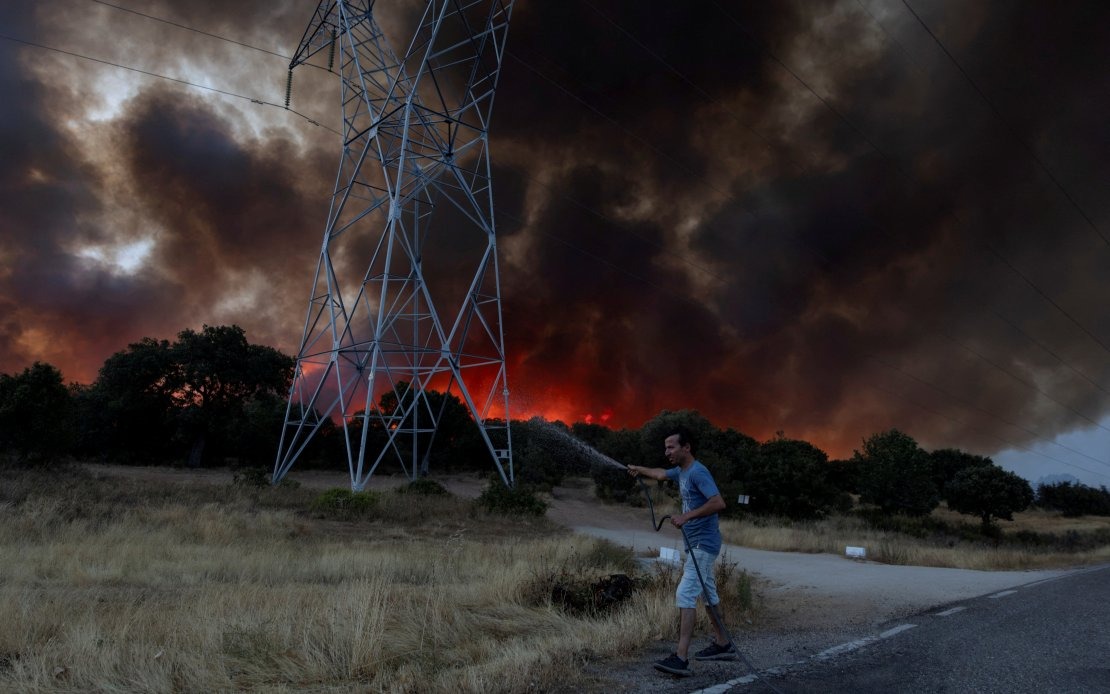
Spain is confronting a critical wildfire emergency that has forced the rapid evacuation of multiple communities and left thousands unable to return home. The crisis intensified on Wednesday evening when a major blaze broke out in the Arribes del Duero National Park, a protected nature reserve straddling the border between Spain and Portugal in the north-western region of Castile and León. The fire originated near the municipality of Fermoselle, triggering immediate defensive measures by regional authorities who recognised the imminent threat to nearby settlements and the broader landscape during an extended period of dangerous heat conditions.
The scale of the immediate human displacement proved substantial, with approximately 950 residents forced to leave their homes as emergency protocols activated across the affected zone. The evacuations encompassed 12 villages and included particularly vulnerable populations, notably occupants of a nursing home located in Muga de Sayago, according to statements from the Guardia Civil police force distributed through social media. Beyond mandatory evacuations, authorities implemented stay-at-home orders in two additional neighbouring communities as a precautionary measure, reflecting the volatile and unpredictable nature of the advancing fire conditions in the region.
Prime Minister Pedro Sánchez characterised the overall wildfire situation confronting Spain as extremely tense and demanding urgent national attention. The political leadership engaged with this crisis at the highest levels, with Sánchez conducting discussions about the wildfire emergency and the underlying extreme heat risks with King Felipe VI during an official meeting held in Palma de Mallorca. These exchanges underscored how the fire challenge had transcended regional management to become a matter requiring coordination between government institutions and the monarchy, reflecting the severity of the threat to Spanish territory and population centres.
The geographic scope of Spain's wildfire problem extends far beyond the single blaze near the Portuguese frontier. At the time of these developments, Spanish authorities were actively managing ten separate wildfires of varying intensity across the country, demonstrating that the threat represents a nationwide phenomenon rather than an isolated incident. This distributed pattern of fire activity illustrates how widespread heat stress and dry conditions have created multiple flashpoints of danger simultaneously, overwhelming firefighting resources and emergency response systems across different regions.
The fundamental driver of this wildfire proliferation is the extreme heat being experienced across the Iberian Peninsula. Spanish officials specifically attributed the elevated fire risk to the current heatwave conditions, warning that another surge of dangerous temperatures would persist through Sunday. This meteorological pattern creates a compounding crisis: the heat simultaneously generates conditions favouring fire ignition and spread while exhausting emergency personnel and equipment stretched across multiple fronts. Sánchez explicitly called on the public to exercise extreme caution during this dangerous window, recognising that human behaviour—from discarded cigarettes to uncontrolled burns—could trigger additional conflagrations when conditions are primed for rapid fire development.
The long-term response to Spain's recurring wildfire vulnerability is also emerging as a policy priority. Sánchez disclosed that Spain has petitioned the European Commission to establish a new European wildfire-fighting centre headquartered on the island of Mallorca. This proposal reflects recognition that contemporary fire challenges transcend national borders and require continent-wide coordination, resources, and expertise. The positioning of such a facility on Mallorca would create a Mediterranean hub for coordinating wildfire response across southern European nations facing similar climate-driven fire pressures, aligning with broader European Union strategies for managing climate-related emergencies.
While some regions experienced gradual improvement in fire conditions, the overall situation remained critical for large population segments. Authorities managed to contain and stabilise specific fire zones, enabling the lifting of evacuation orders and movement restrictions in certain areas. In the province of Ávila, all restrictions were completely rescinded as conditions permitted residents to return to their communities. However, this positive development was substantially offset by the stubborn displacement of approximately 9,500 people remaining unable to access their homes in the Madrid region, where firefighting efforts continued against blazes in the Sierra Norte area west of the capital and in the neighbouring province of Toledo to the south-west.
The persistence of such large-scale evacuations underscores the challenge Spanish authorities face in managing multiple simultaneous fire emergencies. Even as some zones stabilised, the sheer magnitude of the overall crisis meant that thousands of Spaniards remained displaced from their homes, facing accommodation in emergency shelters and uncertain timelines for returning to normal life. This displacement created secondary humanitarian challenges beyond the direct fire threat, including disruptions to employment, education, healthcare access, and family routines.
For regional observers in Southeast Asia, Spain's wildfire crisis offers sobering lessons about vulnerability to climate-driven extreme events. The Peninsula's experience demonstrates how rising temperatures create conditions for unprecedented fire activity even in regions with developed emergency response infrastructure and substantial firefighting resources. As Malaysia and neighbouring countries face their own intensifying climate pressures—including extended dry seasons and heat extremes—the Spanish example illustrates both the physical dangers of such conditions and the strain they place on governmental capacity to protect populations. The coordination challenges evident in managing Spain's multiple simultaneous fires reflect broader questions about preparedness for compound disasters that may increasingly characterise the climate-changed world.

