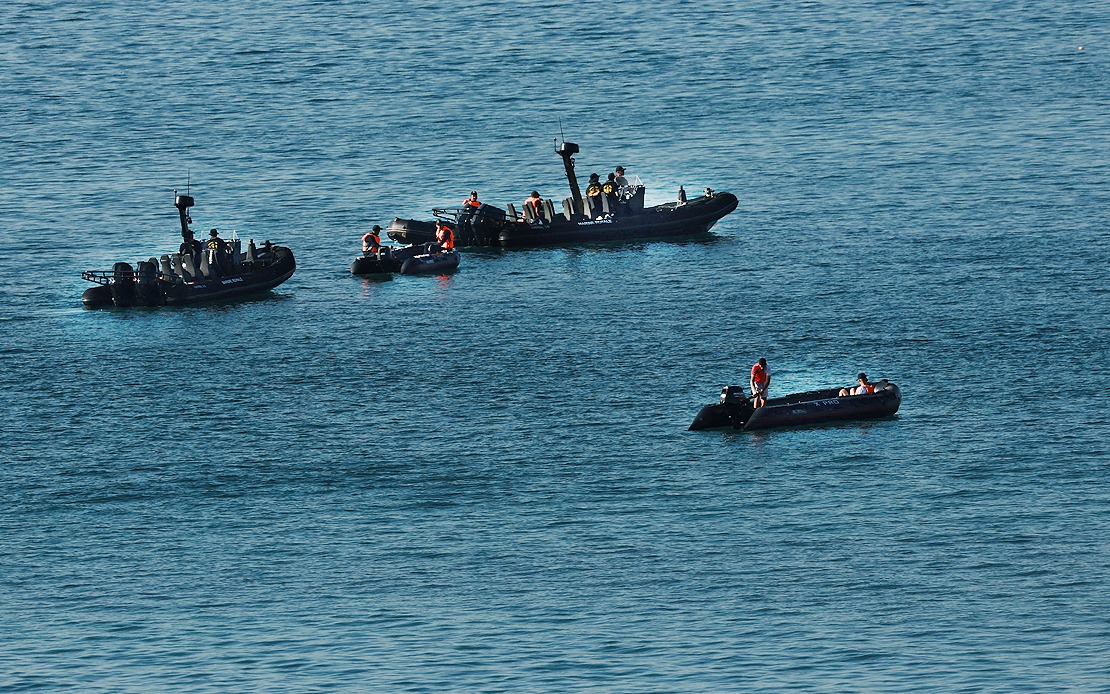
Spanish authorities are intensifying search and recovery operations in the waters surrounding Ceuta after dozens of migrants died attempting to reach the enclave from Morocco in recent days. The operation represents one of the most significant migration-related tragedies in the region, with recovery teams still combing the sea for additional bodies weeks into the incident. So far, 67 bodies have been pulled from the water, each representing someone who perished while swimming from Moroccan shores in pursuit of reaching European Union territory.
The scale of the crisis became apparent when approximately 50,000 migrants crossed into Ceuta from Morocco within a span of just days, overwhelming the Spanish enclave's infrastructure and emergency services. The sudden surge placed enormous strain on a territory with a total population of roughly 85,000 people, creating a humanitarian emergency that exposed significant vulnerabilities in border management and migrant processing systems. The sheer numbers involved meant that ordinary response protocols quickly became inadequate, forcing authorities to mobilize additional resources and coordinate across multiple governmental agencies.
In response to the scale of potential fatalities, local authorities have begun constructing a dedicated facility capable of accommodating up to 200 bodies, indicating the scope of deaths officials anticipate discovering. This grim preparation underscores the tragic human cost of the migration surge and reflects the serious concerns among Spanish officials about the true number of victims still unaccounted for. The construction of such facilities highlights how the incident has transcended typical border management challenges and entered the realm of mass casualty response.
While the initial crisis saw tens of thousands of migrants enter Ceuta, Spanish authorities report that most have since voluntarily returned to Morocco, easing the immediate pressure on local services and infrastructure. However, the voluntary returns have done little to quell political controversy surrounding the incident. Several European Union leaders have levied sharp criticism against Spain's leftist government, challenging their handling of both the immediate security breach and the broader humanitarian dimensions of the crisis. These criticisms extend beyond mere border security concerns, touching on questions of preparedness, communication, and the adequacy of Spain's migration response protocols.
Spain has responded to the crisis by undertaking significant infrastructure modifications at the maritime border. Workers have been installing buoys designed to create a physical barrier in the sea, effectively demarcating the boundary between Spanish and Moroccan waters. This tangible barrier aims to prevent future unauthorized crossings by making the maritime border more clearly defined and physically impassable. The installation of these buoys represents a direct, visible assertion of Spain's sovereignty and a practical attempt to restore effective border control after the breach.
The installation of the maritime barrier directly addresses a critical legal vulnerability that Spanish officials believe facilitated the migrant surge. Spain's Supreme Court had previously ruled that individuals who enter Spanish territory through irregular means at unfortified sections—particularly via sea crossings—retain the legal right to receive individual asylum assessments rather than automatic deportation. This ruling created what officials characterize as a significant loophole in migration law, effectively incentivizing sea crossings by guaranteeing due process protections to those who successfully reach Spanish waters.
The court's decision represented a tension between humanitarian legal principles and border control imperatives. While the ruling ensured that asylum seekers received proper legal consideration rather than summary rejection, it simultaneously undermined Spain's ability to enforce clear migration restrictions. Officials recognized that the existence of such legal protections, combined with inadequate physical barriers, created an environment where large-scale unauthorized migration appeared feasible and legally defensible. The physical barrier installation therefore serves as an attempt to circumvent the legal ruling by making unauthorized sea crossings practically impossible rather than merely legally complicated.
For Southeast Asian observers, the Ceuta crisis illuminates broader tensions affecting the region's own migration dynamics. Countries like Malaysia regularly grapple with unauthorized maritime arrivals and the challenge of balancing humanitarian obligations with border sovereignty. The Spanish experience demonstrates how migration incidents can rapidly escalate from isolated incidents into major crises when underlying structural vulnerabilities remain unaddressed. Malaysia and other ASEAN nations facing similar maritime migration pressures may find instructive lessons in Spain's experience regarding the necessity of clear physical infrastructure, coherent legal frameworks, and coordinated governmental response systems.
The incident also raises questions about Morocco's role in managing migration from its territory. The ability of 50,000 people to mobilize and cross into Ceuta within days suggests either a dramatic breakdown in Moroccan border enforcement or a deliberate decision to permit or facilitate the crossing. This aspect remains politically sensitive, particularly given Morocco's relationship with Spain and the complex history of Ceuta as a Spanish possession on African soil. The diplomatic dimensions of the crisis extend beyond Spanish domestic politics into the triangular relationship between Spain, Morocco, and the European Union.
As recovery operations continue and investigations proceed, Spanish officials face mounting pressure to prevent future incidents while managing the humanitarian dimensions of the ongoing tragedy. The focus has shifted from immediate crisis response to longer-term solutions involving infrastructure investment, legal reform discussions, and diplomatic coordination with Morocco. The physical barrier represents only one element of a broader strategy that must address root causes of migration, coordination with source and transit countries, and harmonization of asylum policies across the European Union.
The unfolding crisis at Ceuta represents a watershed moment for European migration policy, forcing a reckoning with the inadequacy of existing systems and the potential consequences of gaps between legal protections and physical enforcement capacity. For maritime nations throughout Southeast Asia, the incident serves as a cautionary example of how quickly unauthorized migration can spiral into humanitarian catastrophe when systemic vulnerabilities are exploited.

