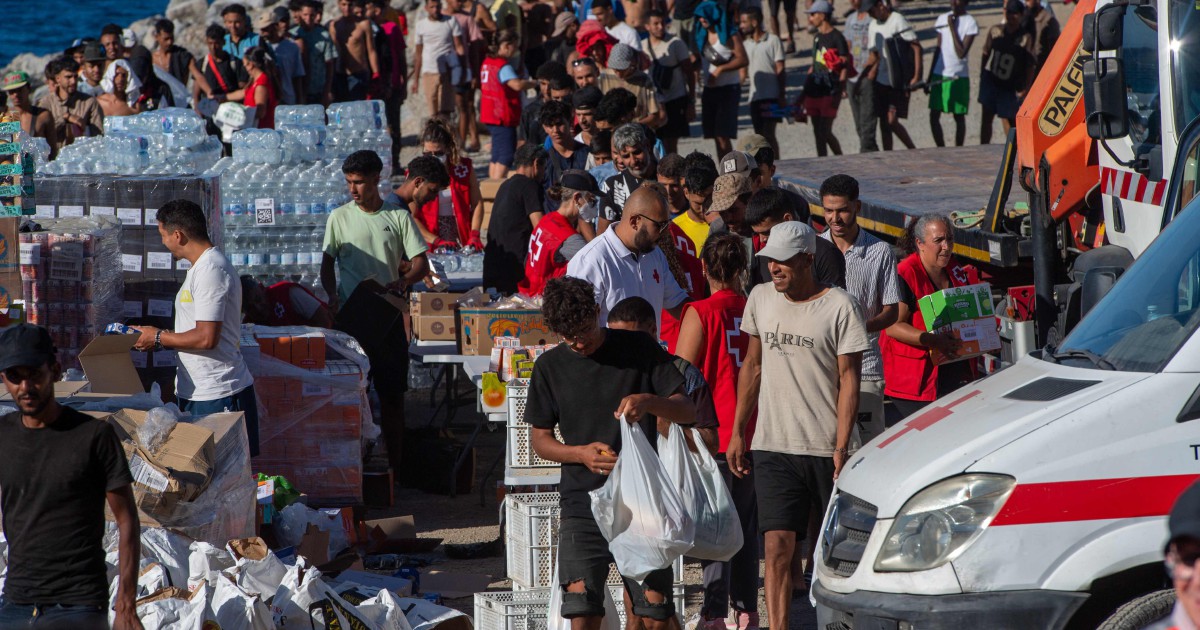
Spanish Prime Minister Pedro Sanchez has identified Russia and Israel as sources of disinformation surrounding Spain's migration policies, which he contends fuelled the sudden influx of migrants into Ceuta last month. In comments made on Monday, Sanchez indicated that intelligence assessments had detected signs of both nations' involvement in spreading misleading narratives, though he stopped short of detailing the specific claims or mechanisms through which such disinformation circulated.
The migrant crisis at Ceuta, Spain's tiny autonomous enclave on the Moroccan coast, has emerged as a significant diplomatic flashpoint. Thousands of individuals made the crossing into Spanish territory in a relatively short window, prompting urgent policy discussions and raising questions about border security and regional coordination. The sudden nature of the surge initially led to widespread speculation about its underlying causes, with analysts suggesting that coordinated misinformation campaigns may have played a role in encouraging movement.
Sanchez's acknowledgement of foreign interference reflects a broader concern among European leaders about the weaponisation of information in migration disputes. Such disinformation tactics represent a relatively low-cost method for external actors to amplify tensions within the European Union and strain bilateral relationships between member states and their neighbours. The specifics of what false narratives were promoted remain unclear, though previous disinformation campaigns in the region have often exaggerated the openness of border policies or fabricated details about asylum procedures.
Remarkably, Sanchez explicitly cleared Morocco of responsibility for the crisis, a statement that carries considerable diplomatic weight. Morocco, which shares a border with Ceuta and exercises significant influence over migration flows from North Africa, had faced considerable suspicion in some quarters of deliberately facilitating the crossing. By publicly absolving Rabat of blame, the Spanish premier appears intent on preserving bilateral relations and avoiding a further deterioration in ties with a key Mediterranean neighbour. This careful diplomatic positioning suggests that Spain recognises the importance of maintaining cooperative arrangements with Morocco on migration management.
The attribution of disinformation to Russia aligns with existing patterns of interference detected across Europe. Moscow has long employed information warfare as a tool to sow discord within Western institutions and exploit existing social divisions. Migration policy, as an inherently contentious issue that divides public opinion across Europe, represents fertile ground for such campaigns. Russia's interests in amplifying migration crises are manifold: destabilising the European Union, undermining confidence in national governments, and widening the ideological rifts that already characterise European political discourse.
Israel's alleged involvement, by contrast, may relate to different strategic considerations. The Middle Eastern state faces its own complex migration dynamics and international scrutiny over its policies. Whether Israel sought to deflect attention from its own practices or pursued other geopolitical objectives through such disinformation remains speculative without further evidence. The inclusion of Israel alongside Russia in Sanchez's statement suggests either parallel interests or coordinated efforts, though the Spanish government has not clarified the nature of any such collaboration.
For regional observers, including Malaysian policymakers engaged with European affairs, this episode underscores the vulnerability of democratic societies to coordinated information warfare. Migration remains one of the most sensitive policy areas across both Europe and Southeast Asia, making it particularly susceptible to manipulation. The spread of false information about migration policies can rapidly mobilise populations and create pressure on governments that may not correspond to actual policy changes or circumstances.
The Ceuta incident also highlights how geopolitical rivalries extend beyond traditional domains of military and economic competition into the information sphere. Non-European powers have demonstrated willingness to intervene in disputes that might otherwise remain regional concerns, utilising migration and border issues as convenient flashpoints. This development carries implications for how nations worldwide approach their own migration challenges, suggesting that careful communication and transparency regarding policy changes become increasingly important.
Spain's response reflects an emerging awareness among European governments that attributing responsibility for disinformation requires careful calibration. Sanchez balanced accusations against distant powers with diplomatic restraint toward Morocco, a strategy that acknowledges both the genuine threat of foreign interference and the need to maintain regional partnerships. His measured approach avoids escalation while still signalling to Spain's European partners that the disinformation threat warrants collective attention.
The broader context involves Spain's ongoing efforts to manage migration flows from North Africa and sub-Saharan Africa. Ceuta and Melilla, Spain's two North African enclaves, occupy a particular position as gateways into the European Union. Their status as European territory surrounded by Moroccan land makes them flashpoints whenever migration pressures intensify. Managing these entry points requires not only robust border controls but also effective counter-messaging to prevent false narratives from driving unplanned surges.
Policymakers across Southeast Asia observing this situation may recognise parallels with their own migration challenges, particularly in contexts where disinformation could amplify existing tensions. Thailand, Malaysia, and Indonesia all encounter issues related to maritime migration and irregular movement, while facing exposure to similar information warfare tactics. The Spanish case demonstrates that even well-developed democracies with sophisticated security services face genuine difficulty in combating coordinated disinformation campaigns around migration.
Looking forward, the incident suggests that European governments and Southeast Asian nations alike must invest in resilience against such interference. This includes not only improved detection capabilities but also proactive communication strategies that establish clear, credible narratives around migration policy before false information can take root. International cooperation in identifying and countering disinformation will likely become increasingly central to effective migration governance in an era of sophisticated information warfare.

