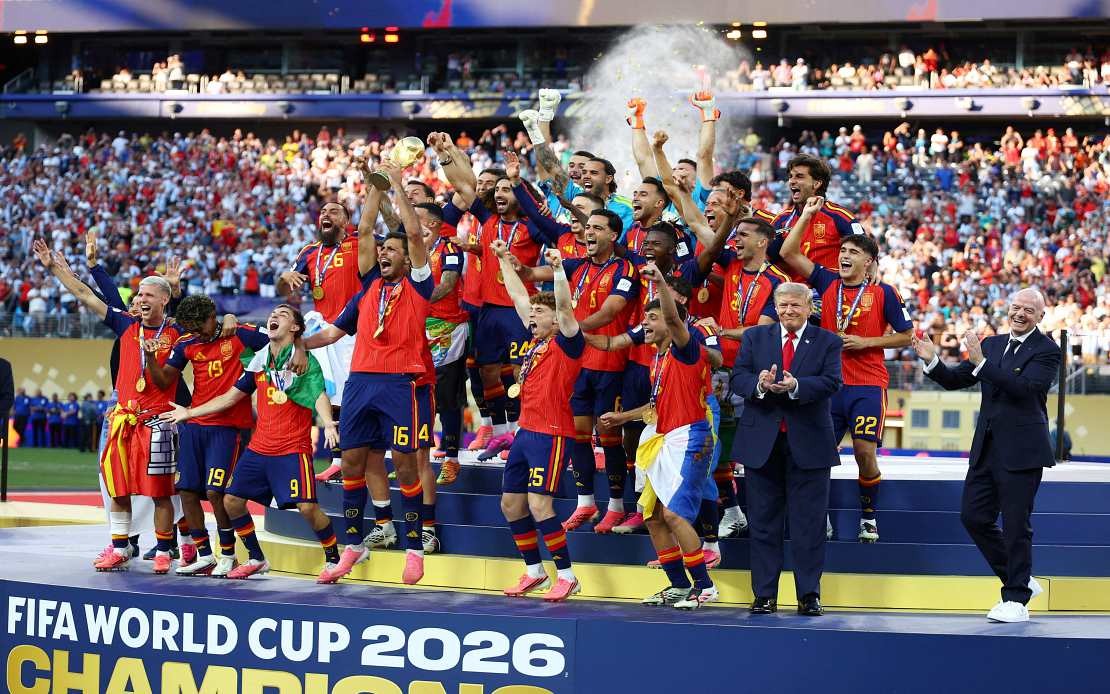
Spain's national football team will touch down at Madrid airport at 12.50 pm on Monday to begin a day of festivities marking their second World Cup championship, with organisers bracing for enormous crowds throughout the Spanish capital. The squad, captained by Rodri, secured their triumphant status by defeating Argentina in the final held in the United States, clinching victory through Ferran Torres' goal scored during extra time on Sunday. The homecoming represents a watershed moment for Spanish football and has galvanised public enthusiasm across the nation for what promises to be one of the year's most significant sporting celebrations.
King Felipe VI will host an official reception at the Royal Palace in the afternoon, a ceremony that underscores the cultural significance of the team's achievement within Spanish national life. The monarchy's involvement in welcoming the players reflects both the institutional importance assigned to international sporting success and the symbolic role the royal household plays in Spanish public occasions. Such formal recognition typically signals the government and state's investment in celebrating national accomplishments and reinforcing collective pride among the citizenry.
Following the palace function, organisers have arranged an open-top bus procession through Madrid's streets, an event anticipated to draw hundreds of thousands of spectators. This form of public celebration has become customary in many European nations following World Cup victories, allowing ordinary citizens to participate directly in honouring their representatives. The parade route through the capital will enable supporters from across the city and surrounding regions to line streets and demonstrate their appreciation for the players' performances.
The festivities will conclude at Cibales Square with a substantial public gathering commencing at 6 pm, though the squad is not expected to arrive until 9 pm. Organisers have scheduled an elaborate show to entertain the assembled crowd, suggesting efforts to maintain momentum and engagement throughout the extended celebration. The late arrival timing indicates planners anticipate sustained attendance and enthusiasm, with spectators willing to gather hours in advance for the opportunity to see their heroes.
Marc Cucurella, a defender within the squad, articulated the players' perspective on the homecoming arrangements, emphasising their eagerness to share the accomplishment with supporters who could not attend matches abroad. His remarks highlight the players' awareness that their achievement belongs collectively to the nation rather than being an exclusively personal triumph. The sentiment reflects broader understandings within football regarding the relationship between national teams and their supporting populations, where victory becomes woven into shared cultural identity.
Spain's World Cup victory represents their second men's championship in the tournament's history, elevating their standing among international football's traditional powers. The achievement follows years of competitive development within Spanish football and consolidates the nation's position as a consistently formidable presence in global competitions. For Malaysian and Southeast Asian observers, Spain's success demonstrates how sustained investment in youth development and tactical sophistication can yield sustained international competitiveness in football.
Prime Minister Pedro Sánchez was present at the stadium in New Jersey where the final took place, alongside members of the royal family. His attendance and subsequent public statement posted on social media platform X—declaring "We Are World Champions. Our national team is tremendous. Thanks, Team"—illustrate how sporting victories become occasions for political leaders to associate themselves with national achievement and to amplify messages of collective success.
The scale of celebrations planned for Madrid reflects the profound emotional connection Spanish citizens maintain with their national football team. The decision to organise a Royal Palace reception, a citywide parade, and a major public gathering demonstrates institutional recognition of the event's significance beyond purely sporting dimensions. Such celebrations become opportunities for communities to reaffirm social bonds and to participate collectively in marking moments of national accomplishment.
For regional observers in Southeast Asia, Spain's World Cup victory and the ensuing public celebrations offer perspectives on how football transcends entertainment to become integral to national identity and civic engagement. The Malaysian public's interest in global football tournaments reflects similar patterns of identifying with sporting success as expressions of national pride. The Spanish example demonstrates how World Cup victories mobilise entire nations and create frameworks for public participation in celebrating collective achievement, phenomena readily recognisable across diverse cultural contexts.
The homecoming festivities underscore football's continuing prominence as a vehicle for generating national cohesion and public enthusiasm. While Malaysia itself has not achieved comparable success in World Cup competitions, the intensity and scale of Spanish celebrations illustrate the profound emotional investments populations direct toward their national teams. Understanding these dynamics provides context for appreciating why World Cup tournaments command such extensive media attention and public engagement across Asia, including within Malaysia's diverse sporting culture.

