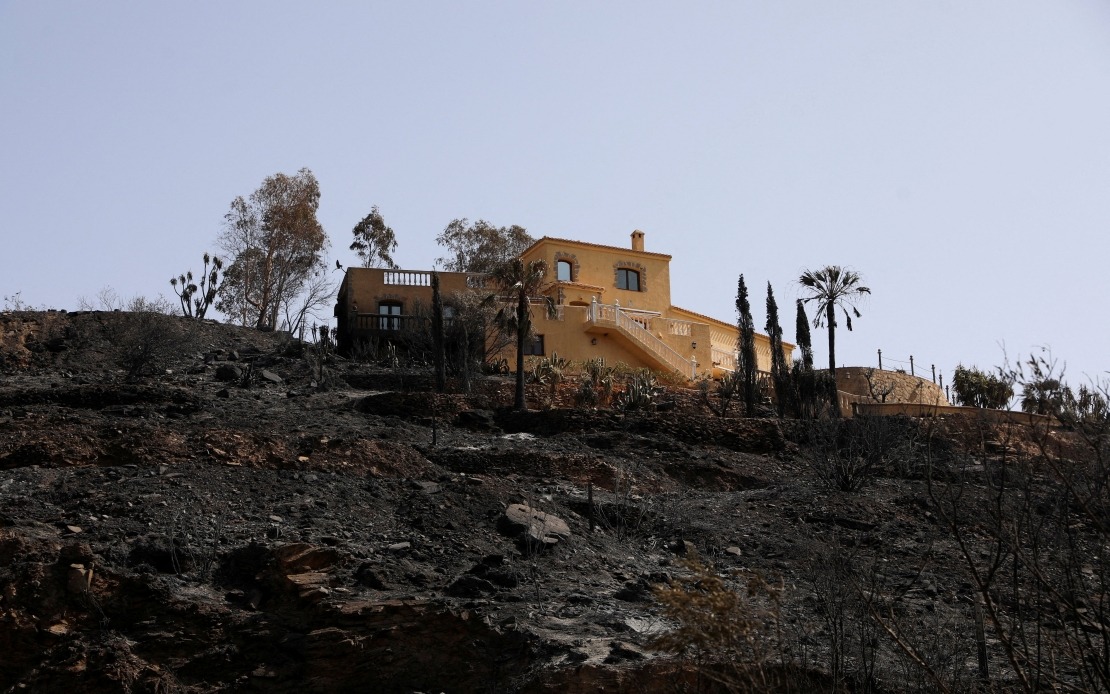
A major wildfire in Spain's southeastern province of Almeria has claimed at least 13 lives, with regional authorities announcing that the blaze has been stabilised after days of intense firefighting efforts. The announcement came Sunday as crews continued monitoring the perimeter of a fire that has proven among the most destructive in the region's recent memory, raising fresh questions about Spain's preparedness for climate-driven natural disasters.
The uncontrolled fire broke out on Thursday near the Los Gallardos municipality in Almeria, which forms part of Andalusia, Spain's southernmost autonomous community. The blaze has consumed approximately 7,000 hectares of land, forcing the evacuation of roughly 1,600 residents from surrounding areas. Seven people remain hospitalised following the disaster, with three in critical condition, according to the latest official figures released by regional authorities.
Among those directly affected by the fire are a significant number of foreign nationals, according to Spain's state broadcaster RTVE. This detail underscores the international dimensions of the emergency and raises complex questions about how regional authorities communicated warnings and coordinated evacuations across language barriers. Ten individuals remain officially registered as missing, adding to the mounting humanitarian toll of the emergency.
The stabilisation of the wildfire has enabled authorities to downgrade the emergency response level and begin allowing evacuees to return to their homes. Approximately 600 residents were authorised to return on Saturday, with regional officials now confirming that the remaining roughly 1,000 evacuees will be permitted to do so following the fire's containment. This phased approach reflects both cautious optimism about controlling the blaze and lingering concerns about potential flare-ups.
Juanma Moreno, head of the Andalusia regional government, confirmed Sunday that the wildfire is no longer advancing and has been contained within its perimeter. However, Moreno tempered optimism by cautioning that additional work remains necessary before authorities can declare the fire fully controlled and extinguished. This measured assessment reflects the inherent unpredictability of large-scale wildfires, which can reignite or spread unexpectedly if weather conditions shift.
Moreno characterised the fire as the most serious wildfire to strike Andalusia in recent years, using the disaster as a platform to emphasise the urgent need for society to confront climate change with greater seriousness. His remarks reflect a growing recognition among Spanish policymakers that the frequency and severity of wildfires are escalating beyond historical norms, straining emergency response infrastructure and resources.
The regional leader specifically highlighted how climate change is fundamentally altering the conditions under which wildfires develop and spread, creating increasingly complex scenarios that exceed the capacity of traditional firefighting methods. He noted that wildfires are now reaching unprecedented scales and becoming progressively more difficult to suppress, even with coordinated regional and national intervention. This assessment aligns with climate science showing that warming temperatures and prolonged drought cycles across southern Europe create ideal conditions for rapid fire propagation.
Investigators are still determining the cause of the Almeria wildfire, with the leading hypothesis suggesting that the blaze may have been ignited by the structural failure of an electricity pole or high-voltage cable. If confirmed, this theory would raise important questions about infrastructure maintenance standards and whether Spain's electrical grid is adequately safeguarded against fire risks in drought-prone regions. Equipment failures resulting in sparks or exposed conductors represent a recurring cause of significant wildfires across Mediterranean countries.
The incident carries implications extending well beyond Spain's borders. Southern Europe, including Portugal, Greece, and parts of France, has experienced increasingly severe wildfire seasons in recent years, with climate change identified as a primary driver. For Southeast Asian nations monitoring global climate trends and their domestic implications, the Almeria fire exemplifies how shifting environmental patterns are transforming natural disaster profiles even in highly developed regions with sophisticated emergency response systems. The region's struggles illustrate the scale of challenge facing countries with less developed infrastructure and resources.
The disaster also highlights interconnections between energy infrastructure vulnerabilities and environmental risk management. Utilities across multiple continents are now reassessing how electrical systems function during extreme heat events and drought conditions that increase fire susceptibility. Spain's experience offers cautionary lessons for other Mediterranean and semi-arid regions regarding the necessity of integrating climate resilience into long-term infrastructure planning.

