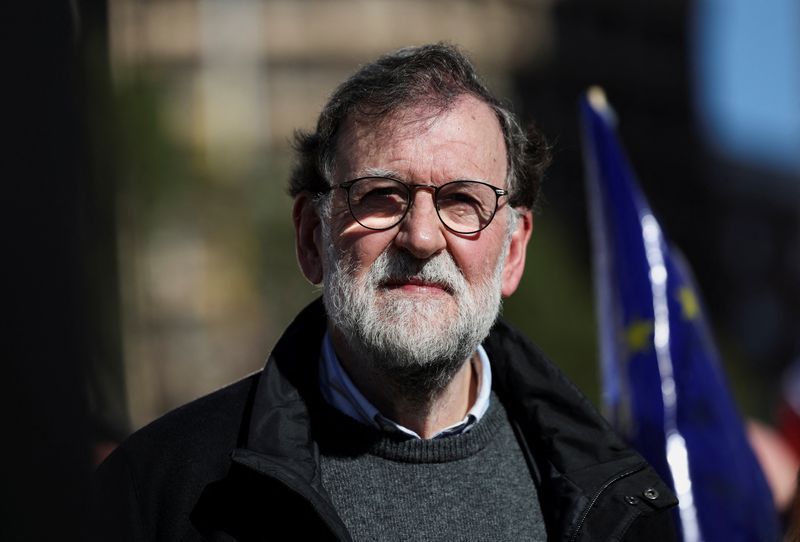
Spain's government has moved swiftly to distance itself from a provocative column written by former Prime Minister Mariano Rajoy questioning the national credentials of France's World Cup football squad. Foreign Minister Jose Manuel Albares announced the apology on Tuesday, just hours before the two nations were set to clash in the tournament's semi-finals, signalling Madrid's determination to prevent sports rivalry from overshadowing diplomatic relations during a sensitive moment.
Rajoy, who served as Spain's prime minister from 2011 to 2018, published his contentious remarks in the online publication El Debate on Friday. While acknowledging France's footballing prowess, he made a pointed observation that appeared to challenge the ethnic composition of the team: "France has a squad of the very highest calibre. Mind you, there are no French players in it." The statement appeared to reference the African and Afro-Caribbean heritage of several players within the French national team, triggering immediate backlash across both countries.
Albares characterised the column in unequivocal terms during an interview with Cadena SER radio, describing Rajoy's words as "intolerable" and suggesting they "carry the poison of racism and xenophobia." The foreign minister emphasised that such views do not represent mainstream Spanish opinion, stressing that the overwhelming majority of Spaniards reject the notion of defining citizenship through physical characteristics. He articulated a fundamental principle of modern democratic societies: "It's a very serious matter to go around using skin colour to determine who can be a citizen and who cannot."
Pedro Sanchez, Spain's current prime minister, reinforced this message while attending France's National Day celebrations in Paris on Tuesday. In a post on social media platform X, Sanchez explicitly condemned "those who measure nationality by a person's surname, birthplace or skin colour," describing Rajoy's remarks as "shamefully xenophobic." This unified stance from Spain's political leadership represented a clear effort to prevent the controversy from damaging bilateral relations during the World Cup competition.
Rajoy's People's Party spokesperson Borja Semper attempted damage control by suggesting the column was intended as sarcasm rather than a serious commentary rooted in prejudice. Semper claimed the piece was written without malicious intent and should be interpreted as satirical expression. However, this characterisation found little traction among critics who saw the remarks as reflecting genuine xenophobic sentiments, regardless of the stated intent.
The controversy gained additional momentum because it followed a similar incident involving Paraguay's Senator Celeste Amarilla, who had launched a racist attack against France's captain Kylian Mbappe following her country's elimination from the tournament. Amarilla described Mbappe in dehumanising language as a "colonised Cameroonian, desperately trying to pass himself off as French," representing a troubling pattern of using athletes' ethnic backgrounds to question their national belonging. This timing created the appearance of a coordinated attack on the legitimacy of France's team composition based on racial characteristics.
Mbappe responded to Amarilla's tirade with considerable dignity, defending not only his own position but also the Paraguayan players themselves, calling the senator's behaviour "despicable and unworthy" of her office. The French Football Federation initiated criminal proceedings in response to the Paraguayan senator's remarks, while Paraguay's government formally disavowed Amarilla's comments, stating they contradicted the nation's values. This swift international condemnation established a clear precedent that such rhetoric would not be tolerated.
The response from France's government and political establishment to Rajoy's column demonstrated rare consensus across the political spectrum. Foreign Minister Jean-Noël Barrot articulated a powerful rebuttal on television, asserting that "France has no skin colour" and dismissing Rajoy's comments as either idiotic, racist, or a combination of both. Even Julien Odoul of the far-right National Rally, typically positioned as an opposition voice, condemned the remarks as "scandalous, shameful, deplorable," describing Rajoy directly as racist.
These incidents underscore broader tensions in European discourse around nationality, integration, and the composition of national teams in increasingly diverse societies. The willingness of political figures from different countries to challenge athletes' national legitimacy based on ethnicity reveals anxieties about demographic change and traditional conceptions of national identity. For Malaysia and other Southeast Asian nations navigating their own multicultural compositions, these European controversies offer instructive lessons about how easily sports can become a vehicle for expressing underlying prejudices about who truly belongs within national communities.
The timing of both the Amarilla incident and Rajoy's column during a major international sporting event highlights how global tournaments can amplify such sentiments, particularly when nations with different ethnic demographics compete against one another. The Spanish government's swift apology and Sanchez's personal intervention suggest official recognition that allowing such remarks to pass unchallenged would damage Spain's international standing and undermine shared European values regarding inclusive nationalism and equal citizenship.
Rajoy's inability to be reached for immediate comment left questions unanswered about whether he would personally acknowledge or retract his statements. His party's attempt to reframe the remarks as satire rather than substance indicated a reluctance to engage substantively with the criticism. Whether Rajoy would eventually clarify his position or allow the apology from Spain's government to serve as the final word on the matter remained unclear as the World Cup semi-final approached.

