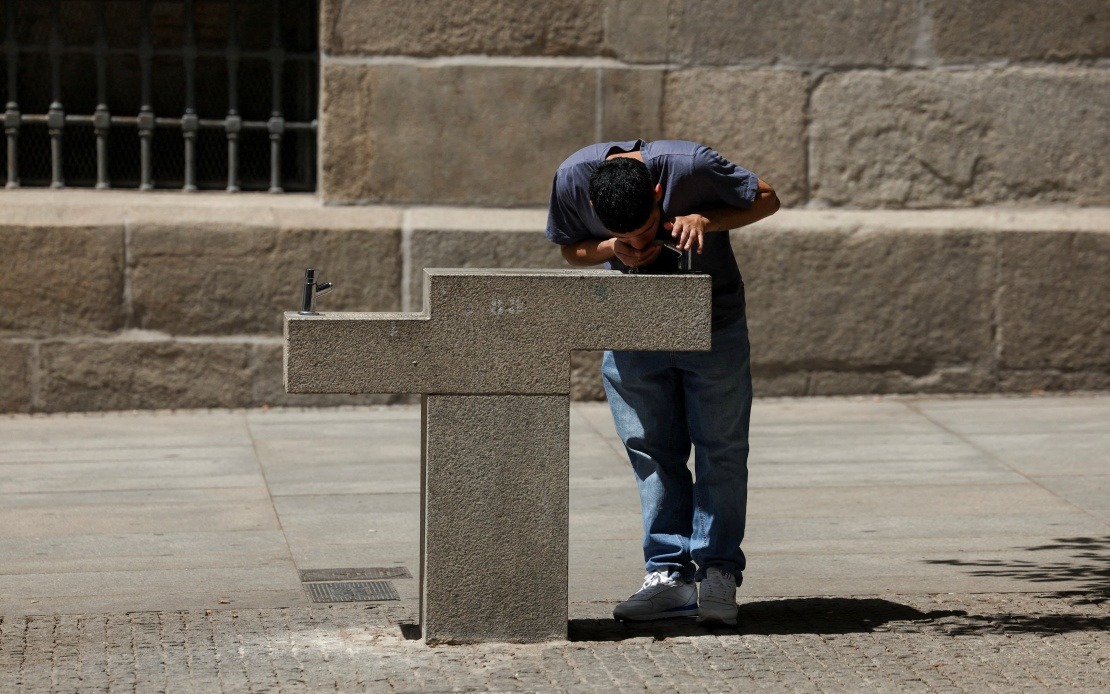
Spain faced a devastating public health crisis in June as extreme temperatures triggered over 1,000 deaths across the country, according to findings from the nation's Daily Mortality Monitoring System. The MoMo system, operated by the National Epidemiology Centre within the Carlos III Health Institute, determined that 1,029 fatalities in June were attributable to the intense heat, encompassing both direct heatstroke victims and individuals whose pre-existing medical conditions deteriorated fatally under the stress of prolonged high temperatures.
The Spanish meteorological data paints a stark picture of the intensity of the heat event. Analysis of records maintained by the Spanish State Meteorological Agency (AEMET) reveals that June 2026 ranks as the second-hottest June in Spain's recorded history since systematic temperature monitoring began in 1961. The average 24-hour temperature across peninsular Spain reached 24.9 degrees Celsius, surpassed only by June 2025, when temperatures averaged 25.2 degrees Celsius. This consecutive year-on-year escalation points to an alarming trend in Spain's climate patterns, with heat waves becoming increasingly severe and potentially more frequent.
The month's peak intensity occurred on June 23, when Spain experienced its hottest June day ever recorded. On that single day, the average 24-hour temperature across the entire country climbed to 29.6 degrees Celsius, with peninsular Spain recording an average maximum temperature of 38.2 degrees Celsius, equalling the previous record set just the year before. Such consistency at record levels represents a significant shift in Spain's climate baseline and raises concerns about what once constituted exceptional temperatures becoming normalized.
The heat wave's geographic reach was remarkable in scope and persistence. Between June 20 and 24, weather stations operated by AEMET registered 316 provisional local temperature records across Spain. These records were distributed between 148 new maximum temperature records and 168 instances where the highest minimum nighttime temperatures exceeded previous measurements. The prevalence of minimum temperature records is particularly concerning, as it indicates that even nighttime cooling periods provided minimal relief, preventing residents from recovering during what are typically cooler hours.
The human exposure figures illustrate the magnitude of the public health emergency. On June 23 alone, approximately 35.7 million people—roughly 73 percent of Spain's total population—experienced some degree of health risk from the elevated temperatures. These calculations, derived from Health Ministry heat alert data combined with population statistics from the National Statistics Institute, demonstrate that the crisis was not confined to specific regions but rather affected the vast majority of Spanish citizens. For vulnerable populations including the elderly, very young children, and those with chronic health conditions, such widespread exposure substantially elevated mortality and morbidity risks.
The 1,029 heat-related deaths recorded by MoMo represent a significant public health toll that extends beyond direct heat casualties. The monitoring system's methodology captures not only individuals who died from acute heatstroke but also those whose underlying cardiovascular, respiratory, or neurological conditions were exacerbated to fatal levels by the physiological stress of extreme heat. This broader accounting provides a more complete picture of heat's deadly impact on population health, revealing that the danger extends across diverse medical circumstances rather than affecting only those with heat-specific illnesses.
For Malaysian observers and regional policymakers, Spain's experience offers crucial lessons about climate vulnerability in developed nations with advanced healthcare systems. If one of Europe's wealthiest countries, with sophisticated medical infrastructure and public health monitoring, experiences over 1,000 deaths from a single month of heat, the implications for tropical and subtropical regions with fewer resources warrant serious consideration. Southeast Asia's position closer to the equator, combined with rapid urbanization and aging populations in several countries, creates particular vulnerability to heat-related mortality.
The Spanish case demonstrates that heat waves are not merely uncomfortable meteorological events but genuine public health emergencies demanding coordinated national response. Spain's MoMo system represents best-practice heat mortality monitoring, yet even with such surveillance capacity, the country could not prevent the substantial death toll. This gap between knowledge and prevention capacity suggests that heat adaptation strategies must extend beyond awareness and early warning to encompass systemic changes in urban design, cooling infrastructure access, and medical preparedness.
Climate scientists increasingly attribute the intensification of European heat waves to anthropogenic climate change, with particular concern about the persistence and geographic expansion of high-pressure systems that trap hot air. Spain's back-to-back record-breaking Junes in 2025 and 2026 support projections that extreme heat events will become more frequent and severe across the Mediterranean region and potentially beyond. The international implications warrant renewed attention to climate mitigation commitments and accelerated adaptation planning in vulnerable regions.
The economic and social dimensions of the crisis extend beyond immediate mortality statistics. Heat waves strain electrical grids through spike demand for air conditioning, disrupt transportation and commerce, affect agricultural productivity, and increase demands on healthcare systems already stretched by multiple competing pressures. For Malaysia and other developing economies in Southeast Asia, such cascading effects could prove especially destabilizing given existing infrastructure constraints and limited adaptive capacity in certain sectors.
The Spanish government's response mechanisms, including the Meteosalud alert system that preceded the peak mortality, represent important innovations in heat health protection but ultimately proved insufficient to prevent the 1,029 deaths. This gap highlights the distinction between having warning systems and ensuring that vulnerable populations can actually access protective measures, whether through adequate cooling facilities, reliable electricity supply, or accessible medical care during emergencies. Developing countries should scrutinize not merely the alert technology but the complete infrastructure chain required for effective heat protection.

