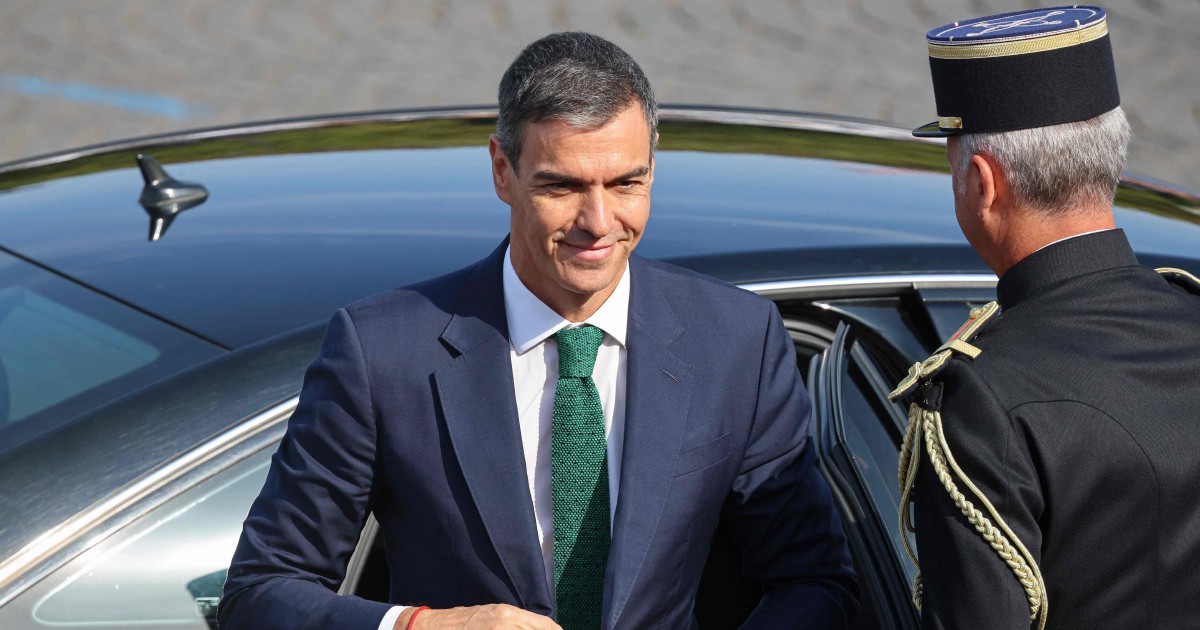
Spain's government is rallying behind the national football squad as the team prepares for one of international sport's most prestigious contests. Prime Minister Pedro Sanchez on Saturday expressed his admiration for what he describes as a remarkable display of collective spirit among the players, offering Spain a moment of national pride during a period marked by political turbulence at home. The squad is scheduled to face Argentina in the tournament's championship match on Sunday, with Sanchez's comments underscoring the team's potential to unite the country around a shared sporting triumph.
Sanchez's endorsement of the national team carries particular significance given the concurrent challenges facing his administration domestically. Spain has been navigating several high-profile corruption investigations that have created political friction and tested public confidence in government institutions. By publicly championing the football team's achievements, the Prime Minister is aligning himself with a source of national unity that transcends partisan divisions—a strategic positioning that reflects the universal appeal of football in Spanish society and its capacity to momentarily overshadow internal political discord.
The team's journey to the World Cup final has demonstrated qualities that extend well beyond technical football prowess. Observers have noted the exceptional chemistry and mutual support evident among squad members, suggesting a cohesion that often proves decisive in knockout tournaments where psychological resilience matters as much as tactical execution. Sanchez's characterization of the team as "unique" speaks to this distinctive composition—a blend of experienced international players and emerging talent united by a clear collective purpose and shared determination to succeed on the world stage.
Argentina presents a formidable challenge, bringing their own narrative of redemption and determination to the final. The South American side has demonstrated considerable skill and mental fortitude throughout the tournament, while Spain brings the technical tradition and systematic approach that has defined the nation's football philosophy over the past decade and a half. The contest promises to showcase two distinctly different footballing cultures and strategic approaches, each carrying the hopes and aspirations of their respective nations.
For Spain specifically, victory would represent another chapter in a remarkably successful period for Spanish football. The national team has won the European Championship twice in recent years and reached multiple World Cup finals, establishing themselves as one of the sport's elite nations. However, the trophy that has eluded Spain most persistently is the World Cup itself—a gap that has frustrated the football community and the wider Spanish public. Sunday's final offers the opportunity to complete what many see as unfinished business and cement the legacy of a generation of players who have defined Spanish football excellence.
The broader significance of Sanchez's public backing extends to understanding how sports achievements function within the fabric of national political life. Football, particularly at the international level, possesses a unique capacity to transcend ordinary divisions and create moments of collective celebration that temporarily bridge social and political fissures. By enthusiastically supporting the team, the Prime Minister is participating in this well-understood dynamic, recognizing that football finals provide the rare occasions when entire nations can unite behind a single endeavor without the complications of partisan ideology or political disagreement.
For Malaysian and Southeast Asian observers, Spain's journey to the World Cup final carries lessons about the role of national teams as ambassadors and sources of unity. Regional governments frequently seek to harness the unifying power of sport, and Spanish officials' strategic engagement with their football team's success reflects an understanding of how sporting achievement can enhance national prestige and temporarily alleviate domestic political tensions. The approach mirrors strategies employed across Asia, where governments recognize that football—as the region's most widely followed sport—offers powerful platforms for national expression and collective pride.
The squad's composition also reflects Spain's broader approach to football development and player cultivation. The team has successfully balanced the contributions of veteran players with the emerging talents of younger footballers, creating an organizational culture that emphasizes team chemistry over individual star power. This philosophy has become increasingly distinctive in an era of football dominated by commercial superstars, suggesting that systematic development and organizational discipline can compete effectively with individually-focused approaches.
Regional parallels exist in how Southeast Asian nations view successful football campaigns as vehicles for national development narratives. While Spain operates as an established football powerhouse with resources and infrastructure to develop elite teams, emerging football nations in the region aspire to similar levels of international achievement. The Spanish example demonstrates how consistent investment in youth development, tactical coherence, and organizational stability can produce sustainable success rather than merely episodic achievements.
The final itself represents more than a sporting competition between two teams. It embodies different national football philosophies, competing strategies for organizing athletic talent, and contrasting footballing traditions that have evolved over decades. For Spain, the contest offers validation of the approach that has made the nation one of football's most respected and influential powers. Sanchez's public recognition of the team's unity acknowledges that achieving such status requires not merely individual talent but sustained commitment to collective excellence.
As the match approaches, the focus on team cohesion emphasized by the Prime Minister will likely prove central to determining the outcome. International football tournaments increasingly turn on moments of collective resilience, tactical discipline, and the ability to maintain focus under pressure. Spain's demonstrated unity, if maintained through the intensity of a World Cup final, could provide the psychological edge necessary to prevail against Argentina's considerable capabilities and veteran tournament experience.

