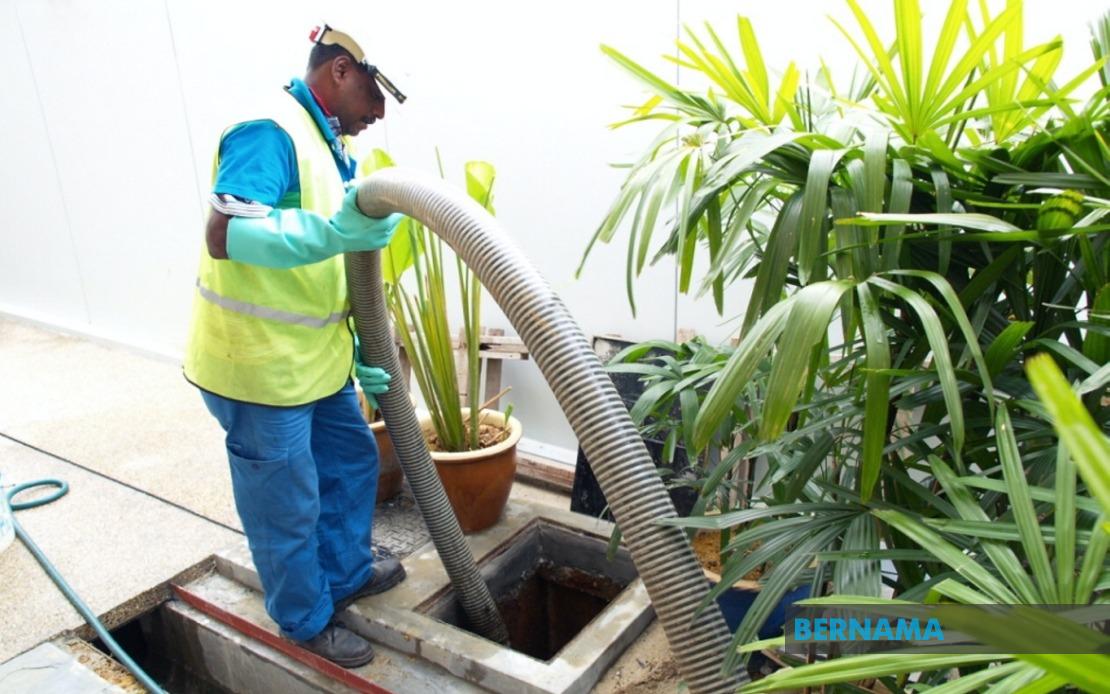
The National Water Services Commission (SPAN) has intensified its enforcement campaign against unmaintained septic systems in Sungai Petani, issuing 270 compliance notices to property owners across the business district who have neglected mandatory tank-emptying schedules. The crackdown, conducted as part of Ops Padi 2 between August 4 and 6, represents a significant regulatory push to address public health and environmental hazards arising from deteriorating wastewater infrastructure in one of Kedah's commercial hubs.
During the three-day operation, SPAN inspectors examined 341 premises in total, comprising 242 commercial establishments and 99 domestic residences. The inspection campaign revealed a troubling pattern: widespread non-compliance with tank maintenance directives previously issued by Indah Water Konsortium Sdn Bhd (IWK), the licensed service provider responsible for sewerage management in the area. SPAN Operations Division Enforcement Section director Ainal Yusman Mohamad Yusop confirmed that every single inspected property had failed to meet its septic tank emptying obligations, prompting the enforcement action.
The scope of neglect uncovered during the operation underscores a concerning infrastructure maintenance gap in Sungai Petani's ageing commercial quarter. Most of the premises subjected to inspection were constructed during the 1970s and 1980s, a period when building codes and maintenance standards differed significantly from contemporary requirements. More alarmingly, the septic systems serving these properties have gone largely untended for extended periods. SPAN's findings documented instances where tanks had not been serviced for more than a decade and a half, with historical records revealing some facilities had received their final maintenance in the late 1990s—over two decades prior.
Under the Water Services Industry Act 2006 (Act 655), property owners bear legal responsibility for maintaining their septic systems through contracted licensed service providers or permit holders authorised to conduct desludging operations. This statutory obligation exists to prevent public health emergencies, environmental contamination, and system failure that could compromise community sanitation. The prolonged dereliction revealed in Sungai Petani represents a systematic breach of these requirements, creating potential risks for surrounding businesses and residents dependent on functioning wastewater infrastructure.
The compliance notices distributed during the operation establish a clear 14-day response window within which affected property owners must initiate corrective action and arrange for professional septic tank emptying. This timeframe, while providing reasonable opportunity for compliance, carries significant consequences for non-adherence. SPAN has signalled its intent to pursue escalatory enforcement measures against those who fail to respond, including the issuance of formal offence notices and commencement of investigative procedures that could result in criminal charges.
The financial penalties prescribed under the legislation carry substantial weight. Property owners convicted of violating Section 65(1)(c) of Act 655 face potential fines reaching RM50,000, a sum sufficient to influence decision-making among commercial operators already managing operational costs. This enforcement stance reflects the regulator's determination to move beyond written warnings toward consequences that meaningfully incentivise compliance, particularly in instances of chronic or systematic failure to maintain essential infrastructure.
For Malaysian businesses operating in older commercial districts, this enforcement action serves as a timely reminder of hidden compliance obligations that extend beyond immediately visible regulatory domains. Many property owners and business managers may not routinely consider septic tank maintenance as a priority area subject to regulatory scrutiny, yet SPAN's operation demonstrates that these systems receive regular monitoring. The enforcement action in Sungai Petani, once publicised, will likely prompt similar examinations in other established commercial precincts across Malaysia where ageing infrastructure predominates.
The implications for property management and business administration are substantial. Companies operating in premises constructed several decades ago should conduct immediate audits of their septic system maintenance records and service contracts with IWK or other licensed providers. The discovery of non-compliance during an unexpected inspection can result in operational disruption, immediate remediation costs, and potential legal exposure. Proactive engagement with service providers to ensure current compliance status represents a prudent risk management approach for any business manager.
From a broader public health perspective, this enforcement campaign addresses a dimension of environmental protection that often escapes public attention. Improperly maintained septic systems pose genuine risks to groundwater contamination and can create localized public health hazards, particularly in densely developed commercial areas where multiple non-compliant systems cluster together. By targeting systematic enforcement in Sungai Petani, SPAN is working to prevent the accumulation of environmental and health deficits that arise from deferred maintenance across networked infrastructure systems.
The operation also reveals the regulatory capacity of SPAN to conduct coordinated, large-scale enforcement actions that examine hundreds of premises within compressed timeframes. The deployment of sufficient inspectorate resources to examine 341 properties across three days suggests an organisation with meaningful enforcement capability and commitment to field-based regulatory activity. This operational visibility should inform the compliance calculus of property owners and business operators across Malaysia who have previously treated septic tank maintenance as optional or discretionary.
Moving forward, the businesses that received compliance notices face concrete decision points. Immediate action—engaging IWK to schedule tank emptying and providing proof of service completion within the 14-day window—represents the straightforward compliance pathway. Failure to respond or delayed action carries escalating legal and financial consequences that will compound initial remediation costs. For broader property management and facilities sectors, the Sungai Petani operation illustrates that infrastructure maintenance previously treated as low-priority administrative matters now receives active regulatory enforcement with meaningful financial consequences attached.

