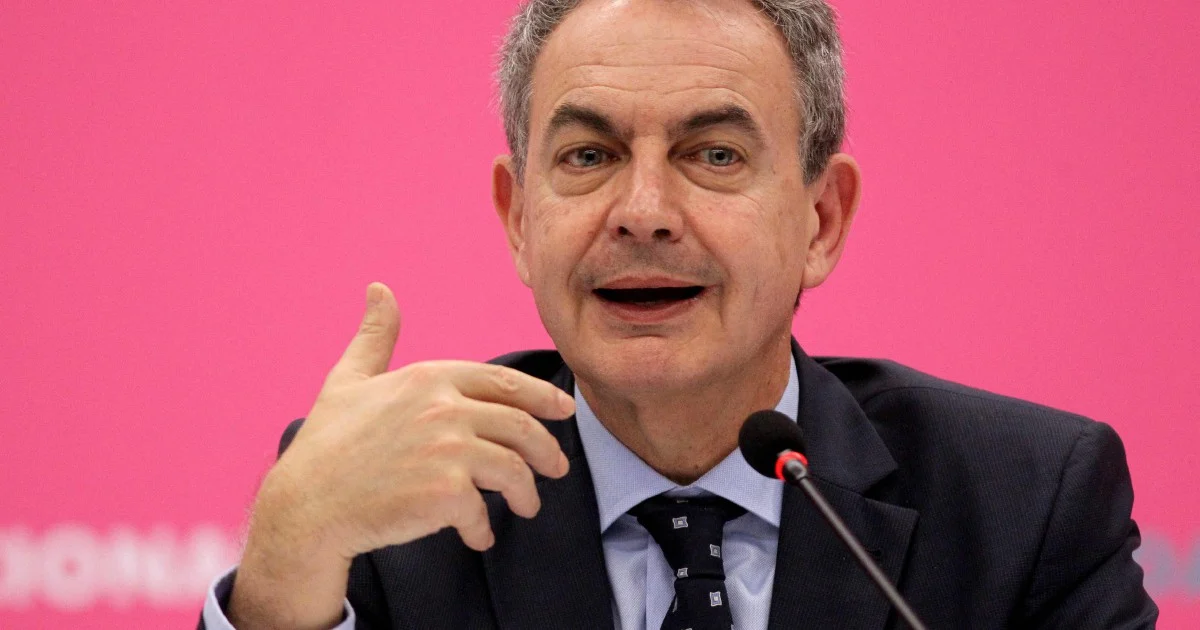
Former Spanish Prime Minister Jose Luis Rodriguez Zapatero is facing an extraordinary legal challenge as he prepares to appear before a Madrid court on Wednesday for questioning regarding alleged influence peddling. The two-day hearing marks a watershed moment in Spanish politics, representing the first time a former premier of his stature has been subjected to such direct scrutiny in a corruption investigation. The development adds considerable strain to an already embattled leftist government grappling with multiple scandals that threaten to undermine public confidence in institutional integrity.
The influence-peddling allegations against Zapatero have emerged amid broader concerns about political conduct in Spain. Prosecutors contend that Zapatero leveraged his position and political connections to exert undue influence on behalf of third parties or interests, potentially in exchange for personal benefit or favours. The specific circumstances of these allegations remain under investigation, but the very fact that a former head of government is being called to answer such questions represents an unusual development in Spanish jurisprudence. Such cases typically involve lower-ranking officials or business figures rather than former presidents.
Zapatero served as Spain's Prime Minister from 2004 to 2011, overseeing a period that encompassed both economic growth and the subsequent impact of the global financial crisis. His tenure was marked by significant policy initiatives on both domestic and foreign affairs, yet his departure from office occurred during economically turbulent circumstances. The emergence of these accusations now, years after his departure from power, suggests that investigative processes have taken considerable time to develop sufficient evidence to warrant court proceedings. This timeline is characteristic of complex corruption cases where establishing chains of influence and improper conduct requires extensive documentary and testimonial evidence.
The impact of Zapatero's legal troubles extends well beyond his personal circumstances. The Spanish Socialist Party, which he led during his premiership, currently governs Spain under Prime Minister Pedro Sánchez. Every corruption allegation involving prominent party figures casts a shadow over the current administration's claims to ethical governance. The leftist government has already faced numerous scandals involving ministerial conduct and party finances, making it particularly vulnerable to criticism regarding institutional standards. Opposition parties are likely to weaponise Zapatero's court appearance as evidence of systemic moral decay within socialist leadership.
Spain's corruption landscape has undergone substantial scrutiny in recent years, with Spanish courts increasingly willing to pursue high-profile cases involving prominent political and business figures. This shift reflects evolving public expectations about accountability and the judiciary's determination to demonstrate that no individual is above the law, regardless of their historical office. The Zapatero case exemplifies this trend toward greater judicial assertiveness in addressing alleged misconduct by those who have wielded significant power. Media coverage throughout Spain has been intense, reflecting the considerable public interest in whether established political elites can be held responsible through the legal system.
From a regional perspective, Spain's corruption investigations offer instructive lessons for Southeast Asia and Malaysia, where questions about political accountability and the independence of the judiciary remain contentious. The willingness of Spanish courts to proceed against a former prime minister demonstrates how established democracies navigate the tension between protecting distinguished figures and ensuring equal application of the law. Malaysian observers watching these proceedings may draw contrasts with their own judicial system's capacity to investigate and prosecute allegations against powerful political figures, particularly those who have held the highest offices.
The two-day nature of the hearings suggests that investigators have assembled substantial documentation and testimony to support their enquiries. Zapatero will likely be questioned extensively about his activities, associations, and any arrangements that may have constituted improper influence. His legal team will presumably challenge the prosecution's characterisation of events and present alternative interpretations of his conduct. The court's determination regarding credibility and the weight of evidence will ultimately shape the trajectory of the investigation and potentially the former PM's legal jeopardy.
The broader institutional implications warrant careful consideration. When former heads of government face prosecution, it tests the resilience of democratic checks and balances and the genuine independence of the judiciary. Spain's willingness to pursue such cases suggests institutional maturity, yet the political fallout for the current government demonstrates the complications that arise when high-profile investigations acquire partisan dimensions. The balance between accountability and the stability of democratic institutions remains delicate, particularly when cases involve figures who command substantial support among their political base.
For Spanish society, the Zapatero proceedings represent a moment of reckoning regarding the standards expected of political leadership. Public opinion surveys indicate considerable disillusionment with political conduct across the ideological spectrum. Cases like this either reinforce narratives of systemic corruption or demonstrate the effectiveness of institutional mechanisms designed to constrain improper behaviour. The court's handling of the evidence and the ultimate determination will significantly influence how Spanish citizens perceive their judicial system's capacity to deliver justice impartially, regardless of an individual's historical prominence or political affiliation.