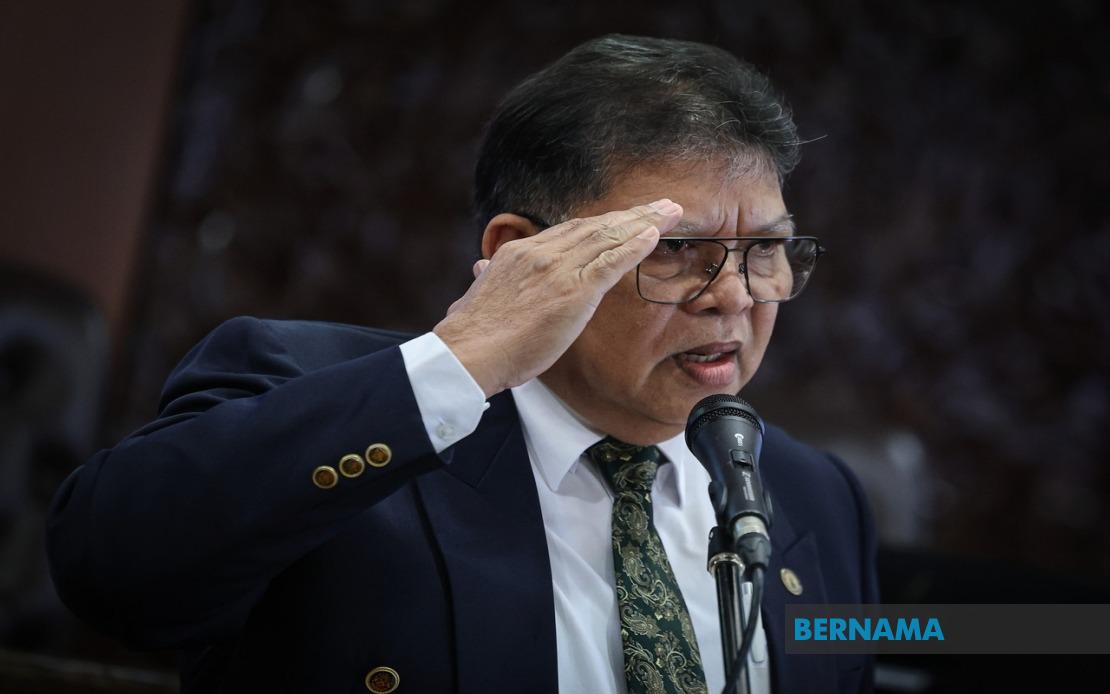
Dewan Rakyat Speaker Tan Sri Johari Abdul has made a compelling case for Malaysia to embrace proportional representation, arguing that such electoral reform would foster a generation of younger leaders better equipped to navigate the nation's evolving diversity. Speaking at the Harmony Symposium held within Parliament's walls today, Johari contended that the traditional first-past-the-post system increasingly risks marginalising minority communities whose political influence could dwindle as demographic patterns shift across the coming decades.
The Speaker's intervention into this sensitive constitutional matter comes amid growing discourse on how Malaysia can balance majority interests with minority protections in an evolving political landscape. His proposal directly addresses a structural challenge that demographers and political analysts have identified: as Malaysia's ethnic composition changes, conventional electoral arrangements based on geographical constituencies may inadvertently dilute minority representation in Parliament. This observation represents a sophisticated understanding of how electoral mechanics interact with demographic realities, and reflects concerns shared by civil society organisations working on institutional inclusivity.
Johari cited population projections indicating that Bumiputera Malays will comprise approximately 77 per cent of Malaysia's population by mid-century, a demographic milestone that carries profound implications for political representation. Under the current constituency-based system, such numerical dominance could theoretically translate into electoral outcomes where minority-dominated seats become vanishingly rare. The Speaker's concern reflects a pragmatic recognition that Parliament's ethnic and cultural composition currently mirrors the broader population, a balance that may not persist without deliberate institutional adaptation.
The implications of silent or diminished minority voices in Parliament extend beyond symbolic representation, Johari suggested. When ethnic communities lack meaningful parliamentary advocates, he warned, ground-level tensions can fester and escalate into larger societal friction. This reasoning invokes both democratic principles and practical social cohesion considerations—a dual argument that positions proportional representation not merely as an equity measure but as a stability mechanism essential to Malaysia's long-term harmony.
Johari's remarks underscored that discussions on national unity must transcend immediate grievances and present-day political calculations. Instead, he urged policymakers and stakeholders to adopt a genuinely forward-looking perspective spanning multiple generations and centuries. This philosophical reorientation represents a deliberate counter to short-termist politics, emphasising that Malaysia's true complexity lies not in its current demographic or political arrangements but in its aspiration to accommodate 77 distinct ethnic groups within a single constitutional framework.
The Speaker positioned proportional representation as a mechanism through which Malaysia could simultaneously honour its pluralistic composition and prepare for demographic transitions. Rather than reactive crisis management, such reform would embed inclusivity into electoral architecture itself, ensuring that no community capable of generating parliamentary-level support becomes systematically excluded from legislative processes. This represents a significant institutional proposal from a high-ranking constitutional figure.
Also engaging with the symposium's themes was Syahredzan Johan, who chairs the Malaysia Cross-Party Parliamentary Group on Racial and Religious Harmony (KRPPM-KKA). Syahredzan, himself the Bangi MP, underscored that the Harmony Symposium deliberately positioned discussions of racial and religious cohesion within Parliament itself rather than relegating them to civil society or academic forums. This institutional approach signals recognition that parliamentary structures themselves require examination when evaluating Malaysia's capacity to manage diversity equitably.
KRPRM-KKA's stated objectives extend beyond rhetorical commitment to minority inclusion. The parliamentary group explicitly targets policy and legal reforms aimed at constructing a more genuinely inclusive Malaysia. By identifying concrete mechanisms and policy frameworks—rather than merely affirming abstract principles—the initiative attempts to move harmony discussions from symbolic gestures toward institutional transformation. For regional observers, this represents an important example of how Southeast Asian democracies grapple with minority protection in majoritaria contexts.
The symposium itself embodied an institutional shift toward bringing racial and religious harmony considerations into Parliament's normal business. Traditionally relegated to civil society initiatives or government ministry campaigns, embedding such discussions within Parliament acknowledges that electoral and legislative structures themselves shape intercommunal relations. The involvement of multiple parliamentary constituencies and cooperation between government and opposition figures suggests that proportional representation, while contentious, enjoys some cross-party policy traction.
For Malaysia's minority communities—including ethnic Chinese, ethnic Indians, and indigenous Orang Asli populations—the proportional representation proposal offers potential pathways to more sustained legislative representation. Current constituency arrangements often concentrate minority populations in specific electoral districts, creating safety for some minority MPs while leaving others vulnerable to changing demographics or gerrymandering pressures. A proportional system would theoretically allow communities distributed across multiple constituencies to aggregate their voting strength nationally.
Regional implications extend to how Malaysia positions itself among Southeast Asian democracies managing ethnic pluralism. Countries like Indonesia and the Philippines grapple with similar questions about minority political representation within majoritarian frameworks. Malaysia's willingness to entertain constitutional reform proposals from senior parliamentary figures demonstrates institutional maturity in acknowledging structural challenges to inclusive democracy.
Implementing proportional representation would require substantial constitutional amendments and negotiation between political coalitions holding divergent interests. The Dewan Rakyat speaker's framing—as a future-oriented necessity rather than a present-day concession—may facilitate such negotiations by emphasising long-term stability over short-term redistribution. Whether this proposal advances into concrete legislative action remains uncertain, but its articulation from Malaysia's highest parliamentary office signals that electoral reform discussions have entered mainstream political discourse.

