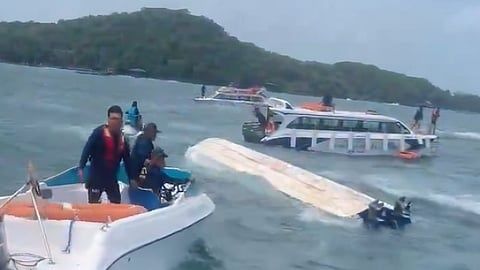
A tragic maritime accident unfolded in southern Vietnam on Saturday when a speedboat ferrying tourists from an island excursion capsized, claiming the lives of 15 Indian visitors. The vessel, which had been transporting 32 Indian tourists along with four crew members, overturned approximately 400 metres from Hon May Rut Ngoai Island, situated in the waters surrounding Phu Quoc, Vietnam's largest island situated in the Gulf of Thailand. State authorities confirmed that rescue personnel successfully retrieved 21 survivors from the water, while all fatalities were recovered from the scene.
The immediate response to the disaster demonstrated the coordinated efforts of local maritime responders and nearby boat operators. According to reports from VN Express, witnesses at the scene indicated that vessels in the vicinity quickly moved to assist, extracting passengers from the water before formal rescue agencies including border guards, naval personnel, coast guard units, and other state rescue teams arrived at the location. However, the rescue operation proved considerably challenging due to the number of people trapped within the capsized vessel, complicating efforts to reach all those aboard.
Phu Quoc represents one of Southeast Asia's premier tourism destinations, drawing millions of visitors annually to its renowned white-sand beaches and crystalline waters. The island, located in the Gulf of Thailand, functions as a major economic engine for Vietnam's tourism sector and serves as a gateway for regional and international travellers seeking beach experiences. Hon May Rut island, situated approximately ten kilometres south of Phu Quoc proper, similarly attracts considerable tourist traffic due to its natural attractions, making the waters surrounding both locations busy with recreational vessels during peak tourist seasons.
The incident carries particular significance for Indian travellers, as Vietnam has become an increasingly popular destination for tourists from South Asia seeking affordable beach holidays and cultural experiences in Southeast Asia. The concentration of Indian visitors aboard the vessel suggests the tour was likely part of an organized package itinerary, indicating the growing commercial links between India and Vietnam's tourism industry. Such group tours represent a meaningful revenue stream for Vietnamese tourism operators and reflect broader patterns of regional travel expansion.
Authorities have not yet determined the specific cause of the capsizing, with investigations ongoing into the circumstances surrounding the accident. Preliminary factors under examination likely include vessel maintenance records, weather conditions at the time of the incident, passenger loading procedures, and safety equipment availability. The speed at which the boat overturned and the difficulty experienced in evacuating trapped passengers suggest the investigation may focus on structural integrity, stability characteristics, and whether appropriate safety protocols were followed during operation.
The tragedy underscores ongoing concerns regarding maritime safety standards in popular tourism zones throughout Southeast Asia. While Vietnam attracts millions of tourists annually and maintains significant tourism infrastructure, questions inevitably arise regarding the consistency of safety regulations across the diverse range of commercial tour operators serving these destinations. The incident may prompt Vietnamese authorities to conduct broader safety audits of tourist vessels operating in high-traffic areas like Phu Quoc.
For Malaysia and other Southeast Asian nations with substantial tourism sectors, the incident provides a sobering reminder of the need for rigorous maritime safety oversight. Tourist destinations across the region—including Malaysian islands and coastal areas—rely on similar speedboat operations to ferry visitors to popular attractions, making the maintenance of consistent safety standards a pressing regional concern. The consequences of inadequate safety protocols extend beyond individual tragedies to impact entire tourism sectors and bilateral relationships.
Indian diplomatic and consular officials would likely become involved in subsequent investigations and coordination with Vietnamese authorities regarding victim identification, repatriation of deceased individuals, and compensation negotiations for survivors and the families of those killed. Such incidents historically prompt reviews of bilateral tourism protocols and safety certifications required for operators serving nationals from one country to another.
The broader context of this accident reflects the rapid expansion of budget and mid-range tourism throughout Southeast Asia, where increasing numbers of travellers from India, China, and other populous nations seek affordable holiday experiences. This growth has sometimes outpaced the development of comprehensive safety infrastructure and training standards, creating potential vulnerabilities in the tourism supply chain. As regional tourism continues expanding, maintaining equilibrium between accessibility, affordability, and safety becomes an increasingly critical challenge for governments and operators throughout Southeast Asia.

