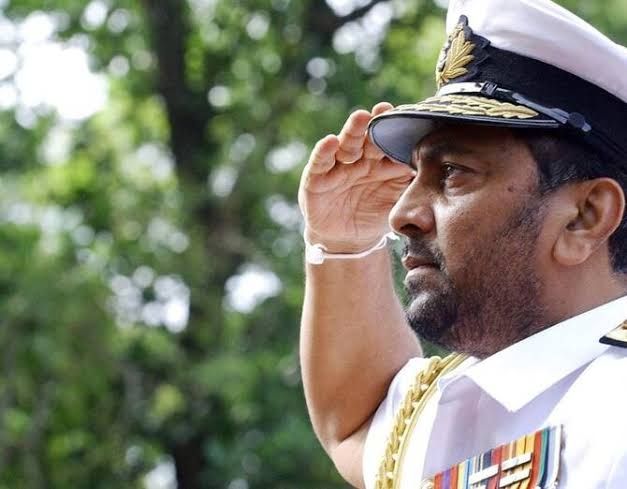
Sri Lanka's anti-corruption authorities have arrested a retired senior military officer in a high-profile case targeting the influential Rajapaksa family. Admiral of the Fleet Wasantha Karannagoda, 73, was taken into custody by the Bribery Commission on Friday over allegations that he unlawfully expedited the naval recruitment and overseas training of Yoshitha Rajapaksa, the 38-year-old son of former president Mahinda Rajapaksa, despite the younger man lacking the necessary qualifications for either appointment.
The case centres on Yoshitha Rajapaksa's enlistment in 2006, when Karannagoda held the position of navy commander. The Bribery Commission alleges that Karannagoda abused his authority during that period to circumvent standard recruitment protocols. This allegation forms part of a broader investigation into how Yoshitha Rajapaksa subsequently secured publicly-funded training at Dartmouth, the Royal Navy's prestigious officer training college in Britain—a pathway typically reserved for individuals who meet rigorous academic and professional standards.
Karannagoda's arrest represents a significant escalation in Sri Lanka's renewed push against institutional corruption and military misconduct. The retired admiral, who led the navy during the final stages of the country's decades-long conflict with Tamil separatists, which concluded in 2009, was promoted to the rank of Admiral of the Fleet in 2019 but has held no active operational role in recent years. His detention underscores the determination of the current administration to revisit cases that were previously shelved or downplayed during administrations sympathetic to the military and the Rajapaksa family.
Yoshitha Rajapaksa himself remains at the centre of multiple criminal investigations. Currently out on bail, he faces separate charges related to misuse of state funds for his Dartmouth training. Beyond the navy recruitment controversy, he is also under prosecution for his failure to adequately explain the financial sources behind his purchase of a residential property during his father's presidency, which lasted from 2005 to 2015. When questioned by investigators, he claimed to have raised the necessary funds by selling gemstones that were gifted to him by his grandaunt—an explanation that unravelled when his relative stated she could not herself account for how she had originally obtained the precious stones.
Karannagoda faces additional and more serious allegations that extend well beyond the recruitment matter. He has been sanctioned by the British government in March 2025 over accusations of grave human rights violations and unlawful killings. More significantly, he is charged with conspiracy to murder in connection with the deaths of 11 young men during 2008 and 2009, a period when he held a senior position overseeing military operations. These charges had originally been filed but were dropped in October 2021, during the presidency of Gotabaya Rajapaksa, Mahinda Rajapaksa's younger brother, who was widely seen as protective of the military establishment. The revival of these murder charges under the current administration signals a fundamental shift in political will regarding accountability for wartime and post-conflict-era killings.
The broader context for these prosecutions is the election of President Anura Kumara Dissanayake in September 2024, who campaigned explicitly on a platform of tackling endemic corruption and investigating long-dormant high-profile crimes that had evaded justice. Dissanayake's government represents a departure from the previous administration's approach and has given prosecutors considerable political space to reactivate dormant cases. This has translated into renewed momentum across multiple investigations touching the Rajapaksa family and their close associates, with numerous cases still working through the courts.
The Rajapaksa family, which exercised enormous political and military influence for nearly two decades, now faces unprecedented legal jeopardy. Beyond Yoshitha and Gotabaya, other family members and their associates have been charged with various offences ranging from financial misconduct to involvement in national security matters. The implications for regional politics are substantial: Sri Lanka's historical reliance on concentrated executive and military power is being tested by these prosecutions, with genuine consequences for officials and their families.
Gotabaya Rajapaksa's case illustrates the expanding scope of the crackdown. He was recently subjected to a foreign travel ban over alleged connections to the Easter Sunday bombings of 2019, which killed 279 people and represented one of the deadliest terrorist attacks in South Asian history. That such a senior political and military figure could face restrictions on his movement demonstrates the extent to which judicial independence and anti-corruption mechanisms have been strengthened under the current administration.
For observers across Southeast Asia, the Karannagoda arrest and related cases represent a cautionary tale about the risks of institutional capture and the potential for delayed accountability. The pattern evident in Sri Lanka—where military figures and political elites long operated with near-total impunity, only to face serious consequences once political winds shifted—carries implications for governance standards throughout the region. The case also highlights the importance of maintaining international pressure, exemplified by Britain's sanctions on Karannagoda, in complementing domestic judicial efforts.
Looking forward, the successful prosecution of high-ranking officers like Karannagoda will test Sri Lanka's judicial institutions and their capacity to handle complex cases involving decades-old events. The outcomes will likely influence how other Southeast Asian nations approach accountability for military and political misconduct, particularly as public expectations for transparency and the rule of law continue to rise across the region.

