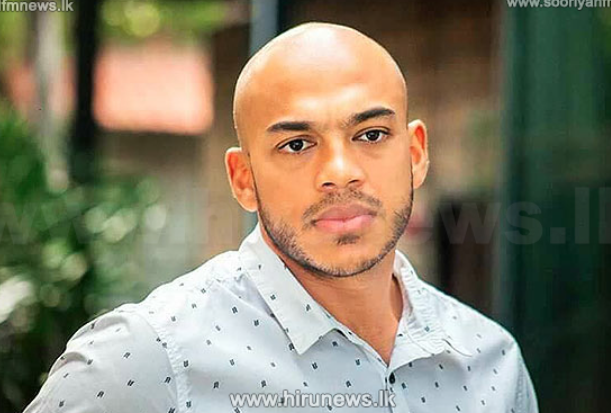
Sri Lanka's anti-graft commission has arrested Yoshitha Rajapaksa, the 38-year-old son of former president Mahinda Rajapaksa, following allegations that he improperly accessed state resources to fund his military training overseas. The arrest on 17 June marks another significant blow to a once-dominant political dynasty that has faced intensifying legal scrutiny since the election of President Anura Kumara Dissanayake, who campaigned explicitly on tackling systemic corruption within the country's ruling circles. Yoshitha's detention underscores the government's determination to pursue high-profile cases against the Rajapaksa clan, a family that wielded extraordinary influence over Sri Lankan politics and governance for nearly two decades.
According to the Bribery Commission's statement, Yoshitha is accused of leveraging his position as a naval officer to circumvent standard recruitment procedures and subsequently obtain government sponsorship for advanced military training. The investigation centres on his attendance at Dartmouth, Britain's prestigious naval college, which the commission alleges he obtained without meeting the requisite qualifications. Officials claim that his advancement through naval ranks lacked the educational credentials and competitive merit expected of other officers, effectively creating a parallel pathway to promotion reserved for someone with his family connections. This pattern of alleged privilege within the military apparatus reflects broader concerns about institutional capture when powerful families occupy key positions within state institutions.
The timing of Yoshitha's Dartmouth placement is particularly contentious given that his father, Mahinda Rajapaksa, held the presidency from 2005 to 2015, granting the family considerable leverage over government resource allocation and military appointments. Critics contend that his selection for the prestigious British training programme displaced a deserving candidate who had earned admission through standard competitive processes. The misuse of public funds for what amounted to nepotistic advantage illustrates how state budgets intended for institutional development became vehicles for familial enrichment and status enhancement. This dynamic has become central to public anger about governance failures that ultimately contributed to Sri Lanka's economic collapse in 2022.
Yoshitha's legal difficulties extend well beyond the current corruption charge. The anti-graft authorities had previously placed him under a foreign travel ban and subject to multiple investigations into money laundering activities. He currently faces separate criminal prosecution regarding the acquisition of a substantial residential property during his father's presidency, for which he initially struggled to provide credible documentation of income sources. His explanation—that he obtained funds through the sale of gemstones gifted by a grandaunt who herself could not account for their origins—failed to satisfy investigators and suggests potential laundering of illicit proceeds through asset accumulation. Additionally, he remains entangled in another prosecution related to the purchase of a television network, further demonstrating the scope of alleged financial impropriety across multiple sectors of the economy.
The acceleration of cases against the Rajapaksa family must be understood within the context of Sri Lanka's seismic political shift following the 2024 election. President Dissanayake's landslide victory specifically mandated vigorous prosecution of corruption across institutions previously shielded from accountability. For nearly two decades, the Rajapaksas wielded sufficient political power to insulate themselves and their associates from meaningful investigation, effectively operating within a system where institutional safeguards against abuse had been systematically weakened. The family's dominance extended across military, political, and business sectors, creating networks of patronage that channelled state resources toward private interests. The new administration's willingness to pursue high-profile members of this entrenched elite signals a fundamental recalibration of political accountability in Sri Lanka.
The broader Rajapaksa family constellation faces unprecedented legal jeopardy. Mahinda Rajapaksa, Yoshitha's father, has faced accusations of various forms of financial misconduct tied to his period in office, though formal charges remain pending in several high-profile cases. His younger brother, Gotabaya, who succeeded to the presidency in 2019, was compelled to flee the country in 2022 following a popular uprising triggered by Sri Lanka's catastrophic economic collapse. Gotabaya has recently been subjected to a foreign travel ban and is attempting to preempt potential arrest proceedings connected to the Easter Sunday bombings of 2019, which claimed 279 lives. The prosecution alleges security failures during his tenure as defence secretary contributed to the attacks. Multiple family members and political associates have faced charges encompassing corruption, money laundering, and more serious criminal offences, with trials advancing slowly through Sri Lanka's overburdened judicial system.
Yoshitha's arrest carries significance for Malaysia and the broader Southeast Asian region, where political dynasties and family-centred governance models persist despite formal democratic frameworks. The Rajapaksa case demonstrates both the dangers of unchecked executive power concentrated within family units and the potential for electoral change to create space for institutional accountability. Malaysian observers should note how institutional independence—particularly within investigative agencies and the judiciary—becomes crucial when political transitions enable prosecution of entrenched elites. Sri Lanka's experience suggests that substantive anti-corruption efforts require more than rhetorical commitment; they demand structural reforms preventing future cycles of abuse. The Rajapaksa prosecutions, if pursued with consistency and transparency, could establish important precedents regarding the accountability of powerful political families across South Asia.
The financial dimensions of Yoshitha's conduct warrant attention as well, reflecting how state resources become vulnerable to appropriation when institutional controls weaken. Government funds designated for military training programmes represent critical investments in institutional capacity; their diversion toward individuals lacking proper qualifications compromises both military effectiveness and the principle of merit-based advancement. Similar dynamics of resource capture occur across multiple sectors when political families gain leverage over budget allocation and procurement decisions. For Malaysia and comparable democracies, this pattern suggests the necessity of robust oversight mechanisms, transparent appointment processes, and genuine separation of powers to prevent the emergence of systems where family connections consistently override institutional requirements.
The unfolding prosecutions will likely extend over several years, with outcomes dependent on judicial independence and the sustaining of political will to pursue cases against economically powerful defendants capable of mounting extensive legal defences. Yoshitha's detention on 17 June represents merely an initial phase in what promises to be a protracted process of legal accountability for alleged financial misconduct. The case encapsulates broader questions about institutional renewal following economic crisis and political rupture—questions equally relevant to other societies confronting the legacies of concentrated executive power and familial governance networks.