Suresh Sallay, a retired Sri Lankan major general with an international reputation as a counterterrorism expert, found himself ensnared by anti-terrorism laws in February despite having previously lectured the Pentagon and United Nations on preventing extremism through social media awareness. The former spy chief, who once addressed audiences in Washington and New York about combating radicalisation, now stands accused by the Sri Lankan government of strategically orchestrating the deadliest civilian attack in the nation's modern history—the Easter bombings of April 21, 2019, which claimed 279 lives and wounded more than 500 others. Sallay remains uncharged and has consistently denied involvement, with his next court hearing set for July 10.
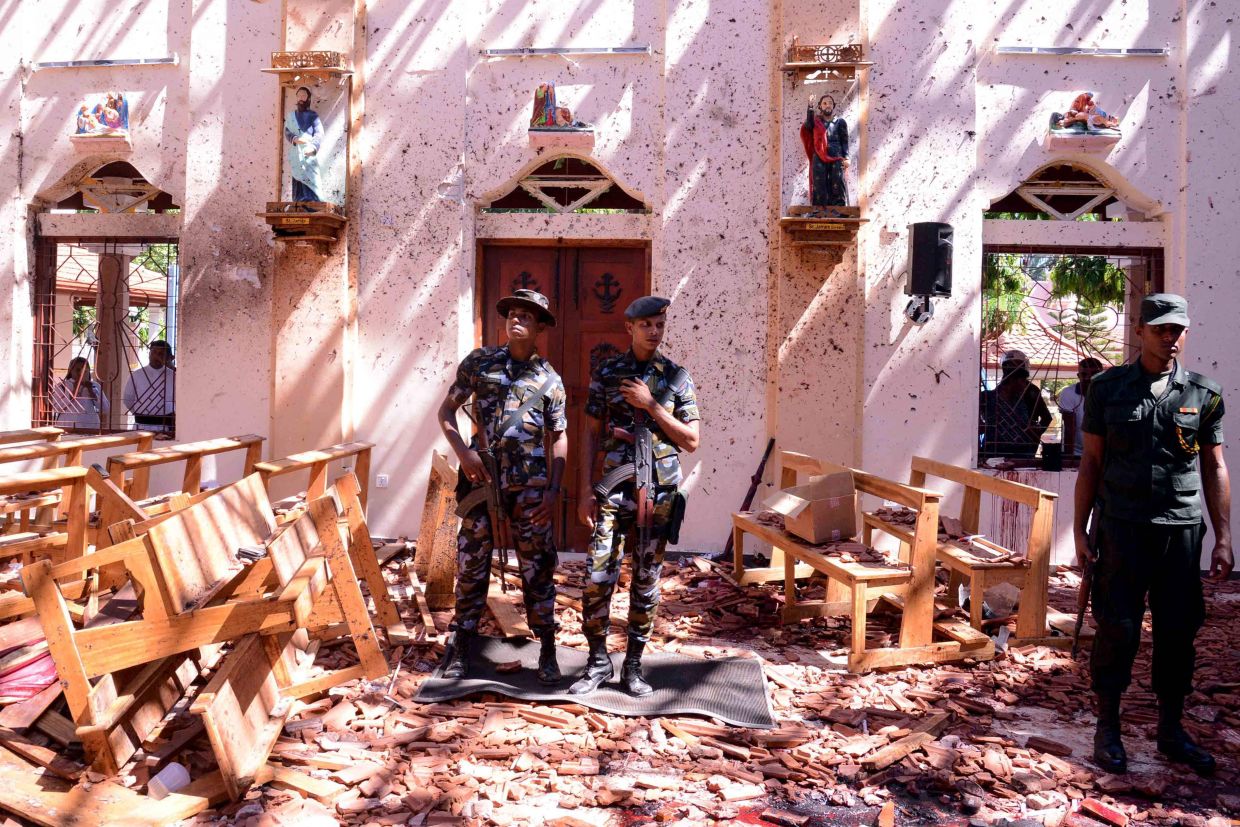
The Easter Sunday attacks represented a coordinated assault that reverberated across the island and the world. Three luxury hotels and three churches became targets of suicide bombers operating in tandem, drawing immediate international attention as the death toll mounted. Among those killed were 45 foreigners—tourists and visitors from Australia, Britain, China, Denmark, the Netherlands, Japan, and the United States. The scale of carnage shocked a nation still recovering from decades of civil conflict and positioned the incident as one of South Asia's most significant terror events of the past decade. Initial investigations identified the perpetrators as seven Sunni Muslim suicide bombers allegedly inspired by Islamic State ideology, a narrative that dominated media coverage and shaped immediate policy responses.
Yet this straightforward account has unraveled dramatically. Rather than a purely external extremist threat, Sri Lankan authorities now allege that state actors orchestrated the bombings as part of an elaborate scheme to consolidate political power. The allegations represent a profound indictment of institutional accountability within Sri Lanka's security apparatus. Public Security Minister Ananda Wijepala declared in parliament that Sallay functioned as the operational "mastermind" who deliberately cultivated connections with Islamic extremists and guided them toward their targets. According to the minister's testimony, merely three weeks before the bombings, Sallay met with Muslim individuals to gather intelligence on church locations that would subsequently become attack sites. The suggestion transforms Sallay from a figure invested in preventing terrorism to someone accused of enabling and directing it.
Investigations have progressively exposed troubling connections between the bombers and multiple state intelligence agencies, raising fundamental questions about institutional control and chain-of-command responsibility. These revelations align with critical accounts suggesting that the attacks succeeded not through an intelligence lapse but through deliberate intelligence operations. A significant element of the emerging narrative involves allegations that state actors cultivated a militant network specifically to fabricate a security crisis that could justify extraordinary political measures. Critics contend that this manufactured threat was designed to benefit the Rajapaksa political dynasty, which governed Sri Lanka at the time, by creating precisely the kind of Islamist extremism challenge that their authoritarian security agenda promised to eliminate.
Channel 4 investigation findings from 2023 presented a compelling whistleblower account alleging that authorities knowingly permitted the bombings to proceed, calculating that such a dramatic attack would propel Gotabaya Rajapaksa toward electoral victory in the 2019 presidential contest. According to this analysis, the security establishment weaponized terror strategically, allowing civilian casualties to accumulate in order to justify the election of a leader who had previously commanded military operations against Tamil separatists. The framework drew parallels between the bombing strategy and the 1983-2009 civil war context, when Rajapaksa administrations had previously financed jihadist networks ostensibly to gather intelligence on Tamil rebels. While officials acknowledged this historical practice, they maintain that the militant handlers lost control of their assets when the bombers independently decided to attack civilian populations.
The irony of Sallay's trajectory cannot be overstated. He prospered substantially during the Rajapaksa administration, becoming the first military officer appointed to lead the State Intelligence Service following Gotabaya Rajapaksa's 2019 election victory. His international credentials were considerable: a graduate of India's prestigious National Defence College, fluent in multiple academic traditions spanning from Madras University in India to the University of Bradford in Britain, and a veteran of diplomatic postings in France and Malaysia. In 2003, he delivered a Pentagon address titled "Suicide Terrorism and its Impact," establishing himself as a serious analytical voice. As recently as 2023, he spoke at United Nations headquarters about the intersection of digital platforms and radicalization, warning audiences that social media represented "one of the greatest challenges" to global security and commenting specifically on attacks "including in Sri Lanka" as evidence of technology-enabled extremism.
Sallay's personal background reflects Sri Lanka's multicultural fabric in ways that complicate the current accusations. As a Muslim married to a Buddhist woman, with a Catholic mother who has appealed to the Pope for his release, he embodies the religious diversity of an island where Buddhists comprise nearly 70 percent of the population, followed by Hindus at 12 percent, Sunni Muslims at 10 percent, and Christians at 7 percent. This demographic composition suggests that intercommunal cooperation remains possible despite sectarian political narratives that sometimes dominate elections. Sallay's hybrid identity and international exposure would seemingly position him outside the ideological commitments that typically drive either Buddhist nationalism or Islamist extremism in Sri Lankan politics.
The accusations against Sallay extend a troubling pattern within Sri Lankan intelligence operations. In 2020, during his tenure as spy chief, Sallay himself orchestrated the arrest of human rights lawyer Hejaaz Hizbullah, accusing the Muslim attorney of masterminding the Easter bombings. Hizbullah spent 22 months in detention before authorities released him, unable to produce substantive evidence supporting the allegations. This precedent suggests either that Sri Lanka's intelligence services operate with fundamentally unreliable assessment methods, or that the apparatus itself deploys terrorism accusations as political tools against inconvenient figures. The parallel between Sallay's accusation of Hizbullah and the subsequent accusations against Sallay creates a recursive pattern of suspicion that undermines institutional credibility.
For Malaysian observers, the Sri Lankan situation illuminates vulnerabilities within South Asian governance structures that warrant careful consideration. The weaponization of counterterrorism frameworks to eliminate political opponents represents a regional risk transcending Sri Lanka's specific circumstances. Similar dynamics have manifested elsewhere in Asia where internal security agencies wield substantial autonomy and weak judicial oversight. The transformation of a celebrated counterterrorism expert into a detained security suspect demonstrates how rapidly institutional legitimacy can collapse when security establishments prioritize factional interests over public safety. Malaysia's own experience with internal security concerns and intelligence agency operations suggests the importance of robust institutional checks and transparent accountability mechanisms.
The substantive question of whether Sallay directly orchestrated the bombings remains unresolved through the judicial process. His detention without formal charges and the apparent delays in bringing the case to trial raise procedural concerns that extend beyond his individual circumstances. The broader narrative surrounding the Easter bombings has shifted so completely—from a straightforward extremist terror attack to an alleged intelligence conspiracy—that observers must grapple with fundamental uncertainty about what occurred and why. This uncertainty reflects weaknesses in Sri Lanka's institutional capacity to investigate complex security matters transparently, a problem that haunts confidence in the country's governance structures.
Regional implications deserve attention as well. If state actors in any South Asian democracy weaponize terrorism for electoral purposes, the consequences extend beyond internal politics. The erosion of credibility in intelligence communities undermines transnational security cooperation, complicates information sharing among neighboring nations, and creates environments where legitimate extremism concerns become indistinguishable from political accusations. For Malaysia and other Southeast Asian states cooperating with Sri Lanka on counterterrorism initiatives, these institutional questions directly affect the reliability of intelligence partnerships and the quality of security collaboration. The Sallay case ultimately represents a cautionary demonstration of how security apparatus politicization transforms institutions designed to protect civilians into mechanisms that endanger them.

