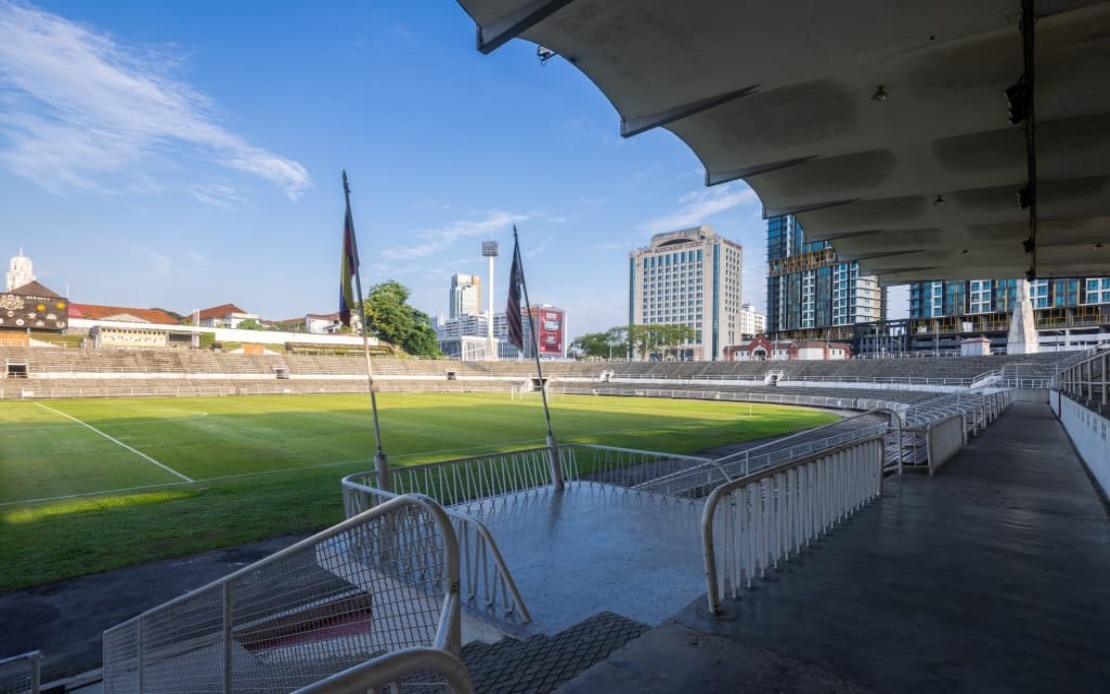
Nearly seven decades have elapsed since Stadium Merdeka became the crucible of a nation's birth, yet the venue continues to pulse with historical significance in the heart of Kuala Lumpur. Flanked by the gleaming Merdeka 118, which rises as a monument to modern Malaysia, the stadium stands as a tangible reminder of August 31, 1957—the day Tunku Abdul Rahman Putra Al-Haj proclaimed Malaya's independence before a jubilant crowd within these walls. For Malaysians navigating a rapidly modernising landscape, the stadium represents something irreplaceable: an anchor to the transformative moment that redefined the nation's destiny.
The construction of Stadium Merdeka itself tells a story of singular purpose. Completed in just twelve months at a cost of approximately RM2.3 million, the venue was purpose-built to host Malaysia's most consequential public gathering. When Tunku Abdul Rahman's voice rang out with seven resounding declarations of "Merdeka!" and the Negaraku played for the first time as an independent nation's anthem, the stadium transcended its role as a sporting venue. According to Prof Dr Sarjit Singh Gill, a social anthropology expert at Universiti Putra Malaysia, the proclamation represented far more than a ceremonial transfer of power. Instead, it marked the definitive end of British colonial dominion and the commencement of a new era for the Federation of Malaya. As the Chairman of the National Council of Professors' National Unity Cluster, he emphasised that Stadium Merdeka functions not merely as a sports facility but as a historical monument embodying the nation's collective identity, dignity and cultural heritage.
The stadium's historical significance deepened when it hosted another defining moment six years later. In 1963, the venue became the setting for the proclamation of Malaysia's federation, effectively concluding British colonial administration across Sabah, Sarawak and Singapore—though Singapore would later chart its own independent course. This dual role as witness to transformative national moments cemented Stadium Merdeka's position within Malaysia's constitutional and cultural narrative. For regional observers, the stadium exemplifies how Southeast Asian nations have preserved spaces that commemorate independence struggles and the transition to sovereignty, offering a model of heritage preservation that balances memory with accessibility.
The stadium's survival itself constitutes a victory for heritage conservation in Malaysia. During the late 1990s, the venue faced genuine threats of redevelopment as commercial interests viewed the prime Kuala Lumpur real estate as an opportunity for lucrative projects. Public opposition, however, proved decisive. Citizens and heritage advocates recognised that some spaces possess intrinsic value beyond their economic utility. Government intervention prevented demolition, and in 2000, Permodalan Nasional Berhad (PNB) assumed stewardship of the site with an explicit mandate to preserve its historical authenticity. This transition marked a turning point in how Malaysia approached the tension between development and preservation—demonstrating that nationalist sentiment and grassroots concern could outweigh commercial calculations.
Under PNB's guardianship, Stadium Merdeka underwent meticulous restoration guided by original Public Works Department construction drawings. The conservation approach prioritised historical fidelity, with later structural additions such as upper seating tiers removed to restore the original 20,000-seat capacity. Specific architectural elements underwent painstaking restoration: the scoreboard, washroom facilities, mosaic tilework and the distinctive cantilevered roof all received attention to bring them to their original condition. Datuk Dr Izwan Ibrahim, Chief Executive Officer of PNB Merdeka Ventures Sdn Bhd, articulated the philosophical underpinning of this approach: preservation meant maintaining the stadium's authenticity while ensuring its narrative remained accessible to all Malaysians. He stressed that Stadium Merdeka transcends its role as historical repository—it embodies the aspirations and determination that forged modern Malaysia.
The recognition of the stadium's cultural importance extended beyond local conservation efforts. UNESCO's Asia-Pacific Heritage Award in 2008 accorded international validation to the site's significance, while its gazettal as a National Heritage site in 2009 provided statutory protection. These designations reflected a growing global consensus that post-colonial venues of independence proclamation merit preservation as shared human heritage. For Southeast Asian nations similarly grappling with how to commemorate independence struggles, Stadium Merdeka offers lessons in balancing nationalist pride with scholarly rigour, and in maintaining historical spaces as living venues rather than sealed museums.
Evolution rather than stasis defines Stadium Merdeka's contemporary role. The venue has transformed from an exclusive venue for state occasions into a dynamic public space accessible to Malaysian society broadly. The refurbished track now serves community users, while the grounds regularly host cultural events. Earlier this year, the Bazram Merdeka bazaar—a Ramadan marketplace—drew over 250,000 visitors, demonstrating the stadium's continued capacity to gather Malaysians around shared experiences and celebrations. This pluralistic use reflects a sophisticated understanding of heritage preservation: spaces that embody national memory need not be cordoned off as reliquaries but can remain vibrant components of everyday civic life.
Yet perhaps the most ambitious aspect of the current stewardship involves intergenerational transmission. For many Malaysians born after 1957, independence exists as textbook history rather than lived memory or visceral experience. Recognising this generational distance, PNB has prioritised creating direct encounters between younger Malaysians and the stadium itself. Datuk Dr Izwan articulated this strategy with clarity: while schoolchildren learn about 1957 from curricula and family narratives, standing within the actual space where independence was proclaimed produces a qualitatively different understanding. By encouraging school visits, facilitating youth activities and creating opportunities for visitors to engage physically with the venue, the stewardship is constructing new personal connections with national history. Neighbouring schools increasingly bring students to experience the space directly, creating individual memories and emotional associations that transcend abstract historical knowledge.
For those who have devoted years to maintaining the stadium, the work carries profound personal meaning. Alias Daud, who concluded a 35-year PNB career after spending the final decade caring for Stadium Merdeka, embodied this commitment. Walking through the gates, he described experiencing mingled pride, gratitude and nostalgia—emotions rooted in witnessing countless Malaysians pass through the venue, each bringing their own stories and memories. For Alias, the space transcended employment location to become something approaching home. His observations during national months proved particularly poignant: when government agencies, schools and universities converged on the stadium for educational visits and commemorative recording, the atmosphere crackled with shared purpose. Younger visitors especially impressed him with their genuine curiosity about the site's historical significance, their impulse to photograph the grounds and their dawning appreciation for what the walls had witnessed.
As Kuala Lumpur's skyline continues its vertical expansion, with modern skyscrapers and commercial towers rising around it, Stadium Merdeka remains a constant, anchoring presence. The contrast between the historic venue and surrounding contemporary architecture creates a powerful visual metaphor for Malaysia's trajectory—a nation that honours its founding moment while embracing technological progress and economic development. The stadium's persistence serves a psychological function beyond its documentary role, reminding citizens that certain moments and spaces deserve preservation even as societies transform. In an era when Southeast Asian nations increasingly confront questions about how to honour independence histories while remaining forward-looking, Stadium Merdeka offers a model of balance: a venue that preserves the spirit of Merdeka—that electrifying moment of national birth—while remaining accessible, alive and continuously generating fresh meaning for successive generations of Malaysians.

