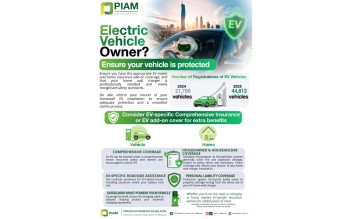
Malaysia's insurance industry has moved to reassure homeowners that their standard fire and property coverage extends to damage caused by electric vehicle chargers, following concerns raised after a recent fire incident in Cheras involving an EV home charging system. The General Insurance Association of Malaysia (PIAM) emphasised that specified fire perils coverage applies regardless of the ignition source, provided policyholders comply with all contractual obligations and have not engaged in fraudulent conduct.
Chua Kim Soon, chief executive officer of PIAM, provided comprehensive guidance on how existing home insurance frameworks accommodate the emerging risks associated with EV ownership. His statement came in response to growing questions about whether traditional policies adequately protect households investing in electric vehicle infrastructure, particularly as the transition to cleaner transportation accelerates across the region. The Cheras incident, which resulted in substantial property damage from a residential EV charger malfunction, has heightened awareness of this coverage question among Malaysian vehicle owners considering the switch to electric.
The nature of EV charging equipment and its classification under existing insurance policies depends on how the installation has been configured. Permanently wired chargers that form part of a property's electrical infrastructure typically fall under the fixtures and fittings category within a standard home policy's buildings section. By contrast, removable or portable charging cables generally require separate protection through specialist electric vehicle motor insurance policies or supplementary coverage options that insurers increasingly offer alongside conventional motor policies.
Insurers expect homeowners to exercise due diligence in maintaining electrical safety standards as a fundamental condition of coverage. When evaluating claims arising from EV charging incidents, insurers will scrutinise official investigation reports—such as those prepared by the fire department—to establish whether the fire originated from negligence, intentional misconduct, fraud, or breaches of applicable building codes and electrical regulations. Documentation from qualified authorities proving compliance with safety standards becomes crucial during the claims assessment phase.
A critical step homeowners often overlook is notifying their insurance provider when installing a permanent EV charging system. This notification serves multiple protective functions: it ensures the declared sum insured for the property accurately reflects current reconstruction costs rather than outdated valuations, and it establishes transparency with the insurer about electrical modifications that may fall within policy scope. This proactive approach substantially reduces friction during the claims investigation process, as the insurer cannot later claim lack of disclosure about material changes to the insured property.
Chua advised property owners to conduct a thorough review of their sum insured figures to confirm these amounts account for all recent home modifications, contemporary fixtures, and upgraded electrical installations. This becomes especially important in Malaysian contexts where many homes are underinsured relative to actual replacement costs, a problem that compounds when major electrical infrastructure upgrades like EV charger installations go undeclared. An inadequate sum insured could result in claims settlements that fall significantly short of actual damage repair costs.
The potential for fire or electrical faults to spread beyond a single property presents particular complications in Malaysia's dense urban housing landscape. Terrace homes, row houses, and high-rise residential complexes face elevated risks from incidents that could engulf neighbouring units, creating substantial liability exposure. While standard house owner policies typically provide a baseline public liability limit of RM50,000, this amount often proves insufficient when fire damage extends to adjacent properties and triggers third-party claims for their property damage or personal injury. PIAM recommends that homeowners in multi-unit residences carefully evaluate whether additional public liability coverage extensions justify their cost, given the severe financial consequences if an EV charging incident damages adjacent homes.
The interplay between motor insurance, home insurance, and the expanding universe of EV-related equipment creates complexity that demands comprehensive coverage planning. Vehicle owners should treat their EV ownership as a trigger for a complete policy audit, examining both their motor insurance provisions for the vehicle itself and their residential property coverage for charging infrastructure and any necessary electrical system upgrades. Many insurers have begun developing integrated EV insurance packages that consolidate these elements, but uptake remains limited as consumers navigate unfamiliar product terminology and coverage nuances.
For Malaysia's rapidly growing EV market, these clarifications from PIAM signal that the insurance framework can accommodate this technological transition through existing policy structures, provided homeowners take reasonable precautions and maintain transparent relationships with their insurers. The emphasis on notification, compliance with electrical standards, and adequate sum insured valuations reflects established insurance principles adapted to new circumstances. As EV adoption accelerates throughout Southeast Asia and charging infrastructure becomes commonplace in Malaysian residential areas, the risk profile of standard home policies will continue shifting, likely prompting further refinement of coverage terms and potentially driving development of more specialised EV-focused insurance products tailored to regional market conditions.

