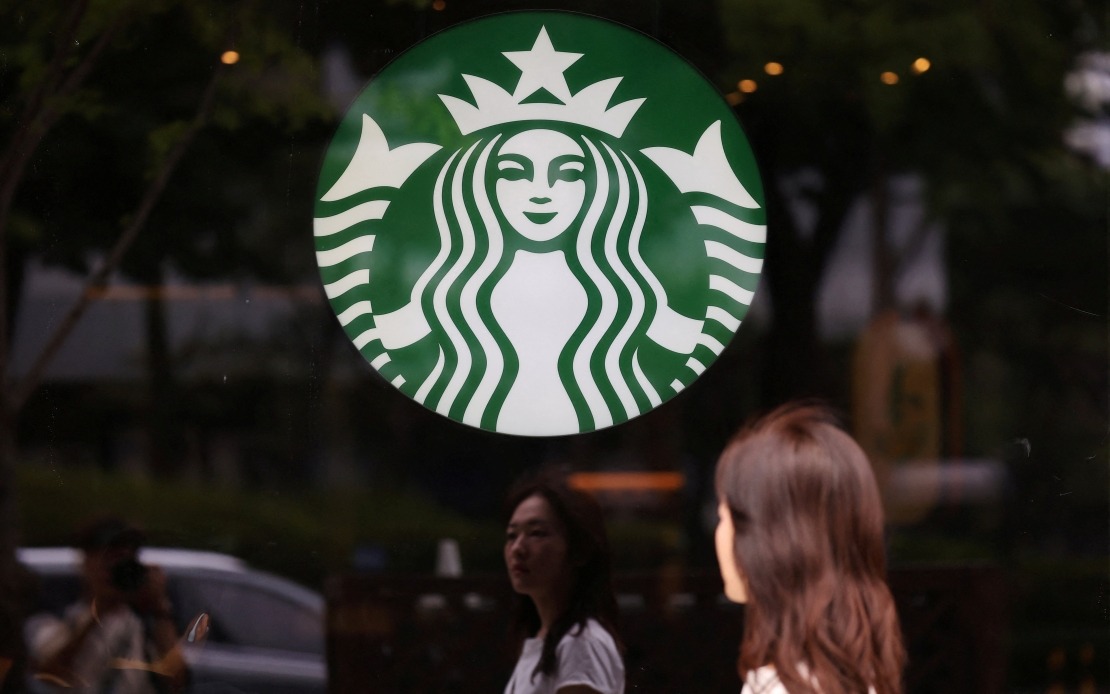
Starbucks closed all of its more than 2,000 outlets across South Korea on Monday afternoon for a mandatory historical education programme, marking an extraordinary corporate response to a public relations disaster that has reverberated across the country. The decision to halt operations simultaneously across the entire South Korean market underscores the severity of the backlash faced by Shinsegae, the local licensee operating the American coffee chain's Korean business, following a hastily withdrawn marketing campaign that struck a raw nerve with the nation's collective memory.
The controversy centred on Shinsegae's promotion of a stainless steel thermos product branded as the "SS Tank," which the company designated as "Tank Day" on May 18. What appeared to be a straightforward consumer goods campaign instantly transformed into a national incident when South Koreans recognised the historical significance of the chosen date. On May 18, 1980, South Korea's military government orchestrated a brutal suppression of a pro-democracy uprising in the southern city of Gwangju, deploying military tanks to crush civilian protesters. The massacre resulted in hundreds of deaths and has remained a defining moment of national trauma, representing a pivotal struggle for democratic freedoms that continues to shape South Korean society and values.
The timing of Shinsegae's campaign was catastrophically insensitive, colliding directly with collective memory and institutional remembrance practices around this pivotal historical event. Within hours of the campaign's launch, South Koreans mobilised on social media and through traditional channels to express their outrage, with many calls circulating for widespread consumer boycotts of Starbucks. The public reaction was swift and unforgiving, reflecting how deeply the 1980 Gwangju Uprising remains embedded in contemporary South Korean consciousness as a symbol of sacrifice for democratic principles. Shinsegae hastily terminated the promotional effort mere hours after initiating it, recognising the depth of public sentiment it had inadvertently provoked.
While observers noted that the abbreviation "SS" could theoretically reference other historical associations—most notably Adolf Hitler's paramilitary Schutzstaffel, which carries its own weight of infamy—the primary source of public fury stemmed from the May 18 connection rather than secondary symbolic interpretations. Nevertheless, the convergence of problematic elements compounded the damage and illustrated how corporate messaging can become entangled in multiple layers of historical sensitivity when context and cultural awareness are absent from decision-making processes.
The political establishment swiftly weighed in on the controversy, with President Lee Jae Myung publicly expressing his dismay at what he characterised as deeply inhumane business conduct. His statement on the X platform (formerly Twitter) articulated the broader national sentiment that such an error represented not merely poor marketing judgment but a fundamental failure of corporate responsibility and cultural respect. The presidential rebuke elevated the scandal beyond consumer circles into the realm of national discourse, signalling that lapses in historical awareness among major corporations were matters of genuine political consequence.
Shinsegae responded by implementing structural accountability measures, including the dismissal of the executive deemed responsible for approving and deploying the campaign. The company issued formal apologies acknowledging the pain caused to those affected by the 1980 events and their descendants, emphasising that the campaign reflected no intentional effort to denigrate the democracy movement or its victims. An internal investigation conducted by Shinsegae stressed that the problematic associations had not been deliberately engineered but rather represented a catastrophic oversight in the strategic and creative vetting processes that should precede major public campaigns.
The mandatory history training for Starbucks staff members operates on multiple levels as a corporate response. Superficially, it functions as internal education designed to ensure that employees understand the historical context of the controversy and can appropriately respond to customer concerns. More substantially, the decision broadcasts Shinsegae's commitment to making systemic corrections to its institutional culture and decision-making frameworks. By closing all outlets simultaneously and requiring attendance at educational sessions, the company signals to South Korean society that it takes the matter with utmost gravity and is implementing preventative measures against future missteps of similar magnitude.
The incident carries particular resonance for multinational corporations operating throughout Southeast Asia and East Asia, where historical sensitivities remain potent forces in consumer behaviour and corporate reputation. Malaysia and other regional nations possess their own complicated historical relationships—with colonial legacies, independence struggles, and communal conflicts—that can similarly become flashpoints when corporations demonstrate insufficient cultural and historical literacy. The Starbucks-Shinsegae scandal serves as a cautionary tale about the risks of globalised marketing strategies that fail to account for local historical contexts and collective memories.
Seoul police authorities initiated their own investigation into the circumstances surrounding the campaign's conception and approval, indicating that public authorities viewed the matter as sufficiently serious to warrant formal scrutiny. This parallel investigation process suggests that questions remain about how such a campaign navigated corporate approval chains without encountering adequate safeguards or checks designed to identify potential historical or cultural sensitivities.
The broader implications of this scandal extend beyond one company's reputation management. For regional business leaders and multinational corporations with operations throughout Asia-Pacific markets, the episode demonstrates that historical awareness and cultural sensitivity must be embedded throughout organisations at strategic, creative, and execution levels. When such awareness is absent, the reputational and financial consequences can prove severe and difficult to reverse, regardless of the speed or comprehensiveness of subsequent apologies and corrective actions. The Starbucks closure across South Korea represents both a response to crisis and an implicit acknowledgment that institutional learning must be prioritised if international corporations are to operate successfully and respectfully within markets shaped by powerful historical narratives.