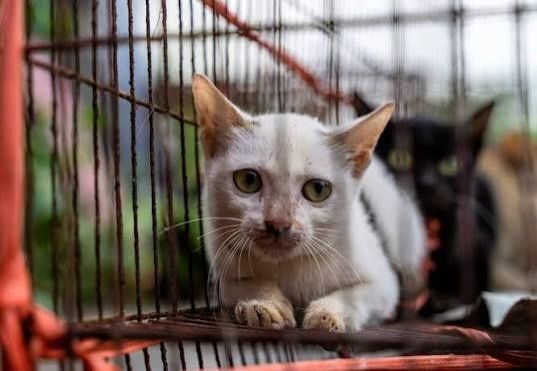
Vietnamese law enforcement has cracked down on an organized ring that systematically stole and trapped cats destined for slaughter, culminating in the rescue of more than 400 live animals and the arrest of nine suspects. The operation, which targeted Ho Chi Minh City and surrounding regions, represents a significant enforcement action against pet theft that has plagued Vietnam's largest city, where animal abductions have become an increasingly serious problem for residents.
The criminal network operated with disturbing efficiency across southern Vietnam over the span of three years, employing tactics to lure and capture cats from communities before transporting them to facilities for processing as meat. Police launched their intervention following mounting complaints from residents about missing pets, signalling a shift toward taking such crimes more seriously. The Ho Chi Minh City police newspaper reported that authorities recovered not only 400 living cats but also discovered 80 frozen specimens already prepared for sale, along with an additional 21 animals from a separate location connected to the operation.
While dog and cat meat consumption remains legal throughout Vietnam, with many establishments openly marketing such products to consumers, the country does maintain regulatory standards intended to prevent animal cruelty. Vendors operating in this sector are required by law to possess certificates documenting the legitimate origin of animals they sell, a requirement designed to prevent the laundering of stolen pets through commercial channels. The fact that this particular network operated without such documentation, and through outright theft, indicates a flagrant disregard for even these minimal legal safeguards.
The rescue operation demonstrates the scale of organized pet theft in Vietnam's urban centres. Beyond the immediate tragedy of animals being separated from their families and destined for slaughter, the bust reveals a sophisticated criminal enterprise with supply chains and processing facilities. The arrest of nine individuals suggests this was not a small-scale opportunistic operation but rather a coordinated criminal group with specialized roles and infrastructure dedicated to sustaining their illegal trade over an extended period.
Reunification efforts have already succeeded in returning more than 40 cats to their original owners, providing some measure of closure for families whose beloved companions were stolen. However, the wider picture remains grim. Animal rights organization Humane World for Animals reported that approximately 100 of the rescued cats subsequently died from the trauma and conditions they endured during their captivity, underscoring the severe physical and psychological toll of such abuse on vulnerable animals.
The organization's involvement highlights the critical role that international and local animal welfare groups play in advocating for stronger protections and supporting enforcement actions. Karanvir Kukreja, representing Humane World for Animals, expressed particular concern for the animals currently held at a police station as evidence in the prosecution of the suspects. He noted that the organization has taken immediate steps to improve conditions for these animals, donating food supplies and arranging for ventilation equipment, including fans, to prevent heat stress during Vietnam's hot climate.
For Malaysian readers, this case carries relevant implications. Pet theft and the illicit animal trade remain persistent challenges across Southeast Asia, operating across borders and jurisdictions. The sophistication of the Vietnamese network suggests that similar operations likely exist in other regional countries, including Malaysia, where companion animals are increasingly valued by urban middle-class households. The case demonstrates both the vulnerability of pets in urban environments and the capacity of law enforcement to respond when resources and political will are mobilized.
The environmental and welfare conditions under which the confiscated animals were held also raise questions about enforcement capacity. Keeping over 400 animals as evidence in a police facility stretches resources and creates additional welfare concerns, highlighting a practical challenge that developing-nation law enforcement agencies face when prosecuting animal trafficking and theft cases. Solutions require cooperation between police, animal welfare organizations, and facilities equipped to temporarily house large numbers of distressed animals.
Looking forward, the case underscores the tension in Vietnam between traditional consumption practices and emerging urban attitudes toward companion animals. As Southeast Asian countries undergo rapid urbanization and modernization, attitudes toward pets are shifting, particularly among younger and more affluent demographics. This cultural evolution creates both opportunities and conflicts, as enforcement of animal protection laws increasingly confronts entrenched commercial interests in the pet meat trade. The willingness of Vietnamese authorities to pursue this particular case may signal a broader shift in enforcement priorities, though much uncertainty remains about whether such actions represent sustained policy change or isolated responses to public pressure.