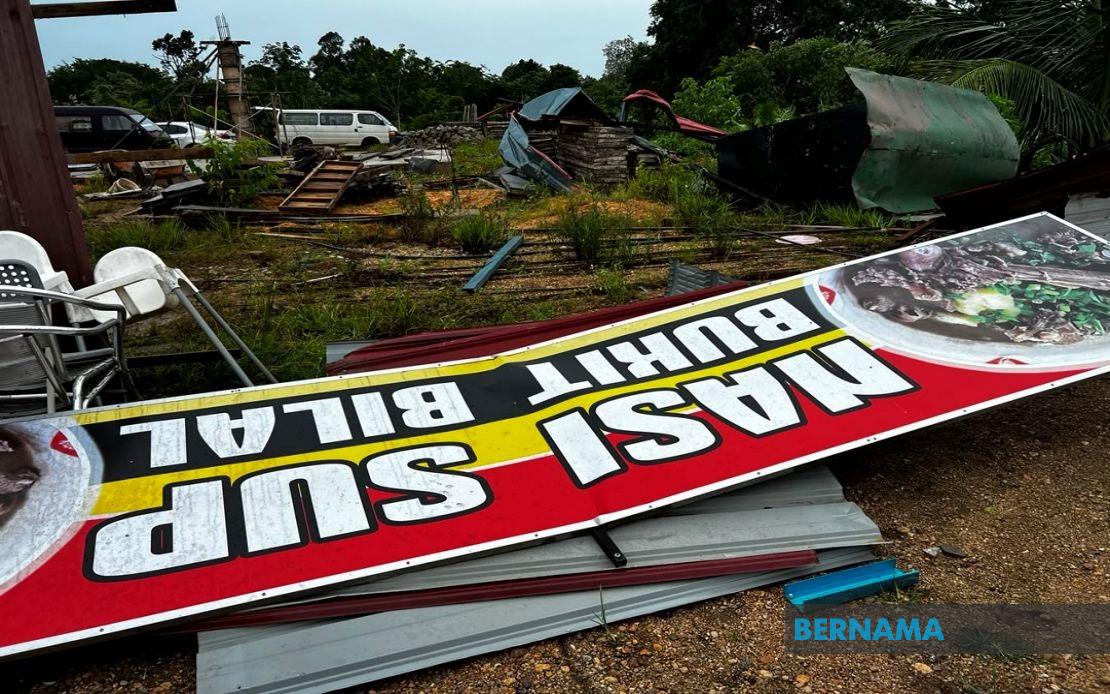
A severe weather event in Machang on July 29 has left a family facing an uncertain future after their soup and mixed rice shop—their sole means of supporting six children—was reduced to rubble in a matter of minutes. The eatery, operated by Nor Ayu Jusoh and her husband Muhammad Hafizuddin Ramli, sustained catastrophic structural damage when a sudden storm struck around 6 pm, with the destruction extending far beyond the business itself to encompass the family's accumulated assets and livelihood security.
Nor Ayu, 40, described arriving at her premises after being alerted by one of her children who works at a nearby workshop. The sight that greeted her revealed the full extent of the destruction: the roof had been completely torn away, display racks lay shattered across the floor, brick walls had collapsed inward, and cooking equipment and raw ingredients were scattered beyond salvage. She estimated losses at nearly RM100,000, a figure that represents far more than material damage—it represents the family's financial foundation.
The shop had only recently become established in its current location. For nearly two decades, Nor Ayu and her husband had operated their business from a different premises, building a customer base and reputation in the community. Four years ago, they relocated to the present site in Kampung Bukit Bilal, constructing the shop on rented land using their own accumulated savings. What took two decades to build was unmade in moments by the storm's violence.
The family's dependence on this single business underscores the vulnerability of many small entrepreneurs in Malaysia. Among their six children, ranging in age from seven to nineteen years old, four are still attending school. The income from the eatery had been stretched to cover their education costs, food, housing, and basic necessities. With the business destroyed and no insurance protection mentioned, the household now faces immediate financial crisis.
Accounts from witnesses paint a picture of a weather event that escalated with shocking speed. Tan Wei Ching, 35, who operates a workshop across the street, observed how the conditions deteriorated from light rain to a violent storm within minutes. The powerful winds initially attacked a nearby cendol stall, tearing off its roof, tent covering, and signboard before the debris became projectiles that struck Nor Ayu's eatery. The force was sufficient to cause structural failure rather than merely cosmetic damage.
The environmental impact extended throughout the surrounding area. Multiple trees in Kampung Bukit Bilal were felled by the same strong winds, indicating that the storm was a genuine weather system affecting the broader community rather than a localized incident. The timing of the event—occurring after the shop had closed for the day and staff had left—meant that there were no injuries, but it also meant that recovery would fall entirely on the proprietors with no insurance or contingency measures in place.
For business owners throughout Malaysia and Southeast Asia, incidents like this highlight the inherent risks faced by small enterprises that lack formal risk management. Many family-run operations, particularly in rural and semi-rural areas, operate without comprehensive insurance coverage due to cost constraints. While larger commercial establishments may have disaster recovery plans and insurance claims processes, smaller businesses like Nor Ayu's shop often exist in a precarious state where a single catastrophic event can erase years of accumulated progress.
Nor Ayu's situation also reflects the broader economic challenges facing women entrepreneurs in Malaysia. As the primary operator of the business, she carries responsibility not only for the family's immediate survival but also for maintaining her children's education during a critical period. The absence of accessible credit or disaster recovery assistance mechanisms means that rebuilding will require either personal resources they no longer possess or charitable intervention.
The family's appeal for assistance points to a gap in the social safety net. While government aid programs exist for disaster relief, the application processes and eligibility requirements often prove difficult for small business owners to navigate, and assistance amounts may not adequately address the full scope of losses. In this case, Nor Ayu's request for help to rebuild suggests that she recognizes the impossibility of recovery through her own means alone.
The destruction of this eatery serves as a stark reminder that climate resilience and disaster preparedness remain underdeveloped areas in Malaysian policy, particularly regarding small and medium enterprises. Unlike larger businesses that may have access to professional consultancy on risk management and insurance, family operations often proceed without formal guidance on protecting themselves against weather-related catastrophes. Better coordination between local authorities, business development agencies, and insurance providers could help prevent such devastating outcomes.
As Machang begins the process of recovery from this storm, the broader question of how Malaysia supports its vulnerable business community remains unanswered. The Nor Ayu family's experience—four years of building replaced by minutes of destruction—will likely be repeated elsewhere unless stronger systems are put in place to provide both preventive measures and recovery assistance. Meanwhile, six children's educational prospects and a family's future hang in the balance while they contemplate an uncertain path forward.

