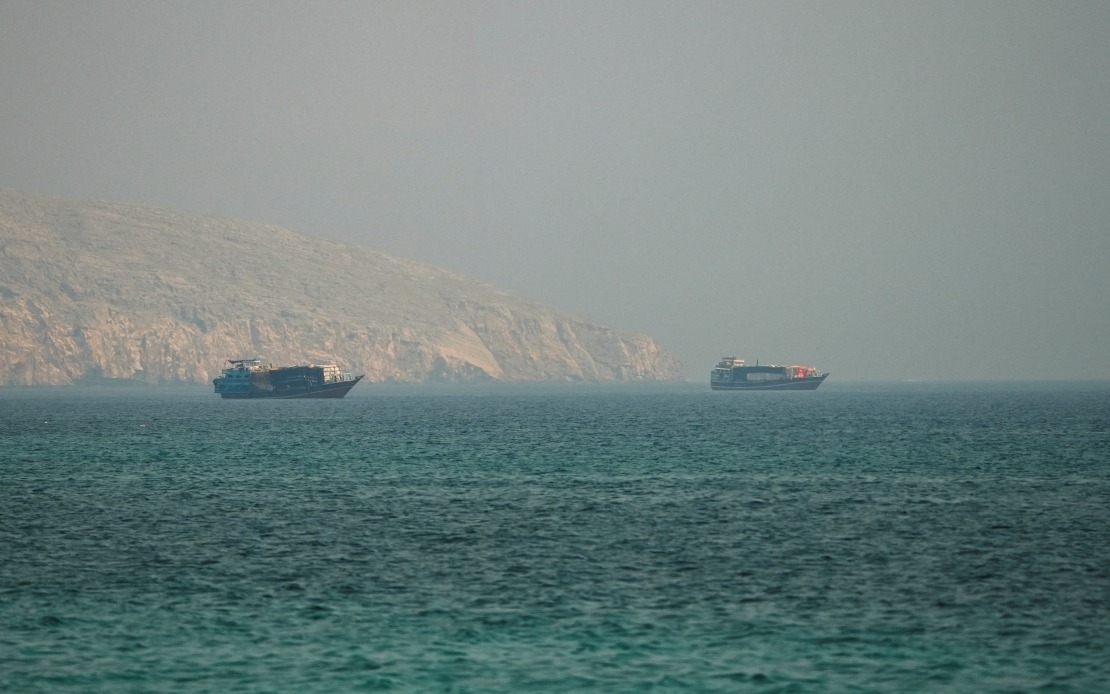
One of the world's most strategically vital shipping lanes remains under a severe security threat designation following a new escalation in military confrontation between the United States and Iran. The UK Maritime Trade Operations, through its Joint Maritime Information Centre, confirmed on Friday that the Strait of Hormuz continues to pose significant risks to commercial vessels transiting the waterway, which handles roughly one-third of global maritime trade.
The UKMTO's latest advisory represents an intensification of concerns over the corridor that connects the Arabian Gulf to the Gulf of Oman. Although authorities have expanded the southern route through the strait and declared it open to all maritime traffic, the designation of "severe" threat reflects the unpredictable nature of recent incidents targeting merchant shipping. For Malaysian maritime operators and regional trading companies reliant on Gulf commerce, this assessment carries immediate practical implications for insurance premiums, route planning, and cargo security protocols.
Vessel operators have been instructed to maintain heightened vigilance when navigating the area, with explicit guidance to anticipate radio contact from naval forces operating across very high frequency channels. The advisory also highlights a designated mine-danger zone that mariners must navigate around or report to authorities. These measures underscore the militarisation of one of Asia's most critical trade conduits, a development with direct consequences for Southeast Asian economies dependent on Gulf oil and gas supplies.
The current escalation stems from a series of coordinated attacks on commercial vessels that have triggered successive rounds of military retaliation. The United States has responded with repeated airstrikes targeting Iranian military installations and strategic infrastructure, officially characterising these operations as defensive reactions to threats against merchant shipping. Washington has framed its military posture as necessary to maintain freedom of navigation and protect international commerce from what it characterises as Iranian provocations.
Iran's position reflects fundamentally different assumptions about maritime sovereignty and access through the strait. Tehran maintains that vessels should coordinate with Iranian authorities prior to transit and that only specific Iranian-designated routes are legitimate passages through the waterway. The Iranian government has rejected alternative routing suggestions and responded to what it views as American aggression with precision drone strikes directed at US military facilities within the Arabian Gulf region and in Jordan, demonstrating an ability to project force beyond the immediate maritime domain.
This cycle of action and counteraction has created a security environment where commercial shipping faces genuine hazards from military operations conducted by state actors. The escalation carries regional ramifications that extend well beyond bilateral US-Iran dynamics. Southeast Asian nations including Malaysia, Singapore, and Thailand depend heavily on stable Gulf maritime corridors for energy imports and trade. Any further deterioration in security conditions could force shipping companies to seek alternative routes, increase transit costs through insurance and security measures, and potentially disrupt the just-in-time supply chains that underpin regional manufacturing competitiveness.
Significantly, diplomatic efforts continue despite the military escalation. Last month, Iran and the United States reached a memorandum of understanding facilitated through Pakistani mediation, ostensibly aimed at de-escalating military confrontation and establishing frameworks for lasting peace. However, the sustainability of these talks remains highly questionable given the continuing hostile military operations. The contradiction between diplomatic engagement and operational hostilities creates profound uncertainty about the trajectory of the crisis and the likelihood of meaningful de-escalation in the coming months.
The fragility of the diplomatic initiative underscores broader challenges in crisis management between Washington and Tehran. Previous attempts at dialogue have foundered on fundamental disagreements regarding nuclear policy, regional influence, and the legitimacy of each party's military presence in the Gulf. The current memorandum represents the first substantive engagement in years, yet its survival depends on whether both parties can establish practical mechanisms for preventing accidental escalation and limiting the scope of military operations.
For Malaysian policymakers and maritime authorities, the situation demands careful attention to regional shipping security and the potential need for enhanced naval coordination with other Southeast Asian nations. The Malaysian Maritime Enforcement Agency and relevant port authorities should consider whether existing protocols for managing transit through contested waters require updating. Regional shipping associations should also engage in dialogue regarding insurance frameworks and best practices for vessels navigating through heightened threat areas.
The broader implications extend to Malaysia's strategic positioning within the Indo-Pacific. As a major shipping hub with substantial maritime interests in the region, Malaysia has stakes in both stable Gulf access and the maintenance of freedom of navigation principles. The current crisis tests whether Southeast Asian nations can maintain balanced relationships with both the United States and Iran while protecting legitimate commercial interests. Malaysia's experience navigating complex geopolitical dynamics in the Strait of Malacca provides useful perspective for addressing similar challenges in the Strait of Hormuz, where regional stability and international commerce remain inextricably linked.

